
◎
Get clear
Get clarity on what matters most right now.

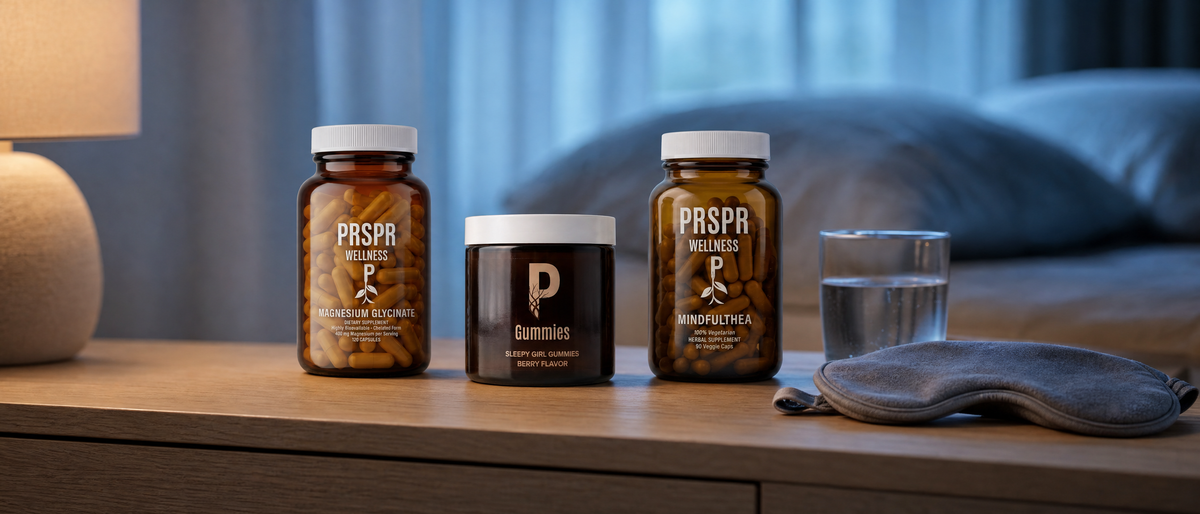
What are sleep cycles? You hear the phrase on podcasts, see it on sleep trackers, and read it in articles that assume you already know what it means. Most people don't. They know sleep has "stages" and that one of them is called REM, and the rest is a blur of letters and numbers.
The search data says you are not alone. According to Google Trends, for US searches over the past seven days related to the seed term "sleep cycles," the top related queries included "cycles of sleep" at 100, "what are sleep cycles" at 36, "rem sleep cycles" at 34, "rem sleep" at 34, "what are the sleep cycles" at 30, "sleep cycle" at 23, "how long are sleep cycles" at 17, "sleep cycles stages" at 14 and "sleep stages" at 14. The rising query "how long do sleep cycles last" was up 300%.
A quick note on those numbers. Google Trends scores are relative within each seed term: 100 marks the most searched query in that set, and the others are scaled against it. They are not search counts. A rising percentage measures growth in interest, not volume.
So people want the words. This piece gives you the vocabulary: what a sleep cycle is, what the stages are called, what REM stands for, and how long a cycle is usually described as lasting. Every number comes with its source.
A sleep cycle is the repeating pattern a night of sleep moves through. The National Heart, Lung, and Blood Institute (NHLBI) puts it simply on its page "How Sleep Works": "When you sleep, you cycle through two phases of sleep: rapid eye movement (REM) and non-REM sleep."
So the cycles of sleep are built from two phases. One is REM. The other is everything that is not REM, which sleep science shortens to NREM. According to the NHLBI, "Non-REM sleep has three stages, defined by measurements of brain activity taken in sleep studies."
That last detail matters for the vocabulary. The stages are not feelings or guesses. They are labels assigned from recordings of brain activity in a sleep study, which is why the names look technical.
The NHLBI describes the three non-REM stages like this:
Then comes REM. The NHLBI notes that "Dreaming usually happens during REM sleep" and that "You usually have more REM sleep later in the night." So a sleep cycle is one pass through those stages, and a night is several passes in a row.
Here is where the letters come in. If you have read "N1" or "N3" and wondered whether that is the same thing as "stage 1" or "stage 3," it is. The N simply stands for non-REM.
The StatPearls chapter "Physiology, Sleep Stages" (Patel, Reddy, Shumway and Araujo, on the NIH's NCBI Bookshelf) describes NREM as divided into three stages, N1 to N3. That gives you the four sleep stages used today:
| Label | Also called | Phase |
|---|---|---|
| N1 | Stage 1 | Non-REM |
| N2 | Stage 2 | Non-REM |
| N3 | Stage 3, deep sleep, slow-wave sleep | Non-REM |
| REM (scored as R) | Rapid eye movement sleep | REM |
Older articles may list four non-REM stages instead of three. That is not a typo. A 2009 paper in the journal Sleep by Moser and colleagues compared two scoring systems: the rules "developed by Rechtschaffen and Kales (R&K, 1968)" and "the new guidelines of the American Academy of Sleep Medicine (AASM, 2007)." In that comparison, the older stages 3 and 4 together line up with the AASM's single stage N3, written in the paper as "S3+S4/N3." In other words, the AASM consolidated the old stages 3 and 4 into one stage.
So when you see a five-stage list (1, 2, 3, 4, REM), you are reading the 1968 scheme. When you see N1, N2, N3 and REM, you are reading the current AASM one.
Start with the acronym. REM stands for rapid eye movement. The NHLBI spells it out in its first line on the topic, "rapid eye movement (REM) and non-REM sleep," and describes the stage this way: "During REM sleep, your eyes twitch and your brain is active." The name describes what researchers observed.
Now the clock. How long are sleep cycles? Sources describe a range, not a single fixed number:
Notice the overlap. The often quoted "90 minutes" sits inside every range, but it is an average used in the literature, not a timer. That is why the answer to "how long do sleep cycles last" depends on which source you read.
Put the two halves together and the phrase "REM sleep cycles" makes sense. It is shorthand for the repeating cycles that each include a REM period, with the NHLBI noting more REM sleep later in the night.
We think the words are worth learning on their own. You do not need a lab to read a sleep article, but you do need the vocabulary, or every chart with "N2" on it looks like code.
Here is the short version to keep in your head. A sleep cycle is one pass through the sleep stages. The stages are N1, N2, N3 and REM. N3 was split into stages 3 and 4 in the 1968 Rechtschaffen and Kales scheme, which the Moser paper compares against the AASM's 2007 rules. REM means rapid eye movement. The length of a cycle is described as a range, and the range depends on the source.
That last point is the one we want you to hold onto. When you read a single confident number, ask where it came from. Good sources show their work. That habit applies far beyond sleep, and it is the same habit behind reading a supplement label: know what each word means before you decide what you think about it.
Two related pieces round out the vocabulary. Our explainer on what a circadian rhythm is covers the daily clock that sleep sits inside, and our guide to what the term sleep hygiene means unpacks a phrase you will run into right next to "sleep cycle." If a question about your own sleep comes up while you read, that is one for a clinician.
This piece started with a product on our own shelf. Our Sleep & Recovery Stack is a stack of three products, named Sleepy Girl Gummies, Magnesium Glycinate and MindfulThea. If one of those names is new to you, our explainer on what L-theanine is is a good place to start reading the vocabulary.
Like everything we carry, it is made in a GMP-certified facility and third-party batch tested, so what's on the label is what's in the bottle. It sits in our Bundles collection, listed at $115.97.
If you want to read each product's panel for yourself, see the Sleep & Recovery Stack and its current availability at PRSPR.
According to the NHLBI, "When you sleep, you cycle through two phases of sleep: rapid eye movement (REM) and non-REM sleep." Each cycle runs through the non-REM stages and REM, and the NHLBI says there are usually four to six cycles per night.
The NHLBI says the cycle starts over every 80 to 100 minutes. The StatPearls chapter "Physiology, Sleep Stages" gives an average of 90 minutes per cycle, and Cleveland Clinic describes about 90 to 120 minutes.
Current AASM scoring uses N1, N2, N3 and REM, as described in StatPearls' "Physiology, Sleep Stages." The 2009 Sleep paper by Moser and colleagues shows that the older 1968 stages 3 and 4 correspond to today's single N3.
REM stands for rapid eye movement, as the NHLBI spells it out. The NHLBI also notes that "Dreaming usually happens during REM sleep."
Answer all five questions to unlock a clear wellness plan made around your goal, schedule, preferred supplement format, and biggest roadblock.
Get clarity on what matters most right now.
See the product and routine connected to your goal.
Simple next steps you can use right away.
Pick the one you would fix first if you could.
This helps us make the guide easier to follow.
Consistency beats the “perfect” routine you never follow.
Be honest. We’re building something you’ll actually use.
Your guide will include one simple way around it.
Answer two more questions to unlock your product starting point, five-step plan, two-week routine, and one practical tip for your biggest roadblock.
Enter your details to open your five-step plan.
Verified PRSPR customer reviews
Expires when you close this page
*Your personal credit for completing the quiz. It's applied automatically at checkout on one-time purchases and expires when the timer runs out.
View full product detailsEverything in your plan, together — one add to cart.
Expires when you close this page
*Your personal credit for completing the quiz. It's applied automatically at checkout on one-time purchases and expires when the timer runs out.
View full product details Mind vocabulary
What is cognition? You have probably seen the word "cognitive" printed on a label, in a headline, or in a product name, and kept scrolling. It is o...
 Biology vocabulary
What is metabolism? You see the word on labels, in gym talk and in nutrition headlines, almost always used as if it were a single setting. Read eno...
 Label vocabulary
Heme vs non heme iron. You see the two words on nutrition charts, in ingredient discussions, and on the back of iron products, usually with no expl...