
◎
Get clear
Get clarity on what matters most right now.

What is sleep hygiene? It is one of those phrases people hear constantly and rarely see explained, and right now a lot of people are looking it up. "Sleep hygiene definition" is up +50% this week, and "sleep hygiene index" is up +40%. The plain question "what is sleep hygiene" carries a volume score of 100, "good sleep hygiene" sits at 47, "sleep hygiene tips" at 33, "poor sleep hygiene" at 21, and both "sleep hygiene checklist" and "sleep hygiene techniques" come in at 9.
Read that list top to bottom and you can see the shape of the curiosity. First people want the definition. Then they want to know what the lists say. Then some of them run into a formal-sounding "index" and wonder what on earth that is.
So this piece is about the phrase itself: what it means, where the two words come from, what published checklists from named health bodies actually include, and what the Sleep Hygiene Index is. It is a vocabulary piece, not a prescription. If you are asking a personal question about your own sleep, that is a conversation for a qualified healthcare professional.
Start with the dictionary. Dictionary.com defines sleep hygiene as "a set of practices or habits" recommended around getting a full, good-quality night's sleep. The Cleveland Clinic describes it in similar terms, as a set of everyday habits around winding down and going to bed.
Notice what both descriptions have in common. Sleep hygiene is not a product, a pill or a single trick. It is a category word for habits: when you go to bed, what the room is like, what you do in the hour before, what you drink late in the day. The phrase groups those habits under one name so people can talk about them together.
That grouping is the whole point of the term. When a doctor, a public health page or a magazine says "sleep hygiene," they are pointing at a bundle of routine behaviors, not at anything you swallow.
"Sleep" needs no introduction. "Hygiene" is the more interesting half. According to the Online Etymology Dictionary, hygiene entered English in the 1670s, from French hygiène, and ultimately from the Greek hygieine techne, "the healthful art." That Greek phrase comes from hygies, "healthy, sound, hearty," which the same source says was personified as the goddess Hygieia.
So when people hear "hygiene" and think only of soap and toothbrushes, they are hearing a narrower modern sense. The older sense is about habits and daily practice in general. "Sleep hygiene" borrows that older, broader sense and applies it to the night.
The phrase has a longer history than most people expect, and the history is still argued about.
The version you will most often read dates the clinical term to 1977. That date has been challenged. A 2013 historical note in the journal Neurological Sciences, indexed by Europe PMC, acknowledges the 1977 work as foundational, then asks whether the definition of sleep hygiene "should be antedated of a century," pointing to an Italian book on the subject published in 1864.
We like that disagreement, because it tells you something true about the phrase. It was not invented in one afternoon by one person. The idea of treating sleep habits as a daily practice, the way you would treat washing or diet, was around for a long time before anyone printed a tidy list. The 1977 work gave it a clinical label. The concept itself is older.
This is the heart of the search list: "sleep hygiene tips," "sleep hygiene techniques" and "sleep hygiene checklist" are all asking what goes on the list. The honest answer is that there is no single official list. Different health bodies publish their own versions, and they overlap heavily. Here is what three of them include, in their own framing.
The CDC's "About Sleep" page lists habits including:
The NHS insomnia page frames its version as dos and don'ts. Its list includes waking up and getting out of bed at the same time every day, making sure the bedroom is dark and quiet, and making sure your mattress, pillows and covers are comfortable. On the don't side, it lists not smoking or drinking alcohol, tea or coffee at least 6 hours before going to bed, not eating a big meal late at night, and not watching television or using devices like smartphones right before bed.
The Cleveland Clinic groups its sleep hygiene tips into eight headings, including staying consistent with bedtimes and wake times, creating a wind-down routine, making the bedroom comfortable, watching what you drink later in the day, and limiting naps.
Line them up and five themes repeat: a consistent schedule, light and screens, caffeine timing, meal and drink timing, and the setup of the bedroom itself. That shared core is what people usually mean by "good sleep hygiene." "Poor sleep hygiene" is simply the same vocabulary used in the negative, habits that run against those lists. Whether any of this applies to you personally is a question the lists themselves leave to your clinician.
The fastest-rising term after the definition is "sleep hygiene index," and it sounds more mysterious than it is.
The Sleep Hygiene Index is a questionnaire. It was introduced in a 2006 paper in the Journal of Behavioral Medicine, which, according to its abstract as indexed by Europe PMC, says it "was developed to assess the practice of sleep hygiene behaviors." The same abstract describes it as "a much shorter sleep hygiene instrument than previously published." Researchers still use it; recent studies indexed by Europe PMC list it among the validated tools they collected data with.
In other words, an index here is a structured set of questions about habits, used in research. It asks; it does not prescribe. We are not going to walk through how it is scored or what any score would mean, because that is interpretation, and interpretation belongs with the people who use the tool professionally.
Here is the bridge from the search bar to the shelf. "Sleep hygiene" names a set of habits. It does not name a supplement, and none of the published checklists above include one. That distinction gets blurred online, where "sleep routine" content often mixes habits and products in the same breath.
Keeping the words straight is useful. A checklist from the CDC or the NHS is one kind of thing. A stack of supplements on a nightstand is another kind of thing. Both can sit in the same evening, but one does not turn into the other because they happen at the same hour.
So when you read "sleep hygiene" on a product page, a social post or a blog, it is worth asking which of the two the writer means. If they mean habits, look for the named source. If they mean a product, read the label.
We think "sleep hygiene" is a genuinely good phrase. It takes an old word about the healthful art of daily practice and points it at the part of the day people think about least carefully. It is plain, it is portable, and it has a history worth knowing, including an argument over how old it really is.
We also think the phrase deserves to be used precisely. The checklists belong to the bodies that publish them, so we quote them and name them rather than rewriting them in our own voice. And we keep our own products off those lists, because that is not where they belong.
That is a small editorial choice, but we think it matters. A reader who searches "what is sleep hygiene" deserves a definition, a history and the named sources, not a sales pitch folded into a checklist. What we make sits next to your evening routine, not inside the definition of it.
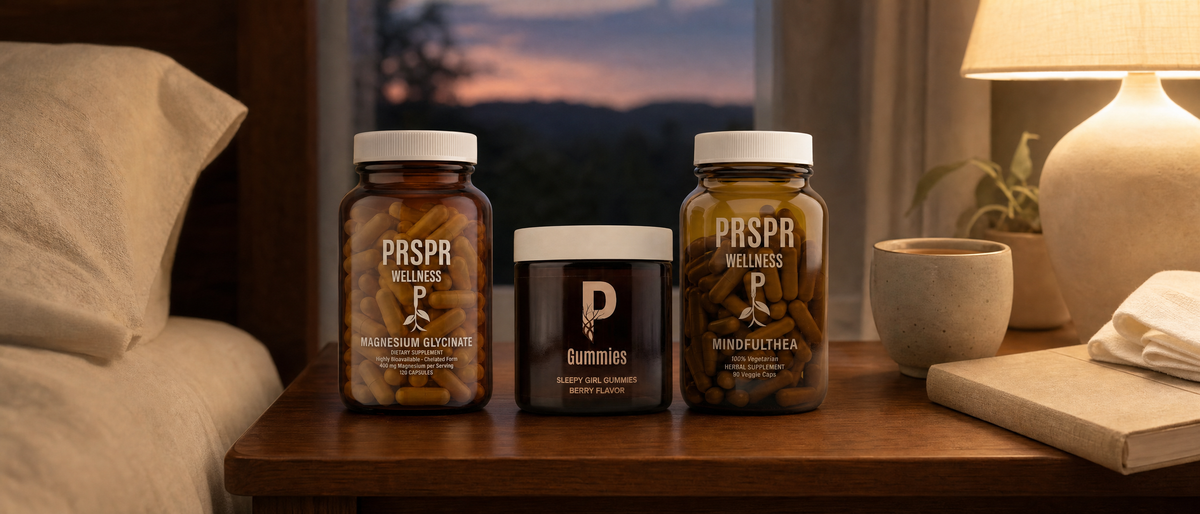
That brings us to our own stack. The Sleep & Recovery Stack is a stack of three products: Sleepy Girl Gummies, Magnesium Glycinate and MindfulThea (L-Theanine). That is how the listing describes it, and that is the description we stand behind.
If you want the backstory on how two of those bottles ended up side by side, our piece on pairing magnesium and L-theanine covers it, and our explainer on where L-theanine comes from starts with the teacup.
What we will add in our own voice is how it is made. Each product in the stack is manufactured in a GMP-certified facility and third-party batch tested, so what's on the label is what's in the bottle.
To see the full stack and its current availability, open the Sleep & Recovery Stack product page, browse the rest of our bundles, or take the build-your-stack quiz to see how everything we carry fits together.
Answer all five questions to unlock a clear wellness plan made around your goal, schedule, preferred supplement format, and biggest roadblock.
Get clarity on what matters most right now.
See the product and routine connected to your goal.
Simple next steps you can use right away.
Pick the one you would fix first if you could.
This helps us make the guide easier to follow.
Consistency beats the “perfect” routine you never follow.
Be honest. We’re building something you’ll actually use.
Your guide will include one simple way around it.
Answer two more questions to unlock your product starting point, five-step plan, two-week routine, and one practical tip for your biggest roadblock.
Enter your details to open your five-step plan.
Verified PRSPR customer reviews
Expires when you close this page
*Your personal credit for completing the quiz. It's applied automatically at checkout on one-time purchases and expires when the timer runs out.
View full product detailsEverything in your plan, together — one add to cart.
Expires when you close this page
*Your personal credit for completing the quiz. It's applied automatically at checkout on one-time purchases and expires when the timer runs out.
View full product details Mind vocabulary
What is cognition? You have probably seen the word "cognitive" printed on a label, in a headline, or in a product name, and kept scrolling. It is o...
 Biology vocabulary
What is metabolism? You see the word on labels, in gym talk and in nutrition headlines, almost always used as if it were a single setting. Read eno...
 Sleep vocabulary
What are sleep cycles? You hear the phrase on podcasts, see it on sleep trackers, and read it in articles that assume you already know what it mean...