
◎
Get clear
Get clarity on what matters most right now.

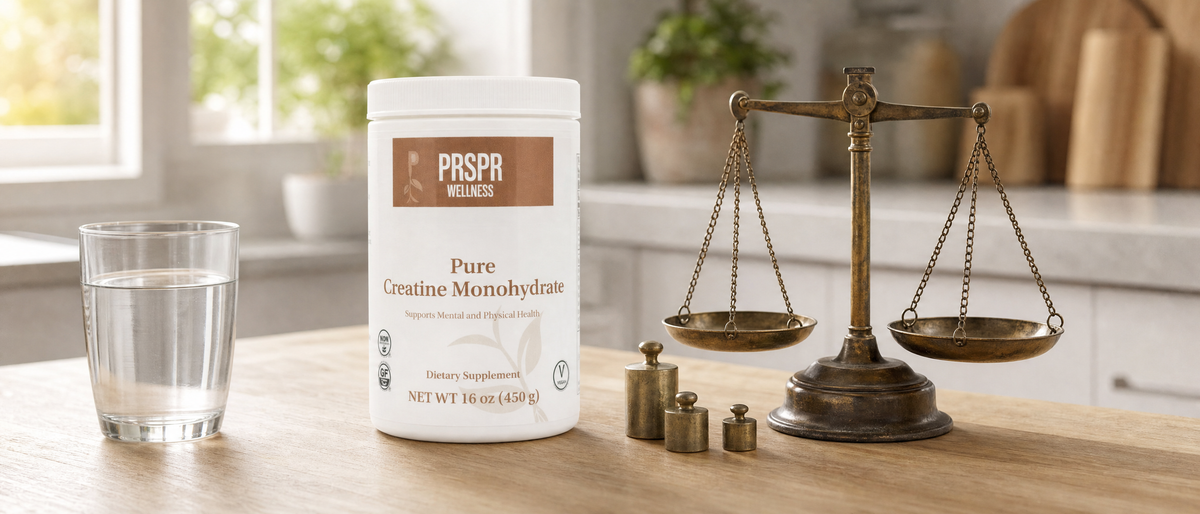
A 16 oz cup of coffee and a 16 oz container of powder share a number and almost nothing else. One is measured by volume, the other by weight, and the search bar shows that plenty of people sense the gap. "16 oz to grams" and "16 oz in ml" both made this week's list of searches, and they are two different questions wearing the same two characters.
This piece sorts them out. Two ounces, two tables, and every conversion factor taken from the National Institute of Standards and Technology (NIST), specifically NIST Handbook 44, Appendix C, and NIST Special Publication 811.
Here is what the search data looked like. According to Google Trends, for searches in the US over the past seven days related to the seed term "16 oz," the top related queries included "16 oz how many cups" at 52, "how much is 16 oz" at 36, "16 oz in cups" at 34, "how many cups is 16 oz" at 33, "how many cups in 16 oz" at 24, "16 oz to lbs" at 14, "16 oz in ml" at 11, "16 oz to grams" at 10 and "16 oz in grams" at 9.
A note on those numbers. Google Trends scores are relative within the seed term, not absolute search counts. A query scored 52 is searched more than one scored 9 inside the same topic, but neither number tells you how many people searched.
Read together, the list splits cleanly in two. The cups and millilitre questions are about volume. The pounds and grams questions are about weight. "How much is 16 oz" sits in the middle, because the honest answer starts with another question: which ounce?
NIST Handbook 44, Appendix C, the federal reference titled "General Tables of Units of Measurement," does not treat the ounce as one unit. It lists the avoirdupois ounce in its table of avoirdupois units of mass, where 16 ounces equal 1 pound. It lists the fluid ounce in its tables of liquid volume, where 16 fluid ounces equal 1 pint and 128 fluid ounces equal 1 gallon of 231 cubic inches.
So the avoirdupois ounce measures how heavy something is. The fluid ounce measures how much space a liquid takes up. They share a name and, in the US system, they both happen to come 16 to a larger unit. That coincidence is most of the confusion.
The odd spelling has a history. According to the Online Etymology Dictionary, avoirdupois is a 1650s misspelling of the Middle English avoir-de-peise, the Norman form of Old French avoir de pois, "goods of weight." The same dictionary says the oldest sense in English was goods sold by weight, dating to the early 14th century, and that from the late 15th century the word named a system of weights in which 1 pound equals 16 ounces, a system it says was introduced into England from Bayonne. In other words, the name has always meant weight.
Most packages and recipes do not print the word avoirdupois. Handbook 44 covers that case directly. In its notes on mass units, NIST says that when the term "avoirdupois" does not appear with a measurement in ounces, the value is "understood to represent the avoirdupois unit." For liquids it goes the other way: the handbook says the word "fluid" or the abbreviation "fl" should be used when a unit of liquid measure needs to be told apart.
That gives a simple reading rule. "16 oz" on its own is, by NIST's convention, a weight. "16 fl oz" is a volume. NIST Special Publication 811 adds that in commercial and everyday use, "weight is usually used as a synonym for mass," which is why a scale reading and a weight ounce describe the same thing.
With the two ounces separated, every search on the list has a clean answer. Here is each one, with the source and the arithmetic.
Handbook 44's avoirdupois table states 16 ounces = 1 pound. So 16 oz by weight is exactly 1 lb. Nothing to round.
Handbook 44 lists 1 avoirdupois pound as 453.592 37 grams and marks that figure as exact. Since 16 oz is a pound, 16 oz in grams is 453.592 37 g, or about 453.6 g for everyday use. Working from the single ounce gives the same result: the handbook's mass table lists 1 avoirdupois ounce as 28.349 523 125 grams, and 16 times that is 453.592 37. NIST Special Publication 811 rounds the same ounce to 28.349 52 grams.
This one only works for the fluid ounce. Handbook 44 lists 1 fluid ounce as 29.573 53 millilitres and 1 liquid pint, which is 16 fluid ounces, as 473.176 5 millilitres. So 16 fl oz is about 473 mL. NIST Special Publication 811 gives the same fluid ounce factor, 29.573 53 mL. There is no millilitre answer for 16 oz by weight without knowing what the substance is.
Again, fluid ounces only. Handbook 44 defines "1 cup, measuring" as 8 fluid ounces, exactly, which is half a liquid pint, and gives it as about 237 millilitres. So 16 fl oz is 2 cups. NIST Special Publication 811 lists the US cup at 236.588 2 millilitres, which matches the handbook's rounded 237.
| Search | Which ounce | Answer | Source |
|---|---|---|---|
| 16 oz to lbs | Weight (avoirdupois) | 1 lb | NIST Handbook 44 |
| 16 oz to grams | Weight (avoirdupois) | 453.592 37 g (about 453.6 g) | NIST Handbook 44 |
| 16 oz in ml | Volume (US fluid) | about 473 mL | NIST Handbook 44, SP 811 |
| 16 oz in cups | Volume (US fluid) | 2 cups | NIST Handbook 44 |
Here is the part the cups searches skip. Converting weight into volume needs one more number: density. NIST Special Publication 811 defines mass density as the "mass of a substance divided by its volume." Every material has its own. A weight ounce and a fluid ounce only line up once you know which material you are measuring.
Handbook 44 shows the idea in its notes on British units. It says the Imperial gallon is defined as the volume of 10 avoirdupois pounds of water under specified conditions. That is a weight-to-volume link, but only for one named substance, water, at stated conditions. Swap the water for anything else and the link breaks.
So when someone types "how many cups in 16 oz" about a liquid measured in fluid ounces, the answer is 2. When the 16 oz is a weight, as on a container of powder, the number of cups depends on that particular powder's density, and two powders of equal weight can fill different volumes. A pound of one is not the same number of cups as a pound of another.
That is why we read the Pure Creatine Monohydrate 16oz name the way NIST reads an unlabelled ounce: as a weight: 16 avoirdupois ounces, which Handbook 44's table makes one pound. Turning that into cups would need a density figure for that specific material, and this piece covers the units only. If you want the gram side of creatine labels, we walked through it in how to read grams and counts on a creatine label.
We think the search list looks the way it does because two letters do a lot of work and are easy to miss. "16 oz" and "16 fl oz" look almost identical on a label. One is a pound. The other is two cups. Same number, different question.
Our habit is simple. Look for "fl" first. If it is there, you are reading volume, and cups and millilitres are fair game. If it is not, you are reading weight, and the conversions that make sense are pounds and grams. A kitchen scale reads the second kind directly. A measuring cup reads the first. Anyone stirring a powder into a 16 fl oz mug, the situation behind our piece on creatine in hot coffee, is holding both units at once: a weight in the scoop and a volume in the mug.
Labels print the same quantity in two systems more often than people realise. We saw the same pattern with vitamin D, where IU and mcg describe one amount in two units. Once you know which unit a number is in, the conversion stops being a guess.
Plain units are not a lesser version of the science. They are the part everyone can check.
This post grew out of the product name itself. Pure Creatine Monohydrate 16oz is a single-ingredient dietary supplement made with creatine monohydrate, according to its listing, and it is listed at $49.99. The 16oz in the name is the number this week's searches were circling.
Like everything we carry, it is made in a GMP-certified facility and third-party batch tested, so what's on the label is what's in the container. You can see it alongside the rest of the range in our Vitamins & Supplements collection.
If you want to read the full listing for yourself, see Pure Creatine Monohydrate 16oz at PRSPR.
It depends on which ounce. By weight, NIST Handbook 44 says 16 ounces equal 1 pound, which the handbook puts at 453.592 37 grams. By volume, 16 fluid ounces equal 1 liquid pint, about 473 millilitres per the handbook.
For 16 fluid ounces, 2 cups, since Handbook 44 defines a measuring cup as 8 fluid ounces. For 16 oz by weight, there is no single answer; it depends on the density of the material.
About 453.6 grams. Handbook 44 gives 1 avoirdupois pound, which is 16 ounces, as 453.592 37 grams.
For fluid ounces, about 473 millilitres. Handbook 44 lists 1 liquid pint, which is 16 fluid ounces, as 473.176 5 millilitres.
Answer all five questions to unlock a clear wellness plan made around your goal, schedule, preferred supplement format, and biggest roadblock.
Get clarity on what matters most right now.
See the product and routine connected to your goal.
Simple next steps you can use right away.
Pick the one you would fix first if you could.
This helps us make the guide easier to follow.
Consistency beats the “perfect” routine you never follow.
Be honest. We’re building something you’ll actually use.
Your guide will include one simple way around it.
Answer two more questions to unlock your product starting point, five-step plan, two-week routine, and one practical tip for your biggest roadblock.
Enter your details to open your five-step plan.
Verified PRSPR customer reviews
Expires when you close this page
*Your personal credit for completing the quiz. It's applied automatically at checkout on one-time purchases and expires when the timer runs out.
View full product detailsEverything in your plan, together — one add to cart.
Expires when you close this page
*Your personal credit for completing the quiz. It's applied automatically at checkout on one-time purchases and expires when the timer runs out.
View full product details Mind vocabulary
What is cognition? You have probably seen the word "cognitive" printed on a label, in a headline, or in a product name, and kept scrolling. It is o...
 Biology vocabulary
What is metabolism? You see the word on labels, in gym talk and in nutrition headlines, almost always used as if it were a single setting. Read eno...
 Sleep vocabulary
What are sleep cycles? You hear the phrase on podcasts, see it on sleep trackers, and read it in articles that assume you already know what it mean...