
◎
Get clear
Get clarity on what matters most right now.

How long do keratin treatments last is up 140 percent in search this week, and what is a brazilian blowout is up 130 percent right behind it. Underneath those two, keratin hair is sitting at a volume score of 100, keratin treatment at 98, keratin treatment hair at 42 and what is keratin at 31.
The smaller numbers are the tell. Keratin protein sits at 11. What is keratin treatment and what is keratin for hair are both at 7, and "is keratin protein," typed exactly like that, is at 6. People are hearing one word used for two very different things and trying to work out which one they are reading about.
They are right to be confused, because keratin genuinely names two things. One is a protein that animals, including you, are partly built from. The other is a service you book at a salon. This article takes them in that order, then explains how the name of the first ended up on the price list of the second.
The fastest-rising search, how long those salon results hold, is one we are leaving to the people who do the work. That is a question for a licensed stylist. A related search that keeps climbing, is a keratin treatment good for your hair, is one for a stylist or a board-certified dermatologist rather than for a company that sells supplements.
Keratin is a family of tough, fibrous structural proteins. A 2024 review of keratin published in the journal Polymers describes it as the core constituent of hard animal tissues, listing feathers, wool, hooves, horns, claws and beaks among the materials essentially made of it.
So when someone types "is keratin protein," the plain answer is yes. Keratin is not a vitamin, a mineral or an oil. It is a protein, and a structural one: the stuff a structure is made of, the way timber is the stuff of a house frame.
The word is much older than the salon. According to the same review, keratin was in use around 1850 as the name for the hard, insoluble material that animal horns are made of, taken from the Greek keras, horn. Every time you read keratin on a salon menu, you are reading a word coined for horn.
Scientists split keratins into two broad groups by structure. Alpha-keratin is the mammal form, and the review lists it as the primary component of hair, nails, wool, hooves, horns and the stratum corneum, the outermost layer of skin. Beta-keratin is mainly the bird form, the main constituent of feathers, beaks and claws.
That is the literal answer to what is keratin for hair. The strand growing out of your scalp is made primarily of alpha-keratin, the same class of protein as a sheep's fleece and a horse's hoof. What holds that protein together is chemistry: the review describes disulfide bonds, links between sulfur atoms, running through the keratin structure at several levels and underpinning its mechanical stability.
The second meaning of the word is a booking. A keratin treatment is a salon smoothing service, and Cleveland Clinic's overview of keratin lays out the steps in order. The stylist washes the hair with a special shampoo and towel-dries it, applies a liquid keratin solution in sections, blow-dries the hair, and then seals the solution in with a flat iron set to a high temperature.
Notice what is being described. It is not the protein growing out of anyone's scalp. It is a product applied to hair that has already grown, followed by heat. Keratin treatment hair, at 42, and what is keratin treatment, at 7, are both people trying to find exactly that distinction between the fiber and the service.
So what is a Brazilian blowout? On a salon menu it is another smoothing service in the same family: a liquid solution worked through the hair and then sealed in with heat. The U.S. Food and Drug Administration describes hair smoothing products in general in those same two steps, a smoothing solution applied to the hair followed by a heat treatment that seals it in.
Salons usually list the two as separate services with separate prices. What neither menu name tells you is which product is in the bowl. The service name is a category. The product's own ingredient panel is the specification, and it is a fair thing to ask your stylist to show you before an appointment.
How long either result holds, and whether a given service suits a given head of hair, sit with the stylist doing the work, or with a dermatologist if the question is about your scalp.
The route from horn to salon menu is shorter than it looks. The service is named for what is in the bottle. Cleveland Clinic's description calls the product a liquid keratin solution, and the 2024 Polymers review notes that keratin peptides in cosmetics are one of the few high-value uses of keratin that have made it out of the laboratory and into real products. The protein in the biology textbook and the word on the price list are connected by an ingredient.
That is why keratin hair, the biggest term this week, is such a slippery search. Some of the people typing it want to know what hair is made of. Others want to know what happens in the salon chair. Both groups type the same two words, and the words themselves do not say which meaning is wanted.
It also explains why the word travels so well. Keratin is a real, specific protein with a clean scientific definition, which makes it a credible name to put on a service or a bottle. But a word that is precise in a textbook is not a specification on a menu. "Keratin" on a price list names a category of service. It does not tell you what else is in the solution, how much keratin is in it, or what form that keratin takes.
The same reading habit works on any label. When one scientific word is doing the naming, look for the panel underneath it. We made a similar point about category words in hair, skin and nails as a shelf label rather than an ingredient, and walked through the clinical vocabulary people meet when they start reading about hair in our hair-cycle glossary.
We think keratin is one of the most useful words in hair care to learn properly, precisely because it gets used so loosely.
It is a protein with a clean definition: a fibrous structural protein, named in the nineteenth century after horn, split by scientists into alpha and beta forms. It is also the name of a salon service, and it is an ingredient word on a solution. None of those uses is wrong. The trouble starts only when the three blur into one, and a shopper reads "keratin" on a menu or a front label as if it settled a question it does not settle.
Our rule is simple. When one word is doing that much work, ask which meaning is in front of you. Is it the protein, the service, or an ingredient? Then read the panel, or ask the stylist which product is going on your hair. The word gets you into the conversation. The label finishes it.
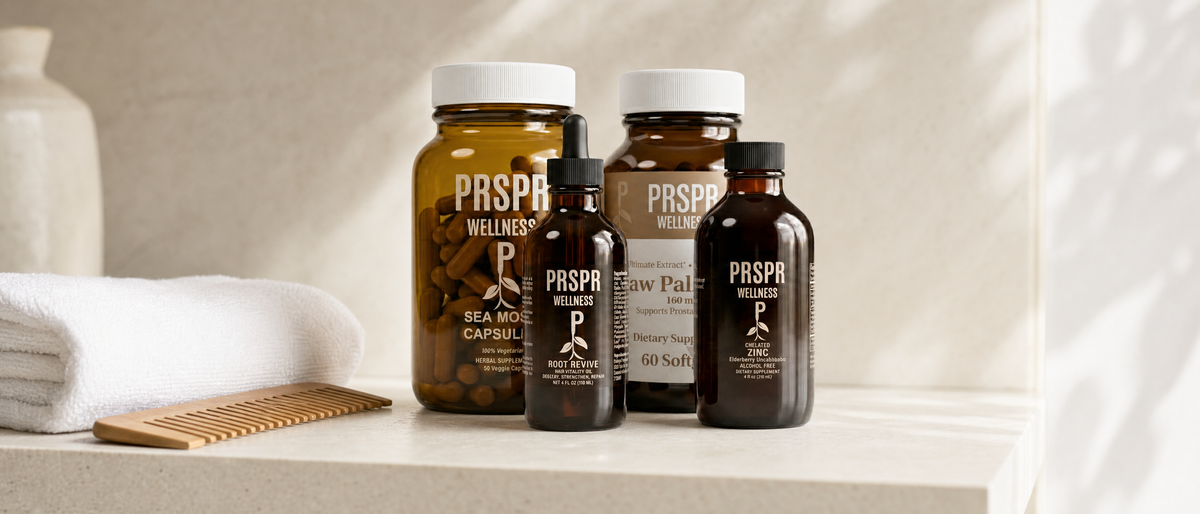
The Hair Renewal Protocol is a four-part hair bundle. The live listing names its components as Root Revive Hair Growth Oil, Saw Palmetto Capsules, Seamoss Capsules and Zinc + Elderberry. That is the composition as the listing states it. Keratin is not one of the four named components, and nothing in the box is a salon service.
What we will add in our own voice is the quality story alone. It is made in a GMP-certified facility and third-party batch tested, so what is on the label is what is in the bottle.
If the vocabulary of the scalp aisle is what brought you here, when the scalp got its own aisle is the natural next read. Otherwise open the Hair Renewal Protocol page and read each component's panel, browse the rest of the bundles collection, or take the build-your-stack quiz.
Answer all five questions to unlock a clear wellness plan made around your goal, schedule, preferred supplement format, and biggest roadblock.
Get clarity on what matters most right now.
See the product and routine connected to your goal.
Simple next steps you can use right away.
Pick the one you would fix first if you could.
This helps us make the guide easier to follow.
Consistency beats the “perfect” routine you never follow.
Be honest. We’re building something you’ll actually use.
Your guide will include one simple way around it.
Answer two more questions to unlock your product starting point, five-step plan, two-week routine, and one practical tip for your biggest roadblock.
Enter your details to open your five-step plan.
Verified PRSPR customer reviews
Expires when you close this page
*Your personal credit for completing the quiz. It's applied automatically at checkout on one-time purchases and expires when the timer runs out.
View full product detailsEverything in your plan, together — one add to cart.
Expires when you close this page
*Your personal credit for completing the quiz. It's applied automatically at checkout on one-time purchases and expires when the timer runs out.
View full product details Mind vocabulary
What is cognition? You have probably seen the word "cognitive" printed on a label, in a headline, or in a product name, and kept scrolling. It is o...
 Biology vocabulary
What is metabolism? You see the word on labels, in gym talk and in nutrition headlines, almost always used as if it were a single setting. Read eno...
 Sleep vocabulary
What are sleep cycles? You hear the phrase on podcasts, see it on sleep trackers, and read it in articles that assume you already know what it mean...