
◎
Get clear
Get clarity on what matters most right now.

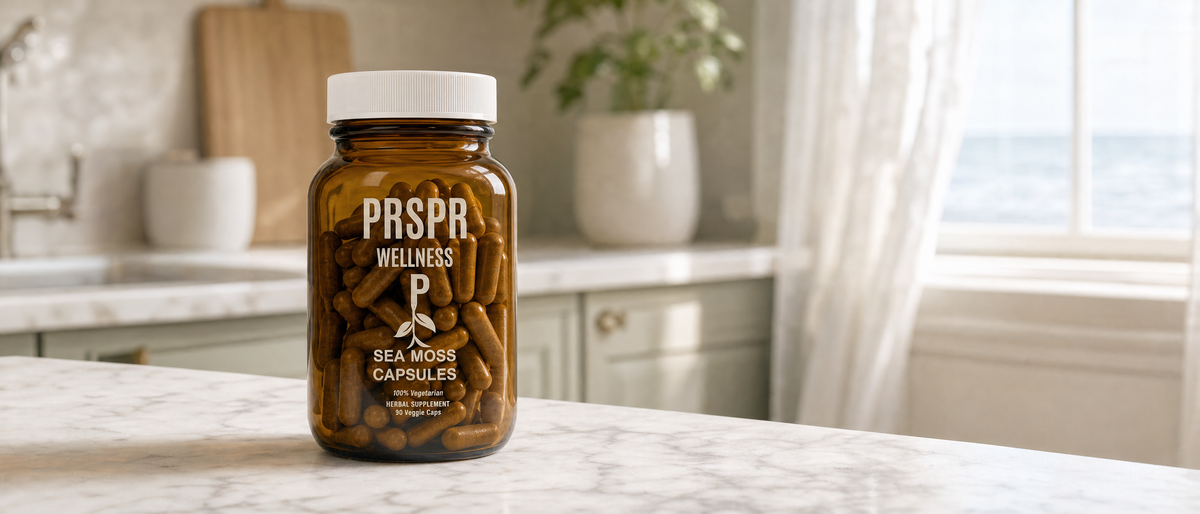
Is sea moss actually good for you. Is Irish sea moss good for you. Can you take sea moss while pregnant. Does sea moss help with hair growth. Those are not our questions; they are yours, or at least the internet's, and this week they are being typed at a remarkable rate. Searches for is Irish sea moss good for you are up 550 percent in United States search this week per the Google Trends data behind this article, with the pregnancy question up 300 percent and the hair growth question up 130 percent right behind it. When a single ingredient generates that many question marks at once, something interesting is happening.
What is happening, as far as the data can show, is that sea moss has moved from curiosity to scrutiny. The steady chart-toppers are still there: sea moss benefits holds the top volume spot, and phrases like irish sea moss health benefits and the power of sea moss keep rising, up 90 percent each this week. But the fastest climbers are all questions, and skeptical ones at that. Is it actually good for you, up 70 percent, is the search of someone who has seen the hype and wants the substance. This article is for that person. We are not going to answer the health questions for you, because honest answers to those belong to your own research and a qualified professional, not to a supplement brand's blog. What we can do is explain what this ingredient actually is, where it comes from, and what the questions people are asking really involve.
Irish sea moss is not a moss. It is a red seaweed, Chondrus crispus, that grows along rocky Atlantic coastlines, including the shores of Ireland that gave it its everyday name. Coastal communities have harvested it for generations, and it has a long history in traditional food practices on both sides of the Atlantic: simmered into drinks and puddings in Ireland, and central to sea moss gel preparations in Caribbean kitchens, where the tradition is arguably strongest today. The organic Irish sea moss label on a jar tells you the species and how it was grown and handled, which matters, because seaweed takes on a lot from the water it grows in.
If you have seen sea moss on an ingredient panel far beyond the supplement aisle, that is not an accident either. A carbohydrate extracted from this same seaweed, carrageenan, has been used to thicken foods for a very long time. The point of that detail is simple: this is an old, well-traveled ingredient with a real history, not something invented for your feed last year.
A lot of this week's searches are about format. Irish sea moss gel is rising, and what is sea moss gel good for is climbing with it. Gel is the traditional preparation: dried sea moss is soaked and blended into a thick paste that keeps in the fridge and gets spooned into smoothies. Capsules are the newer, more convenient route: the seaweed is dried and ground, and a serving is measured for you. Neither format changes what the ingredient is. The choice comes down to how you actually live. If you enjoy the ritual of making and using a gel, that tradition is real and worth enjoying. If you know the jar in the fridge would go slimy before you finished it, a capsule you can take in two seconds is the version of the habit you will actually keep.
Here are the real questions from this week's search data, treated honestly.
Is Irish sea moss good for you? The most-asked question, and the one we will not answer with a yes or no. What we can say: people have eaten this seaweed for generations, the interest in sea moss benefits is real and sustained, and whether it earns a place in your routine is a conversation for you and a qualified healthcare professional, informed by what is actually in the jar you are holding.
Can you take sea moss while pregnant? Up 300 percent this week, and the answer to every supplement question during pregnancy is the same one: ask your doctor or midwife before adding anything. No blog post, ours included, is the right source for that decision.
Does sea moss help with hair growth? We understand why the internet wants this one to be true, and we are not going to claim it. If a brand's marketing answers this question for you with confidence, read their label and ask what evidence sits behind the sentence.
Since the whole theme of this week's searches is scrutiny, here is what scrutiny actually looks like on a sea moss jar, in four checks that take two minutes. First, the species: the label should say Chondrus crispus if it is selling Irish sea moss, because other seaweeds sometimes ride the same marketing wave under the same nickname. Second, the sourcing story: seaweed absorbs its environment, so an organic certification and a brand willing to say where and how its sea moss was grown is telling you something the price tag cannot. Third, the format honesty: a capsule label should tell you how much dried sea moss you get per serving, and a gel should tell you how it was preserved. Fourth, the testing: look for a brand that batch tests its finished product, because with an ocean-grown ingredient the difference between careful and careless handling never shows up in the product photo. None of these checks require expertise. They just require the label to be willing to answer.
The skeptical turn in this week's searches is healthy. An ingredient with centuries of real food tradition behind it does not need inflated promises, and the fastest way to ruin a good ingredient's reputation is to let marketing write checks the seaweed never offered to cash. We would rather tell you exactly what is in the jar and let you decide than borrow a claim from a trend. Ask the annoying questions. Read the panel. And notice which brands welcome that behavior versus which ones try to hurry you past it with lifestyle photography and vague superlatives. An honest jar has nothing to fear from a careful buyer, and a careful buyer is what this week's search data says you already are. That instinct is the power of sea moss week on the internet actually working in your favor.
Our Seamoss Capsules are exactly what the label says: organic Irish moss, Chondrus crispus, in capsule form, made for daily use as part of a balanced lifestyle. No proprietary blend, no mystery ratio. They are produced in a GMP-certified facility and third-party batch tested, so what is on the label is what is in the bottle. The jar is $44.99 for the current listing.
If this week's questions brought you here, do the label-first thing: open the Seamoss Capsules page, read what is in it, and compare it against anything else on your list. The rest of our vitamins and supplements are listed the same plain way.
Answer all five questions to unlock a clear wellness plan made around your goal, schedule, preferred supplement format, and biggest roadblock.
Get clarity on what matters most right now.
See the product and routine connected to your goal.
Simple next steps you can use right away.
Pick the one you would fix first if you could.
This helps us make the guide easier to follow.
Consistency beats the “perfect” routine you never follow.
Be honest. We’re building something you’ll actually use.
Your guide will include one simple way around it.
Answer two more questions to unlock your product starting point, five-step plan, two-week routine, and one practical tip for your biggest roadblock.
Enter your details to open your five-step plan.
Verified PRSPR customer reviews
Expires when you close this page
*Your personal credit for completing the quiz. It's applied automatically at checkout on one-time purchases and expires when the timer runs out.
View full product detailsEverything in your plan, together — one add to cart.
Expires when you close this page
*Your personal credit for completing the quiz. It's applied automatically at checkout on one-time purchases and expires when the timer runs out.
View full product details Electrolytes
Salt is having a comparison week. Searches for celtic sea salt vs himalayan pink salt are up about 70 percent, pink himalayan salt vs table salt is...
 Kids
KidsPick up a box of children's snacks and somewhere on the front there is a number with the letter g after it, next to the word fiber. It looks like o...
 Label Reading
It is printed on the front of a lot of mineral bottles and it is one of the least understood words in the supplement business. Chelated. Search int...