
◎
Get clear
Get clarity on what matters most right now.

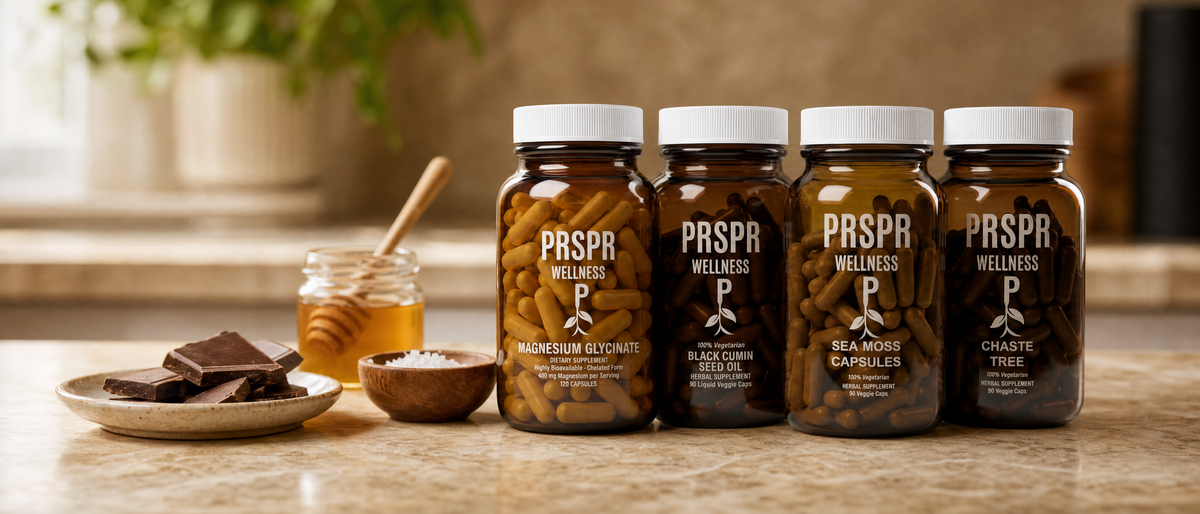
You are fine, you just ate, and then one specific food lands in your head and will not leave. Not food in general. That food. Researchers have a name for that moment, and it is not hunger. Food cravings are one of the most studied everyday eating experiences, and the research gives the word a tighter meaning than casual talk does.
This piece covers what a craving is, how researchers separate it from hunger, and which cravings people report most often in published surveys, with every number tied to the study that produced it.
In Google Trends data for the US over the past 7 days, related searches for the seed term "cravings" included the rising term "most common period cravings," up +90%. Among top related searches, "food cravings" scored 88, followed by "sweet cravings" (30), "period cravings" (29), "craving" (21), "weird cravings" (16), "chocolate cravings" (11), "cravings meaning" (11), and "salt cravings" (10). Top scores are relative interest scaled so the top term in the set equals 100; they are not search counts. A rising percentage shows growth in search interest compared with the prior period. The pattern is plain: people want the meaning of the word, and they want to know which cravings are common.
Start with the word. Vocabulary.com defines a craving as "an intense desire for some particular thing." Two parts of that definition matter: intense, and particular.
The word itself has moved a long way. According to the Online Etymology Dictionary (Etymonline), "crave" comes from Old English crafian, meaning to ask, implore, or demand by right. Etymonline dates the sense "long for, eagerly desire" to about 1400. So if you searched "cravings meaning," the short history is that a word for demanding something became a word for wanting something badly.
Research uses the same two ideas. In their 1991 survey in the journal Appetite, Weingarten and Elston of McMaster University defined a craving as an intense desire to eat a specific food. Andrew Hill of the University of Leeds, in his 2007 review "The psychology of food craving" in the Proceedings of the Nutrition Society, describes food cravings as characterised by their intensity and their specificity. Different decades, same core: strong, and aimed at one thing.
In everyday speech, "I'm craving something" and "I'm hungry" get used interchangeably. Researchers keep them apart.
Adrian Meule's 2020 review "The Psychology of Food Cravings: the Role of Food Deprivation," published in Current Nutrition Reports, draws the line clearly. A craving can usually be satisfied only by a particular food. Hunger, the review notes, can be eased by eating almost any type of food. The review also states that being hungry is not a prerequisite for experiencing a food craving.
That is the useful test. If any food would do, the research word is hunger. If only one food will do, the research word is craving.
Surveys keep landing on the same short list. Here is what named studies found.
Chocolate cravings
Chocolate tops almost every list. In Weingarten and Elston's 1991 questionnaire of more than 1,000 college undergraduates, 97 percent of women and 68 percent of men reported experiencing food cravings, and chocolate was the most frequently craved food, especially among women. Meule's 2020 review summarizes the wider literature the same way: chocolate and chocolate-containing foods are the most frequently craved, followed by other high-calorie sweet and savory foods. A 2025 study by Jun, Joo and Fazzino in Frontiers in Psychology, with 583 participants, found pizza and chocolate were the most commonly craved foods in its item set.
Sweet cravings
Sweet foods sit right behind chocolate. In a 1999 cross-cultural study in Appetite, Zellner and colleagues asked Spanish and American participants to name the food or drink they craved most. Among participants whose answers could be classified, about five in eight women named sweets. Within the American sweet cravers, 44.6 percent of women named chocolate, compared with 17.4 percent of men.
One note on vocabulary. "Sweet" in a craving survey is a taste category that participants pick themselves. It is not the same thing as a nutrition label term. If you want the label side, our explainer on what added sugar means covers how that term is defined.
Salt cravings and savory foods
Salty foods usually appear in research under a wider heading: savory. In the same 1999 Zellner study, about five in eight of the classifiable male cravers named savory foods, the mirror image of the women's sweet result. The 2025 Jun, Joo and Fazzino study reported that savory items were less commonly craved by women and sweets less commonly craved by men. So when someone searches "salt cravings," the closest survey answer is that savory foods are a regular second tier after chocolate and sweets, with a gender split in several studies.
Weird cravings
"Weird cravings" is a real search, and the surveys offer a better answer than you might expect: what counts as normal depends on where you are. Meule's review notes that rice is the most frequently craved food in Japan. Hormes and Rozin's 2010 paper in Addictive Behaviors went further and asked whether other languages even have a word for craving. Based on input from native speakers, only 17 percent of the 20 languages they examined had a word that clearly named the idea. The English word you are searching with is itself less universal than it seems.
The rising search "most common period cravings" asks a survey question, so here are survey answers, reported as findings.
Across these named studies, the most commonly reported period craving is chocolate, and the share of women who report a cycle link varies widely by sample and country.
The phases of the cycle have names of their own; our post on menstrual cycle phase names lists them.
Look again at the 2004 Zellner numbers. The same women gave 40 percent in one format and 60 percent in another. Nothing about the women changed. The question changed.
That is the habit worth keeping. Every craving statistic is a self-report, and the number depends on three things:
Weingarten and Elston flagged the limits of self-report in their own 1991 paper. When you see "most women crave X" in a headline, ask which sample, which question, and which definition.
We like this word because the research gives it edges. A craving is not just wanting food. It is an intense desire for one particular food, and researchers keep it separate from hunger on purpose.
We also think the survey numbers are more interesting than the folklore. Chocolate really does top the lists. The gap between 40 and 60 percent from one study, just by rewording a question, is the best lesson in reading statistics we have seen in a while.
Read the number, then read the question behind it.
This article is a reference on a word and the research behind it, nothing more. The Women's Daily Edge is one of the bundles we carry, and here is what its listing states about the bundle itself:
It is made in a GMP-certified facility and third-party batch tested. You can see it with our other sets in the Bundles collection.
See the Women's Daily Edge at PRSPR
A craving is an intense desire for a particular thing, as Vocabulary.com defines it. In food research, Weingarten and Elston's 1991 survey defined a craving as an intense desire to eat a specific food.
Adrian Meule's 2020 review in Current Nutrition Reports describes a craving as usually satisfied only by a particular food, while hunger can be eased by almost any food. The review also notes that you do not have to be hungry to have a craving.
Chocolate is the most frequently reported, according to Weingarten and Elston's 1991 college survey and Meule's 2020 review, followed by other sweet and savory foods.
In the surveys covered above, chocolate is the craving most often reported in relation to the menstrual cycle. Tomelleri and Grunewald's 1987 study of 83 college women found chocolate foods preferred during menstrual flow, with other food categories showing no significant difference by stage.
Etymonline traces "crave" to Old English crafian, meaning to ask or demand by right, and dates the sense "long for, eagerly desire" to about 1400.
Answer all five questions to unlock a clear wellness plan made around your goal, schedule, preferred supplement format, and biggest roadblock.
Get clarity on what matters most right now.
See the product and routine connected to your goal.
Simple next steps you can use right away.
Pick the one you would fix first if you could.
This helps us make the guide easier to follow.
Consistency beats the “perfect” routine you never follow.
Be honest. We’re building something you’ll actually use.
Your guide will include one simple way around it.
Answer two more questions to unlock your product starting point, five-step plan, two-week routine, and one practical tip for your biggest roadblock.
Enter your details to open your five-step plan.
Verified PRSPR customer reviews
Expires when you close this page
*Your personal credit for completing the quiz. It's applied automatically at checkout on one-time purchases and expires when the timer runs out.
View full product detailsEverything in your plan, together — one add to cart.
Expires when you close this page
*Your personal credit for completing the quiz. It's applied automatically at checkout on one-time purchases and expires when the timer runs out.
View full product details Botany
You pick up a fallen leaf on a walk, or you read a product label that says a botanical comes from a leaf, and you realize you do not have the words...
 Fitness Terms
You have heard it from a coach, a gym sign-up form, a friend who just bought a set of dumbbells. Strength training. Resistance training. Hypertroph...
 Anatomy
You bend an elbow to pick up a cup, turn your head to check a mirror, or flip open an anatomy chapter and meet three long Latin-flavored words in t...