
◎
Get clear
Get clarity on what matters most right now.

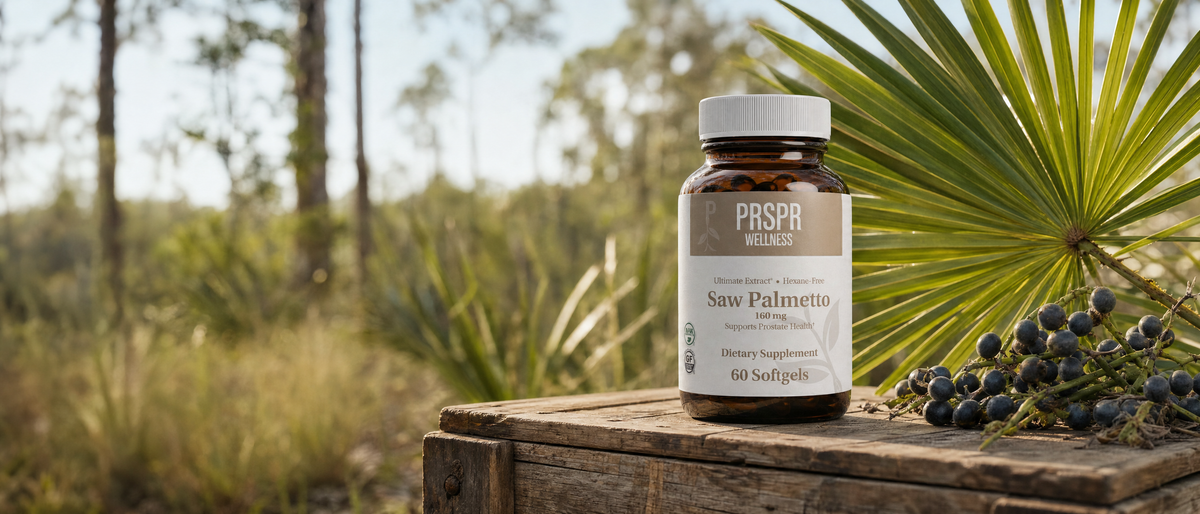
Somebody gets stopped on a Florida roadside with bags of small dark fruit, and the charge is a felony. The fruit is saw palmetto, and "saw palmetto berries illegal" is one of the fastest-climbing searches this week. The surprise is understandable. The plant grows wild across huge stretches of the state and looks like it belongs to nobody. It belongs to somebody. That is the whole story.
The search data says a lot of people just found this out. On Google Trends this week (US, past seven days), searches related to "palmetto berries" include "saw palmetto berries illegal," which is rising +70%, and "saw palmetto berries price per pound," which is marked Breakout. Among the top related searches, "palmetto berries florida" scores 21, "palmetto berries price" scores 7, "why are palmetto berries illegal to pick" scores 5 and "saw palmetto berries price" scores 3. These scores are relative within the seed, so read them as a ranking of what people ask, not a head count.
So this piece is a law-and-trade explainer. We will walk through the actual Florida statutes and the state agency's permit, then look at what named, dated sources have reported the wild berry trade pays per pound. This is a plain-English summary, not advice for your situation. Rules change, so check with the Florida Department of Agriculture and Consumer Services (FDACS) directly before you pick, buy or haul a single bag.
Saw palmetto is Serenoa repens, a low fan palm, and the berry is its fruit. We covered the plant and its naming in our saw palmetto plant explainer. This article is about the fruit as a commodity.
Florida keeps a list of native plants it treats as "commercially exploited." Florida Statutes section 581.185 defines those as native species "subject to being removed in significant numbers from native habitats in the state and sold or transported for sale." The list itself lives in the Florida Administrative Code, in rule 5B-40.0055, the Regulated Plant Index, and Serenoa repens, saw palmetto, appears on its Commercially Exploited Plant List. The rule's history line records an amendment dated July 17, 2018, and the FDACS saw palmetto page states that "effective July 2018," the agency requires a permit to harvest and sell saw palmetto berries in Florida.
The berries are someone's property and a regulated plant at the same time. Two statutes do the work.
Florida Statutes section 581.185(3)(c) makes it unlawful to harvest one or two commercially exploited plants on "the private land of another or on any public land" without the landowner's written permission, and unlawful to harvest three or more without both the landowner's permission and a permit from the department.
In 2024 the Legislature added a section just for this fruit. Florida Statutes section 581.189, titled "Dealing in, buying, transporting, and processing saw palmetto berries," was created by chapter 2024-137, Laws of Florida, according to its history line. An FDACS Office of Agricultural Law Enforcement flyer states the new requirements took effect July 1, 2024.
Under section 581.189(2), it is unlawful to "willfully destroy, harvest, or sell" saw palmetto berries on another person's private land or on any public land without written permission from the landowner and a permit from FDACS. The statute spells out what that written permission must include:
Public land is not a loophole. The same FDACS flyer says it is illegal to harvest from state forests, state park lands, wildlife management areas and water management district lands unless the agency that runs the land authorizes it.
There is a narrow carve-out. Section 581.189(8) says the section does not affect a person who harvests or handles berries from up to two plants for home or personal use.
The FDACS saw palmetto berry harvesting FAQ lays out the mechanics:
On timing, the same FAQ is direct: there is no official harvest season. It says harvest depends on where the plants grow, local rainfall and market conditions, and that generally the season runs from August through November.
The law does not stop at the picker. According to the FDACS FAQ, buyers, transporters and processors do not need their own permit, but they must carry a bill of lading and a copy of the harvester's entire permit, including the permission letters.
Section 581.189(3) adds a records rule for dealers who buy from landowners or harvesters. They must keep the bill of lading, the permit, the landowner's written permission, the seller's contact details, the harvest dates, the weight or volume of berries, and a scan or photocopy of the seller's government-issued photo ID. Section 581.189(3)(b) requires those records to be kept for at least two years from the date the harvest ends.
Florida Statutes section 581.189(6) sets the penalty tiers:
| Conduct (section 581.189) | Classification |
|---|---|
| Harvesting without the landowner's written permission or the FDACS permit, (6)(c) | Felony of the third degree |
| A dealer, transporter or processor buying, selling or possessing unlawfully harvested berries, (6)(e) | Felony of the third degree |
| Presenting a false, forged or altered permit or permission letter, (6)(d) | Felony of the third degree |
| A harvester selling without first showing the permit or permission, (6)(a) | Misdemeanor of the first degree |
| Failing to keep the required records, (6)(b) | Misdemeanor of the first degree |
For scale, Florida Statutes section 775.082 caps a third-degree felony sentence at five years and a first-degree misdemeanor at one year, and section 775.083 sets fines of up to $5,000 and $1,000 for those classes. Section 581.189(5) makes unlawfully harvested berries contraband subject to seizure, and section 581.189(7) makes a convicted person responsible for enforcement costs and for restitution to the landowner equal to the fair market value of the berries.
This is not theoretical. Hoodline reported on September 27, 2026 that three men were held in the Indian River County Jail after deputies found about 350 pounds of freshly cut berries taken from state land along Interstate 95 near Vero Beach.
Now the "saw palmetto berries price per pound" searches. We found no official daily rate. Every figure below is one named outlet's report at one point in time.
| Source and date | Reported price |
|---|---|
| Sustainable Herbs Initiative, describing the 1995 season | Started around $0.10 per pound, moved to $1.00, then reached over $3.00 per pound fresh from the field |
| UF/IFAS News, September 5, 1996 | A landowner-earnings example built on berries at 25 cents a pound |
| TCPalm, updated August 18, 2026, citing FDACS | Up to $8 per pound, depending on demand and seasonal availability |
| Hoodline, September 27, 2026 | $1.60 to $3.00 per pound for raw berries |
Read that table as history, not a quote sheet. The saw palmetto berries price moves with the season, as TCPalm's own phrasing, "depending on demand and seasonal availability," makes clear. And for a landowner weighing an offer, the per-pound figure is only half of it: under section 581.189, the paperwork is what makes the sale lawful.
They are not illegal in every case. Florida Statutes section 581.189 makes it unlawful to harvest them on another person's land or on public land without the landowner's written permission and an FDACS permit. Saw palmetto is listed as a commercially exploited plant in Florida Administrative Code rule 5B-40.0055.
The FDACS FAQ says you still file the permit request and the permission letter form for your own land. Section 581.189(8) separately excludes harvesting from up to two plants for home or personal use.
We think this is one of the better stories in the whole supplement aisle, because it has nothing to do with marketing. A wild fruit became valuable enough that the state had to write down who owns it, who can pick it and what paper has to travel with every bag.
It also explains the question people keep typing. "Why are palmetto berries illegal to pick" sounds like the plant is forbidden. It is not. The permission is the thing. Pick from land you have no right to, and the same berry that fetches a few dollars a pound becomes contraband.
See palmetto on a lot you do not own? Leave it. Own the land and a buyer comes calling? Get the letter and the permit in order first, and confirm the current rules with FDACS yourself.
That brings us to our own bottle. Saw Palmetto is described in its listing as a plant-based dietary supplement made with saw palmetto extract, formulated for convenient daily use. That is how the listing describes it, and that is the description we stand behind. For how shoppers sort this shelf, see how shoppers narrow a saw palmetto search.
What we add in our own voice is how it is made. Saw Palmetto is manufactured in a GMP-certified facility and third-party batch tested, so what's on the label is what's in the bottle.
To read the full listing for yourself, open the Saw Palmetto product page, browse the rest of our vitamins and supplements collection, or take the build-your-stack quiz to see where it fits alongside everything else we carry.
Answer all five questions to unlock a clear wellness plan made around your goal, schedule, preferred supplement format, and biggest roadblock.
Get clarity on what matters most right now.
See the product and routine connected to your goal.
Simple next steps you can use right away.
Pick the one you would fix first if you could.
This helps us make the guide easier to follow.
Consistency beats the “perfect” routine you never follow.
Be honest. We’re building something you’ll actually use.
Your guide will include one simple way around it.
Answer two more questions to unlock your product starting point, five-step plan, two-week routine, and one practical tip for your biggest roadblock.
Enter your details to open your five-step plan.
Verified PRSPR customer reviews
Expires when you close this page
*Your personal credit for completing the quiz. It's applied automatically at checkout on one-time purchases and expires when the timer runs out.
View full product detailsEverything in your plan, together — one add to cart.
Expires when you close this page
*Your personal credit for completing the quiz. It's applied automatically at checkout on one-time purchases and expires when the timer runs out.
View full product details Mind vocabulary
What is cognition? You have probably seen the word "cognitive" printed on a label, in a headline, or in a product name, and kept scrolling. It is o...
 Biology vocabulary
What is metabolism? You see the word on labels, in gym talk and in nutrition headlines, almost always used as if it were a single setting. Read eno...
 Sleep vocabulary
What are sleep cycles? You hear the phrase on podcasts, see it on sleep trackers, and read it in articles that assume you already know what it mean...