
◎
Get clear
Get clarity on what matters most right now.

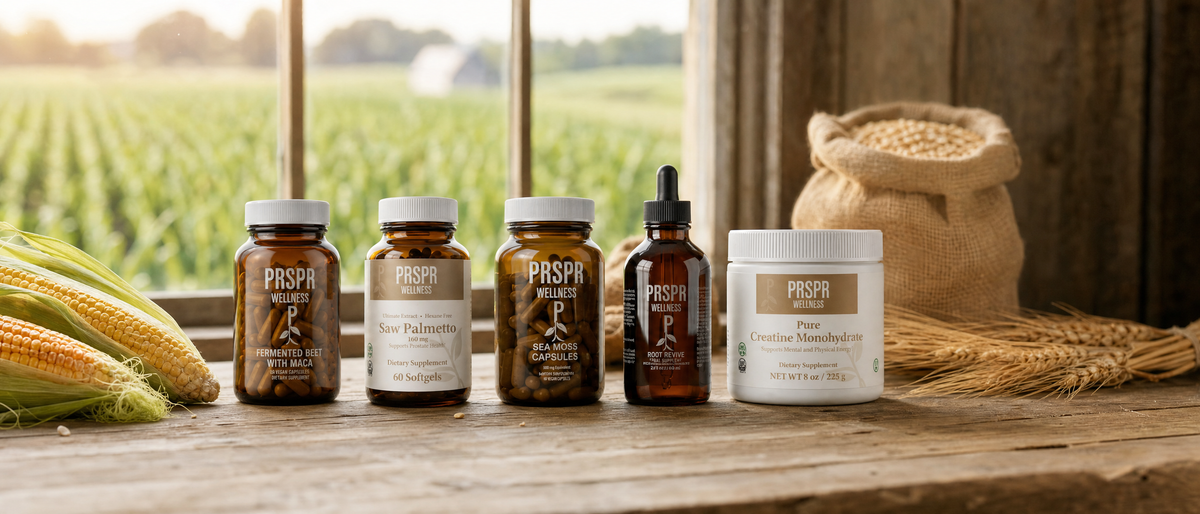
What does non GMO mean? It is printed on cereal boxes, oil bottles, snack bags and supplement labels, and it turns out a lot of people have never been told. What is non GMO carries a volume score of 100 right now, what does non GMO mean 42, GMO vs non GMO 32, non GMO label 14, does non GMO mean organic 13, and non GMO vs organic 12. Two searches are climbing fast: non GMO foods list is up +70%, and non GMO certification is up +50%.
In a row, those searches move from the phrase itself, to what it is compared against, to two practical questions: which foods, and who checks.
That is a vocabulary question, and it has answers in plain federal sources. The FDA explains what "GMO" refers to. The USDA runs the mandatory bioengineered food disclosure and the organic program. So this piece stays on the words: what the term means, what a non-GMO claim does and does not tell you, how it differs from organic, and what verification generally looks like.
We are not going to argue that one kind of food is better for you than another. That is not what a label term tells you, and it is not what these searches are asking.
Start with the three letters. GMO stands for genetically modified organism. The FDA describes "GMO" as the common term consumers and popular media use for foods that have been created through genetic engineering.
The FDA's explainer on GMOs describes genetic engineering as a process: identify the genetic information that gives an organism a desired trait, copy it, insert it into the DNA of another organism, and then grow the new organism.
So the most direct answer to what is non GMO is this: a non-GMO claim says the product, or its ingredients, did not come from organisms made that way. It is a statement about how the source plants or organisms were developed. That is all it is a statement about.
The FDA's guidance on voluntary labeling of foods from genetically engineered plants states that the FDA does not use the terms "genetically modified" or "genetically modified organism" when referring to foods derived from genetically engineered plants. The USDA's consumer page on bioengineered foods says terms like "GMO," "genetically modified organism" and "genetic engineering" are sometimes used interchangeably for marketing purposes, but disclosures under its standard use the term "bioengineered."
So when you are reading an official label disclosure in the United States, the word you are looking for is not GMO. It is bioengineered.
The GMO vs non GMO comparison is easier once you know there are two very different kinds of statements in play.
The first is mandatory. The USDA's Agricultural Marketing Service explains that Congress passed the National Bioengineered Food Disclosure Law in July of 2016, directing USDA to establish a national mandatory standard for disclosing foods that are or may be bioengineered. USDA announced that standard on December 20, 2018.
Under it, the USDA says food manufacturers, importers and certain retailers must disclose bioengineered foods, using text, a symbol, an electronic or digital link, or a text message. The USDA's general FAQ for the standard also states that the law includes dietary supplements in its definition of food, so supplement manufacturers and importers must comply with it too.
The standard's definition is narrow and specific. The USDA's FAQ defines bioengineered foods as those that contain detectable genetic material modified through in vitro recombinant DNA techniques, where the modification could not otherwise be obtained through conventional breeding or found in nature. The same FAQ notes that highly refined foods or ingredients without detectable modified genetic material are not bioengineered foods under the standard.
The second kind of statement is voluntary: a non-GMO label. That is a claim a brand chooses to make about its own product. It sits on the opposite side of the mandatory disclosure, and it is the one this bundle's listing uses.
One line from the USDA's consumer page is worth reading slowly. It says a bioengineered food disclosure is a marketing label, and does not convey any information about the health, safety, or environmental attributes of bioengineered food as compared to non-bioengineered counterparts.
We think the same framing applies in the other direction. A non-GMO label tells you how the ingredients were sourced. It does not grade the food.
The +70% search for a non GMO foods list is a reasonable ask, but the official list runs the other way. The federal government maintains a list of foods that are available in a bioengineered form, not a list of non-GMO foods.
The USDA calls it the List of Bioengineered Foods. Its general FAQ names alfalfa, apple (Arctic varieties), canola, corn, cotton, eggplant (BARI Bt Begun varieties), papaya (ringspot virus-resistant varieties), pineapple (pink fleshed varieties), potato, salmon (AquAdvantage), soybean, summer squash and sugarbeet. The USDA's disclosure page adds that a later rule updated the List by adding sugarcane and amending the entry for squash.
The FDA's page on GMO crops adds scale. It says only a few types of GMO crops are grown in the United States, but some make up a large share of the crop, and that in 2020 GMO soybeans made up 94% of soybeans planted, GMO cotton 96% of cotton planted, and 92% of corn planted was GMO corn.
This is the comparison behind two of the searches on our list, does non GMO mean organic and non GMO vs organic. The short answer to the first is no.
Organic is a federal program with its own rules. The USDA's Agricultural Marketing Service states that the use of genetic engineering, or GMOs, is prohibited in organic products. Its example is concrete: an organic farmer cannot plant GMO seeds, an organic cow cannot eat GMO alfalfa or corn, and an organic soup producer cannot use any GMO ingredients.
So, per the USDA, organic rules exclude GMOs. But organic also covers far more than that one question. The USDA describes a certification process where an operation adopts organic practices, selects a USDA-accredited certifying agent, applies, and is inspected on site before the certifying agent reviews the results.
A non-GMO claim answers one question: were the ingredients genetically engineered? An organic claim answers that question and a long list of others about how the food was grown and handled. That is why the two are not interchangeable, and why a non-GMO product is not automatically organic.
Non GMO certification is the other fast climber on the list, and it is where label reading gets practical.
The federal pages above describe two programs: a mandatory bioengineered disclosure and a certified organic program. Neither of them is a "non-GMO" certification. Non-GMO verification, where it exists, is generally offered by independent third-party programs. In broad terms, those programs publish a standard, review ingredient sourcing records, may require testing of higher risk ingredients, and license a mark the product can display once it qualifies.
That gives you a simple rule for any non-GMO label. If the package shows a named verification mark, you know an outside program checked it against its standard. If it just says "non-GMO," it is the brand's own claim. Both are legitimate things to print. They are just different amounts of information, and it helps to know which one you are reading.
Here is the worked example. The listing for our Men's Vitality Bundle ends with a line called the Clean Formula Promise: vegan and cruelty-free; non-GMO, gluten-free; no artificial colors or preservatives; BPA-free, recyclable packaging.
Run the non-GMO token through everything above. It is a voluntary claim about sourcing. It is not the USDA organic seal, and the listing does not name organic. It is not a third-party verification mark, and the listing does not name one. It is the brand's own statement, sitting in a list of other sourcing and packaging statements.
We took the packaging token in that same line apart in our piece on what BPA-free actually refers to. If you are browsing the whole category, our guide to how the men's supplement category is organized walks the shelf, and our explainer on what sea moss is covers one of the ingredients in this bundle from the botany up.
Non-GMO is a real, specific claim, and it deserves to be read at its actual size.
It tells you how the ingredients were sourced. It does not tell you a product is organic, it does not tell you an outside program checked it, and it is not a grade on the food. When anyone stretches it into more than that, readers lose track of what it means.
We also think "non-GMO" labels would be clearer if they said who, if anyone, verified them. A mark or a named program turns a claim into something you can look up. The listing for our bundle states the claim and names no verifier, and we would rather say that out loud than let the phrase imply more.
So here is the habit we want you to build. When you see non-GMO, ask two questions: compared to what, and says who. Those two questions will sort almost every label on the shelf.
The Men's Vitality Bundle brings together five products: Saw Palmetto, Pure Creatine Monohydrate, Root Revive Hair Growth Oil, Beet & Maca Capsules and Seamoss Capsules. Its listing carries the Clean Formula Promise quoted above: vegan and cruelty-free; non-GMO, gluten-free; no artificial colors or preservatives; BPA-free, recyclable packaging. That is what we say the bundle is.
What we will add in our own voice is how the products in it are made. Each is manufactured in a GMP-certified facility and third-party batch tested, so what is on the label is what is in the bottle. No guessing, no filler, no cutting corners.
If you want to read the whole line for yourself, open the Men's Vitality Bundle page and go through the listing as it is written, browse the rest of our bundles collection, or take the build-your-stack quiz to see where it fits alongside everything else we carry.
Answer all five questions to unlock a clear wellness plan made around your goal, schedule, preferred supplement format, and biggest roadblock.
Get clarity on what matters most right now.
See the product and routine connected to your goal.
Simple next steps you can use right away.
Pick the one you would fix first if you could.
This helps us make the guide easier to follow.
Consistency beats the “perfect” routine you never follow.
Be honest. We’re building something you’ll actually use.
Your guide will include one simple way around it.
Answer two more questions to unlock your product starting point, five-step plan, two-week routine, and one practical tip for your biggest roadblock.
Enter your details to open your five-step plan.
Verified PRSPR customer reviews
Expires when you close this page
*Your personal credit for completing the quiz. It's applied automatically at checkout on one-time purchases and expires when the timer runs out.
View full product detailsEverything in your plan, together — one add to cart.
Expires when you close this page
*Your personal credit for completing the quiz. It's applied automatically at checkout on one-time purchases and expires when the timer runs out.
View full product details Mind vocabulary
What is cognition? You have probably seen the word "cognitive" printed on a label, in a headline, or in a product name, and kept scrolling. It is o...
 Biology vocabulary
What is metabolism? You see the word on labels, in gym talk and in nutrition headlines, almost always used as if it were a single setting. Read eno...
 Sleep vocabulary
What are sleep cycles? You hear the phrase on podcasts, see it on sleep trackers, and read it in articles that assume you already know what it mean...