
◎
Get clear
Get clarity on what matters most right now.

Every ingredient list has one word that stops people. On our electrolyte label that word is D-Ribose, and search agrees. What is d ribose is the fastest climber in this small cluster, up about 40 percent, and it is also the biggest term in it by volume, holding a score of 100. Underneath it sit d ribose benefits at 38 and d ribose supplement at 32.
Compare that to how people search the category around it. What are electrolytes holds 44 and what do electrolytes do holds 38. Those are steady, evergreen, category-level questions. The D-ribose numbers behave differently. They spike, they are dominated by a single what-is query, and they belong to somebody holding a specific package and reading a specific line. That is an ingredient search, and it has a different shape from a category search.
This article is about the word. What D-ribose is as a molecule, why it is on a hydration label at all, and why looking up one ingredient teaches you something a category search never will. It says nothing about what D-ribose does in a body. D ribose benefits is one of the larger searches here, that is an outcome question, and the person to ask is a qualified healthcare professional who knows your situation.
D-ribose is a sugar. Not a sweetener in the culinary sense, and not the sugar in a sugar bowl, but a sugar in the chemical sense: a small carbohydrate molecule. It is a pentose, which means it has five carbon atoms, as against the six in glucose. The D in front of the name is a stereochemistry label. Sugars come in mirror-image pairs, and D and L mark which of the two mirror forms a molecule is. Almost every sugar your biology runs on is the D form, which is why you see that letter so often on ingredient panels and so rarely thought about.
Ribose is not an exotic compound. It is one of the structural pieces of RNA, the R in the acronym, and it appears inside the molecule cells use to move energy around. It occurs naturally in the body and in food. When a supplement lists D-ribose, it is listing a purified, manufactured version of an ordinary biological molecule, usually produced by fermentation of a plant-derived sugar feedstock.
That is the whole definition. It is a five-carbon sugar, it is a structural component of things your cells already build, and it is manufactured for supplement use rather than harvested from anything exotic.
Here is the part that is genuinely useful, and it applies to every label you will ever read.
A category search is a shopping search. What are electrolytes at 44 and what do electrolytes do at 38 are somebody at the start of a decision, working out whether this shelf is for them. Those searches return buying guides, comparisons and roundups, because that is what matches the intent.
An ingredient search is a reading search. What is d ribose at 100 is somebody who has already bought, or is holding the package, and has hit a word they cannot parse. There is no shopping decision left in that query. It wants a definition.
The reason this matters is that the two searches reward completely different sources. A category search will happily send you to a page selling something. An ingredient search sends you to a reference, because a definition is checkable and a ranking is not. If you want to know what is actually in a product, the ingredient searches are the honest route. You take the panel one line at a time, look each word up somewhere that is not trying to sell you the thing, and by the end you know what you are holding.
Most of the lines on an electrolyte panel are minerals: sodium, potassium, chloride, calcium, magnesium, zinc. Those are elements. They have atomic numbers. They appear on the periodic table and their names are not negotiable.
D-ribose is not one of those. Neither is taurine, and neither is L-theanine. Those are organic compounds, which is a different class of thing entirely: molecules built from carbon skeletons rather than single elements. A panel that mixes both is telling you the formula was assembled from two different vocabularies, and the label does not usually flag the switch.
That is the practical reading tip. When you go down an ingredient list, sort each line into element or compound before you do anything else. Elements are minerals and their names will recur across every brand in the category. Compounds are specific molecules and their names will not. The compounds are the lines worth looking up, because they are the lines where formulas actually differ.
Vitamin C is the third kind of entry, a vitamin, which is its own naming convention again, and ConcenTrace concentrated seawater is a fourth: an ingredient named for its source rather than its chemistry. Four naming systems, one panel. Nobody tells you that at the shelf.
We think the unpronounceable line is the best line on any label, and not because of what is in it. It is the best line because it is the one that forces you to stop skimming.
Familiar words on a panel get read as reassurance. You see magnesium, you nod, you move on, and you have learned nothing except that the word was there. An unfamiliar word breaks that. You have to go and find out, and the finding out is where the actual label literacy happens. People who look up one ingredient tend to look up the next one too.
So our advice is to treat D-ribose as an invitation rather than an obstacle. Look it up, then keep going down the panel and look up the next thing you do not recognize. We ran that exercise across a full mineral list in our walkthrough of an electrolyte label, and did the same with the salt line in the pink salt comparison. Same method, different lines.
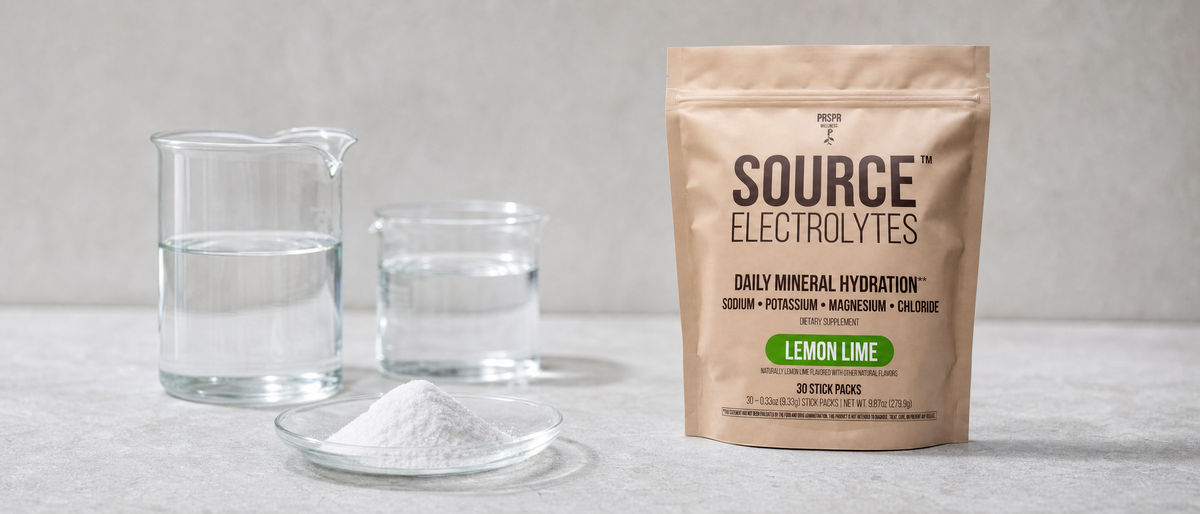
Our Source Electrolytes is a stick-pack drink mix, and D-Ribose is one named line in its formula. The full list on the live listing reads vitamin C, calcium, magnesium, zinc, chloride, sodium, potassium, D-Ribose, taurine, Himalayan pink salt, L-theanine, and ConcenTrace concentrated seawater. No added sugar. It comes in Lemon Lime and Pink Lemonade. Those are composition facts, stated here the way the label states them.
The only thing we will add in our own voice is the quality story. It is made in a GMP-certified facility and third-party batch tested, so what is printed on the stick pack is what is in the stick pack. No guessing, no filler.
If this made you want to read a panel properly, start with the Source Electrolytes page and go down the ingredient list one word at a time. Read the rest of the vitamins and supplements collection the same way, or take the build-your-stack quiz if you would rather start from a routine than from a panel.
What is D-ribose?
A five-carbon sugar, chemically a pentose. It is a structural component of RNA and of the molecule cells use to shuttle energy, it occurs naturally in the body and in food, and the supplement version is manufactured, typically by fermentation.
What are electrolytes?
Minerals that carry an electric charge when dissolved in water. On a supplement panel that generally means sodium, potassium, chloride, calcium and magnesium. The word describes a chemical property the minerals share, not a single ingredient.
What do electrolytes do?
That is a physiology question about how a body works, and it is the kind of question we point at a qualified healthcare professional or a medical reference rather than answering on a product blog.
Answer all five questions to unlock a clear wellness plan made around your goal, schedule, preferred supplement format, and biggest roadblock.
Get clarity on what matters most right now.
See the product and routine connected to your goal.
Simple next steps you can use right away.
Pick the one you would fix first if you could.
This helps us make the guide easier to follow.
Consistency beats the “perfect” routine you never follow.
Be honest. We’re building something you’ll actually use.
Your guide will include one simple way around it.
Answer two more questions to unlock your product starting point, five-step plan, two-week routine, and one practical tip for your biggest roadblock.
Enter your details to open your five-step plan.
Verified PRSPR customer reviews
Expires when you close this page
*Your personal credit for completing the quiz. It's applied automatically at checkout on one-time purchases and expires when the timer runs out.
View full product detailsEverything in your plan, together — one add to cart.
Expires when you close this page
*Your personal credit for completing the quiz. It's applied automatically at checkout on one-time purchases and expires when the timer runs out.
View full product details Mind vocabulary
What is cognition? You have probably seen the word "cognitive" printed on a label, in a headline, or in a product name, and kept scrolling. It is o...
 Biology vocabulary
What is metabolism? You see the word on labels, in gym talk and in nutrition headlines, almost always used as if it were a single setting. Read eno...
 Sleep vocabulary
What are sleep cycles? You hear the phrase on podcasts, see it on sleep trackers, and read it in articles that assume you already know what it mean...