
◎
Get clear
Get clarity on what matters most right now.

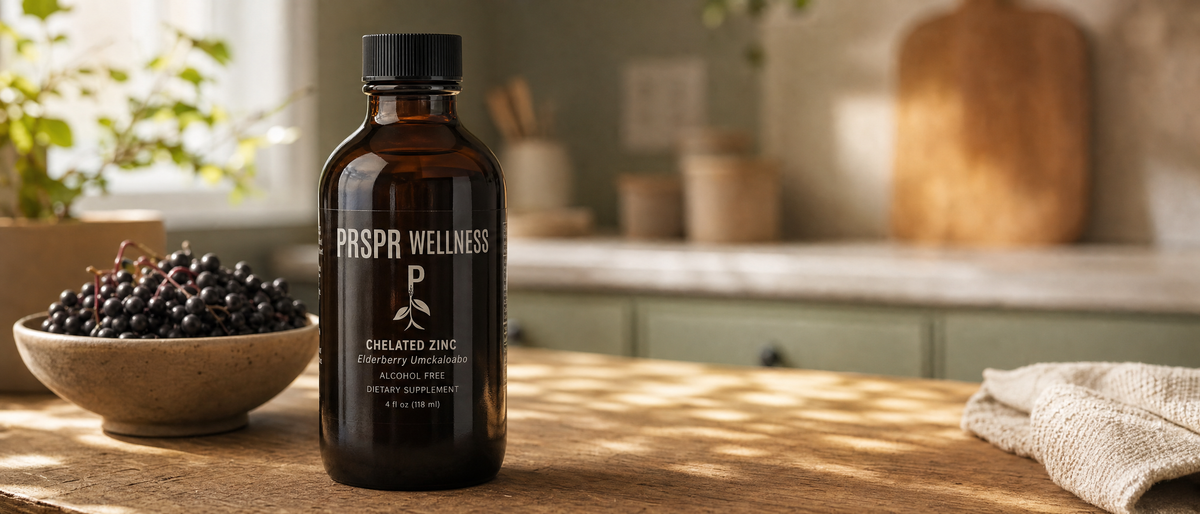
Does elderberry help with a cold. Is elderberry good for colds. What does elderberry do for the body. It is August, summer is technically still on, and yet the internet has already started its winter homework: the cold question cluster around one dark little berry is up between 80 and 150 percent in United States search this week. Add the pantry questions, what is elderberry at the top of the pile and black elderberry right behind it, and you get a picture of a lot of people trying to get ahead of sniffle season early. Meanwhile, over in the mineral aisle, this week's zinc searches produced a genuinely fun fact: echinacea is the fastest riser on the entire zinc-related list, up 250 percent, which tells you how often these ingredients travel together in people's heads.
Since our shelf carries a bottle that combines several of this week's search stars in one formula, the usual disclosure applies double: this article will not tell you whether elderberry, zinc, or anything else prevents, treats, or shortens anything. Every one of those questions belongs to a qualified healthcare professional. What this article will do is introduce the actual ingredients, because they have real histories worth knowing before winter marketing season buries them in promises.
Elderberry is the fruit of the elder tree, most famously Sambucus nigra, the European or black elderberry, which is the species behind most of the black elderberry searches. The berries are small, deeply dark, and inedible raw in any quantity; traditionally they are cooked down, which is why the folk tradition around them is a kitchen tradition: syrups, cordials, preserves, and teas passed through generations across Europe and beyond. Elderberry sits in that long lineage of foods people reached for seasonally, long before anyone could search elderberry benefits, and that folk history, not any modern promise, is why the berry keeps its permanent seat in the cold-season conversation.
Zinc is an essential mineral, meaning your body needs it and cannot make it. The question what foods contain zinc is up 250 percent this week, and it deserves its plain answer: meat, shellfish, legumes, seeds, nuts, dairy, and whole grains are the classic sources. Oysters are the famous overachiever, which is a fact that has launched a thousand trivia nights, but the everyday sources on that list matter more for most kitchens. A regular diet that includes several of them is the unglamorous foundation every mineral conversation should start from, and it costs nothing to check yours against that list before checking any shelf. As with every mineral this blog covers, the plate comes first and the bottle is a supplement to it, in the literal meaning of the word. The rising question how much zinc per day for a woman gets the same referral every dosage question here gets: intake needs vary by person and life stage, and the right number for you is a conversation with a professional, not a search result.
Transparency is the whole game on this blog, so here is our formula, straight from the live listing: chelated zinc combined with a blend of botanical ingredients including elderberry, echinacea, and umckaloabo root. Four names worth knowing. Chelated zinc means the mineral is bound to a partner molecule, the same disclosure-style vocabulary we decoded in our iron and magnesium label guides. Echinacea, this week's surprise search star, is a flowering plant from the North American prairie with its own long history in traditional preparations. Umckaloabo root is the one you have probably never typed: a South African geranium species with a folk history of its own and a name that is simply fun to say. Every ingredient is named because it is in there, and that is the only reason a label should say anything.
Does elderberry help with a cold? Is elderberry good for colds? The two biggest risers, up 150 and 120 percent, and we will not answer either, because a berry blog post is not where cold advice should come from. What we can say: the questions themselves are exactly the right kind to ask, and the right audience for them is a professional, ideally before the season starts rather than mid-sniffle.
What does elderberry do for the body? Same referral, same reason. Notice something about this whole cluster, though: people are asking what things do rather than which brand to buy, and that ordering, understanding before shopping, is precisely the habit this blog exists to encourage.
Why is echinacea rising alongside zinc? We can only report the pattern: the two names travel together in this week's data, up 250 percent on the zinc seed, exactly as they travel together on formula labels like ours. Search behavior often mirrors shelf design, and it is a useful reminder that the aisle teaches people its own vocabulary whether anyone intends it or not.
Can I take elderberry while breastfeeding? Up 90 percent this week, and the one question in the cluster with a truly non-negotiable answer: ask your doctor or midwife before adding any supplement. No exceptions, no blog-post shortcuts, ours included.
The label method for this category is the same five-step read this blog applies everywhere, with one seasonal twist. The steps: every ingredient named in full; amounts stated where the format allows; the serving direction and monthly math; everything else in the bottle accounted for; and third-party batch testing mentioned somewhere you can find it. The twist: check when you are reading. A label read calmly in late summer, the way this week's early searchers are doing, gets your full judgment. The same label read through a January head-cold gets whatever judgment you have left, which is why the smartest thing in this week's data is its timestamp. The people asking elderberry questions in August are doing their shopping brain a favor their winter self will quietly collect on.
Winter wellness marketing is a genre, and every year it gets louder around exactly the searches rising this week. Our advice is the same in August as it is in January: learn the ingredients while it is quiet. A shopper who knows what elderberry actually is, where zinc actually comes from, and how to read a formula panel in September is unbuyable by hype in December. The early questions in this week's data suggest a lot of people have independently reached the same conclusion, and we think they are exactly right.
Our Elderberry w/ Zinc is the formula described above, named ingredient by named ingredient, made for daily use as part of a balanced lifestyle. It is produced in a GMP-certified facility and third-party batch tested, so what is on the label is what is in the bottle. $47.99 on the current listing.
If the early cold-season questions brought you here, do the September-smart thing: open the Elderberry w/ Zinc page, read the four ingredient names for yourself, and take your what-does-it-do questions to someone qualified to answer them, on your schedule rather than the season's. The rest of our vitamins and supplements collection is labeled just as plainly.
Answer all five questions to unlock a clear wellness plan made around your goal, schedule, preferred supplement format, and biggest roadblock.
Get clarity on what matters most right now.
See the product and routine connected to your goal.
Simple next steps you can use right away.
Pick the one you would fix first if you could.
This helps us make the guide easier to follow.
Consistency beats the “perfect” routine you never follow.
Be honest. We’re building something you’ll actually use.
Your guide will include one simple way around it.
Answer two more questions to unlock your product starting point, five-step plan, two-week routine, and one practical tip for your biggest roadblock.
Enter your details to open your five-step plan.
Verified PRSPR customer reviews
Expires when you close this page
*Your personal credit for completing the quiz. It's applied automatically at checkout on one-time purchases and expires when the timer runs out.
View full product detailsEverything in your plan, together — one add to cart.
Expires when you close this page
*Your personal credit for completing the quiz. It's applied automatically at checkout on one-time purchases and expires when the timer runs out.
View full product details Electrolytes
Salt is having a comparison week. Searches for celtic sea salt vs himalayan pink salt are up about 70 percent, pink himalayan salt vs table salt is...
 Kids
KidsPick up a box of children's snacks and somewhere on the front there is a number with the letter g after it, next to the word fiber. It looks like o...
 Label Reading
It is printed on the front of a lot of mineral bottles and it is one of the least understood words in the supplement business. Chelated. Search int...