
◎
Get clear
Get clarity on what matters most right now.

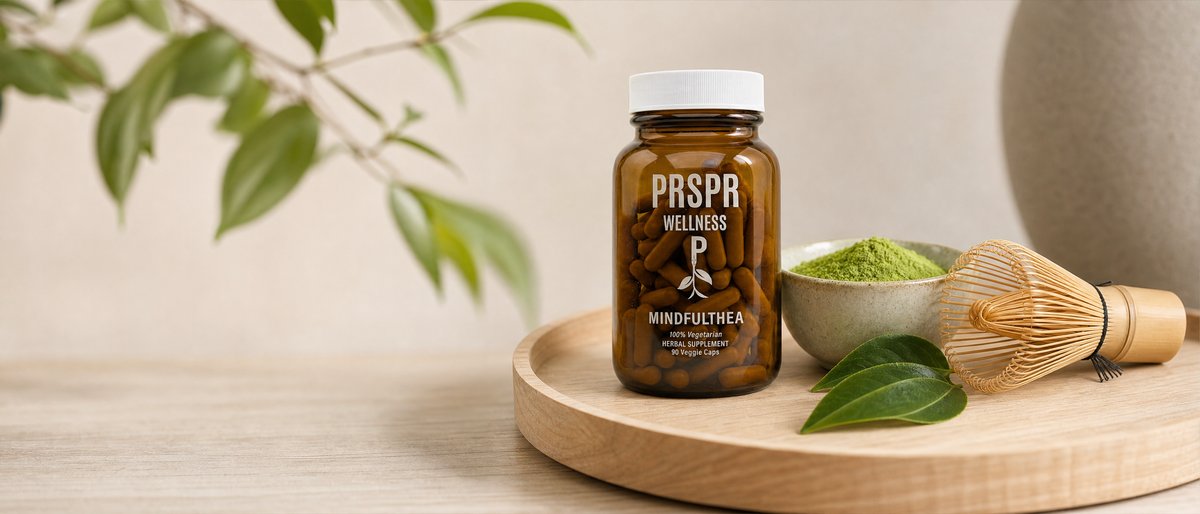
What is matcha made of is up 800 percent in search this week. That is the biggest jump in the whole matcha cluster, and it is a plain question: people are looking at a bright green powder and asking what is actually in the tin.
The questions around it keep circling one word. How much caffeine does matcha have is up 170 percent. What is a matcha latte is up 80 percent. Among the steady top terms, what is matcha carries a volume score of 50, matcha tea 47, matcha caffeine 37, and both caffeine in matcha and matcha have caffeine sit at 16.
So there are two searches happening at once. One is about the product: what matcha is and how it is made. The other is about a single compound inside the leaf. We are going to answer the first one fully, and we are going to answer the second one at the level of chemistry and labels, because that is where the answer actually lives.
Matcha is made of one thing: green tea leaf, ground into a fine powder. That is the whole ingredient list for plain matcha. Encyclopaedia Britannica describes it as a powdered green tea, the kind prepared in the Japanese tea ceremony.
The leaf comes from Camellia sinensis, the tea plant. Every true tea comes from that one species. Green, black, oolong and white tea are not different plants; they are the same plant handled differently after picking. Green tea is the version that is heated soon after harvest, which stops the leaf from oxidizing and keeps it green.
Matcha adds a few steps on top of that. The tea bushes are shaded for a stretch before harvest. The picked leaves are steamed and dried, and the stems and veins are stripped out. What remains is ground, traditionally between stone mills, into a powder fine enough to hang in water instead of sinking.
The name tells you most of this already. Merriam-Webster traces matcha to Japanese words for "rub" or "grind" and "tea." Ground tea. That is a better definition than most product descriptions manage.
So if you are asking what is matcha, the short answer is this: the whole green tea leaf, shaded, steamed, dried, deveined and milled. No separate plant, no flavoring, nothing added, unless the package says otherwise.
This is the difference that explains almost every other question in the cluster.
When you make ordinary green tea, you steep leaves in hot water and then take them out. The leaves go in the bin. What you drink is water that has pulled some compounds out of the leaf. Plenty stays behind in the strainer.
When you make matcha tea, nothing gets thrown away. You whisk the powder into water, usually with a bamboo whisk, until it is suspended and frothy. Then you drink all of it. The leaf is in the cup.
That one change matters for how you read the product. With steeped tea, the package describes leaves you will discard. With matcha, the package describes exactly what you will consume, because the powder and the drink are the same material. Whatever the leaf carries comes along.
A matcha latte follows the same logic. If you have been wondering what is a matcha latte, it is matcha whisked with a small amount of water and then combined with milk, often steamed, sometimes sweetened, sometimes poured over ice. The matcha is still whole ground leaf. The latte part is everything added around it, and that part varies from one cafe menu or canned drink to the next. Read the ingredient list, not the name.
A whole block of this week's matcha terms are caffeine questions. That is not an accident. It follows directly from what matcha is made of.
Start with the simplest one: does matcha have caffeine? Yes. The tea leaf contains caffeine, and matcha is the tea leaf. There is no way to grind a caffeine-containing leaf into powder and end up with a caffeine-free powder.
How much caffeine does matcha have is a harder question, and we are not going to hand you a number. The honest answer is that it depends on the grade, the leaf, how much powder goes into the cup and how it is prepared, and a single figure pulled from a website tells you nothing about the tin in your kitchen. If the amount of caffeine in matcha matters to you, look for it on the package. If the package does not say, that silence is information too.
Here is the part most of those searches miss. Caffeine is not the only compound people associate with the tea leaf. The leaf also carries L-theanine. They grow in the same leaf, they end up in the same cup of matcha, and they get mentioned in the same breath so often that a lot of people assume they are related. They are not.
Put the two side by side and the difference is obvious once you know what family each belongs to.
Different families, different shapes, different names. Sharing a leaf does not make two molecules versions of each other, any more than salt and sugar are related because they share a kitchen shelf.
We have covered the second molecule from several angles already. Our piece on how L-theanine started in a teacup tells its tea-leaf origin story. Our explainer on why theanine is an amino acid outside the standard protein set places it in its chemical family. And if you have seen it printed several different ways, our guide to L-theanine, L theanine and theanine on labels sorts out the spelling.
The practical takeaway for reading a label is simple. Matcha on a package names a whole ground leaf, with every compound that leaf carries, caffeine included. L-theanine on a package names one compound. One word is a food. The other is a single molecule. They answer different questions, and you should read them differently.
Matcha is one of the most honest ingredient lists on the shelf. One plant, one part of the plant, ground up. You can know exactly what it is made of in a single sentence.
What it usually lacks is the number people are clearly searching for. That many caffeine questions in a single week's trends is a loud signal. We think every tin of matcha, and every drink built on it, should print its caffeine content per serving in plain view. People should not have to go searching for a figure that belongs on the package.
And we think it pays to know which kind of word you are reading. A food name like matcha carries the whole leaf with it. A compound name like L-theanine carries exactly one thing. Once you can tell those two apart, a lot of confusing labels stop being confusing. For anything about how caffeine or theanine fits your own body, ask a qualified healthcare professional.
MindfulThea (L-Theanine) is a dietary supplement made with L-theanine. It is formulated for convenient daily use. That is how the listing describes it, and it is the whole of what we say the product is. The listing does not describe it as a tea or a matcha. It names L-theanine, and that is the word to read.
What we will add in our own voice is how it is made. MindfulThea (L-Theanine) is manufactured in a GMP-certified facility and third-party batch tested, so what is on the label is what is in the bottle. No guessing, no filler, no cutting corners.
If you want to see exactly what is in it, go to the source. Open the MindfulThea (L-Theanine) page and read the listing as written, browse the rest of the vitamins and supplements collection, or take the build-your-stack quiz to see how the pieces fit together.
Answer all five questions to unlock a clear wellness plan made around your goal, schedule, preferred supplement format, and biggest roadblock.
Get clarity on what matters most right now.
See the product and routine connected to your goal.
Simple next steps you can use right away.
Pick the one you would fix first if you could.
This helps us make the guide easier to follow.
Consistency beats the “perfect” routine you never follow.
Be honest. We’re building something you’ll actually use.
Your guide will include one simple way around it.
Answer two more questions to unlock your product starting point, five-step plan, two-week routine, and one practical tip for your biggest roadblock.
Enter your details to open your five-step plan.
Verified PRSPR customer reviews
Expires when you close this page
*Your personal credit for completing the quiz. It's applied automatically at checkout on one-time purchases and expires when the timer runs out.
View full product detailsEverything in your plan, together — one add to cart.
Expires when you close this page
*Your personal credit for completing the quiz. It's applied automatically at checkout on one-time purchases and expires when the timer runs out.
View full product details Mind vocabulary
What is cognition? You have probably seen the word "cognitive" printed on a label, in a headline, or in a product name, and kept scrolling. It is o...
 Biology vocabulary
What is metabolism? You see the word on labels, in gym talk and in nutrition headlines, almost always used as if it were a single setting. Read eno...
 Sleep vocabulary
What are sleep cycles? You hear the phrase on podcasts, see it on sleep trackers, and read it in articles that assume you already know what it mean...