
◎
Get clear
Get clarity on what matters most right now.

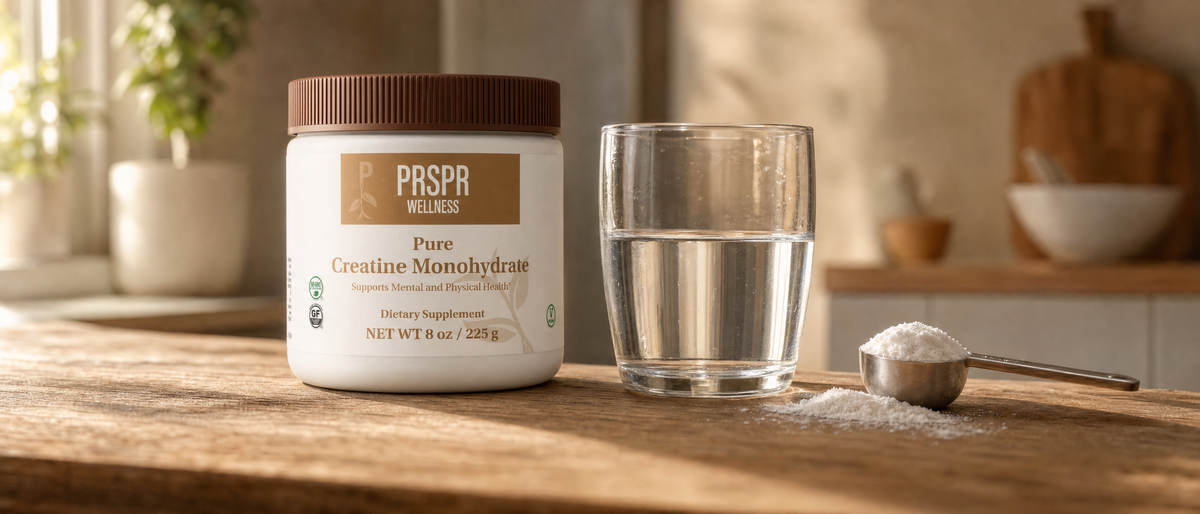
Type "creatine" into Google this week and DHT shows up before you finish typing. A creatine DHT levels study jumped to breakout status in search data, and it dragged a wave of related questions with it: what does creatine do for your body, what are normal creatine levels, is pure creatine monohydrate powder different from the capsule version.
The related numbers show how fast this moved. Pure creatine monohydrate powder searches are up 160% this week. Creatine monohydrate capsules are up 130%. The plain phrase pure creatine monohydrate is up 90% on its own, separate from any single brand name. That's not one term spiking in isolation. That's a whole cluster of people typing versions of the same question inside a few days of each other.
What does creatine do for your body and creatine levels climbed right alongside it, up 50% and 40%. Those are baseline questions, the kind people search when a topic gets loud enough that they realize they've been taking something for years without knowing the fundamentals. None of that curiosity came out of nowhere either. Best creatine monohydrate and monohydrate creatine sit at the top of the steady, everyday search volume, and creatine powder isn't far behind. Creatine has been one of the most searched supplement terms for years running, quietly, in the background, long before this week. This week it just picked up a specific, pointed study attached to it, and the search volume followed.
Creatine occurs naturally, in the body and in foods like red meat and fish, and creatine monohydrate has been sitting on sports nutrition shelves long before this week's search spike ever happened. It's one of the most recognized names in the supplement aisle, the kind of ingredient that shows up in gym bags, protein tubs, and pre-workout blends across every price point, from generic store brands to dedicated supplement lines.
It comes in more than one format, and the search data reflects that split. Some brands sell creatine monohydrate capsules, pre-measured and easy to travel with. Others sell it as a powder, measured out by the scoop and mixed into water or a shake. Both are creatine monohydrate. The difference is how you dose it and carry it, not what the ingredient actually is.
That distinction matters more than it sounds like it should, because a lot of what's labeled "creatine" on a shelf isn't creatine alone. A pre-workout tub might list creatine monohydrate as one line among a dozen others: caffeine, beta-alanine, citrulline, taurine, a handful of blended compounds stacked into the same scoop under one product name. Reading the actual ingredient panel, not just the front label, is the only way to know which one you're holding, and it's a habit worth building whether or not a study is trending this week.
None of this is new information. It's the same ingredient, sitting on the same shelves, that it's been sitting on for years. What changed this week isn't the product. It's how many people suddenly went looking for the label.
That's also why format and brand comparisons like creatine monohydrate capsules versus powder, or a specific store brand next to a dedicated supplement line, are easier to make on a single-ingredient product than on a blend. There's no proprietary ratio hiding behind a trademarked formula name. It's one compound, at a stated amount, whichever tub it comes in.
Here's what's actually happening this week: people are searching a specific study, and search platforms are surfacing the related questions faster than most product labels ever get read. That's the real gap this trend is pointing at. Not whether monohydrate creatine is worth taking. Whether you actually know what's in the product you're taking it from.
That gap is easiest to close when the label has nothing to decode. PRSPR Wellness Pure Creatine Monohydrate lists one ingredient: creatine monohydrate. No blend, no proprietary stack, no six-ingredient panel to cross-reference against a trending headline. When a search moment like this one hits, a single-ingredient label means you're evaluating one thing, not untangling which part of a blend a study is even talking about.
That's the practical difference between a product built around one ingredient and a product built around a formula. A formula asks you to trust a combination of things you may not be able to name. A single ingredient just asks you to read one line, know exactly what it is, and decide from there.
This kind of search-driven confusion isn't unique to creatine. Any time a study or a headline moves fast, whichever products are easiest to identify are the ones people can actually make sense of. A ten-ingredient blend makes that hard by design, whether or not that was the intent. A one-ingredient label doesn't.
We built this brand around one idea: heal at the source, not the symptom, and that starts with knowing exactly what's in the bottle before anything else. A trending search term isn't a reason to panic, and it isn't a reason to shrug it off either. It's a reason to go read the label you already have sitting in your kitchen.
When people search "best creatine monohydrate," most of them aren't actually asking which one works fastest. They're asking which one tells them the truth about what's inside. If a product can't tell you exactly what's in it, in exact amounts, that's the real problem, not the ingredient itself.
That's true whether the search of the week is about DHT, about a different study next month, or about nothing at all. The label should hold up either way. If it needs a trend to get read, that's on the company that made it, not on you for finally asking.
Clear amounts. No guesswork. That's the standard we hold every product to, this one included, trend or no trend.
We'd rather you read a label and move on with your day than come back here every time a new headline shows up. That's the whole reason a single-ingredient product exists in the first place: fewer questions to hold onto, because there's less hiding in the panel to begin with.
PRSPR Wellness Pure Creatine Monohydrate is manufactured in a GMP-certified facility and third-party batch tested, so what's on the label is what's actually in the tub. That's not a marketing line, it's a manufacturing standard: an outside lab checks the batch against the label, separate from us, before it ships.
Each tub holds 225 grams of creatine powder, portioned into 5-gram scoops with the scoop included, 45 servings per tub. One ingredient. One line on the panel. Nothing else to decode, no matter what's trending this week or next.
It sits alongside the rest of our Vitamins & Supplements lineup, all built on the same label-first standard: know what's in it, know how much of it is in there, and skip the rest.
That's the whole point of a single-ingredient product. Less to guess about, less to search for at midnight because a study went viral and nobody trusts the panel in front of them.
Grab the Pure Creatine Monohydrate from PRSPR and read the label for yourself.
Answer all five questions to unlock a clear wellness plan made around your goal, schedule, preferred supplement format, and biggest roadblock.
Get clarity on what matters most right now.
See the product and routine connected to your goal.
Simple next steps you can use right away.
Pick the one you would fix first if you could.
This helps us make the guide easier to follow.
Consistency beats the “perfect” routine you never follow.
Be honest. We’re building something you’ll actually use.
Your guide will include one simple way around it.
Answer two more questions to unlock your product starting point, five-step plan, two-week routine, and one practical tip for your biggest roadblock.
Enter your details to open your five-step plan.
Verified PRSPR customer reviews
Expires when you close this page
*Your personal credit for completing the quiz. It's applied automatically at checkout on one-time purchases and expires when the timer runs out.
View full product detailsEverything in your plan, together — one add to cart.
Expires when you close this page
*Your personal credit for completing the quiz. It's applied automatically at checkout on one-time purchases and expires when the timer runs out.
View full product details Electrolytes
Salt is having a comparison week. Searches for celtic sea salt vs himalayan pink salt are up about 70 percent, pink himalayan salt vs table salt is...
 Kids
KidsPick up a box of children's snacks and somewhere on the front there is a number with the letter g after it, next to the word fiber. It looks like o...
 Label Reading
It is printed on the front of a lot of mineral bottles and it is one of the least understood words in the supplement business. Chelated. Search int...