
◎
Get clear
Get clarity on what matters most right now.

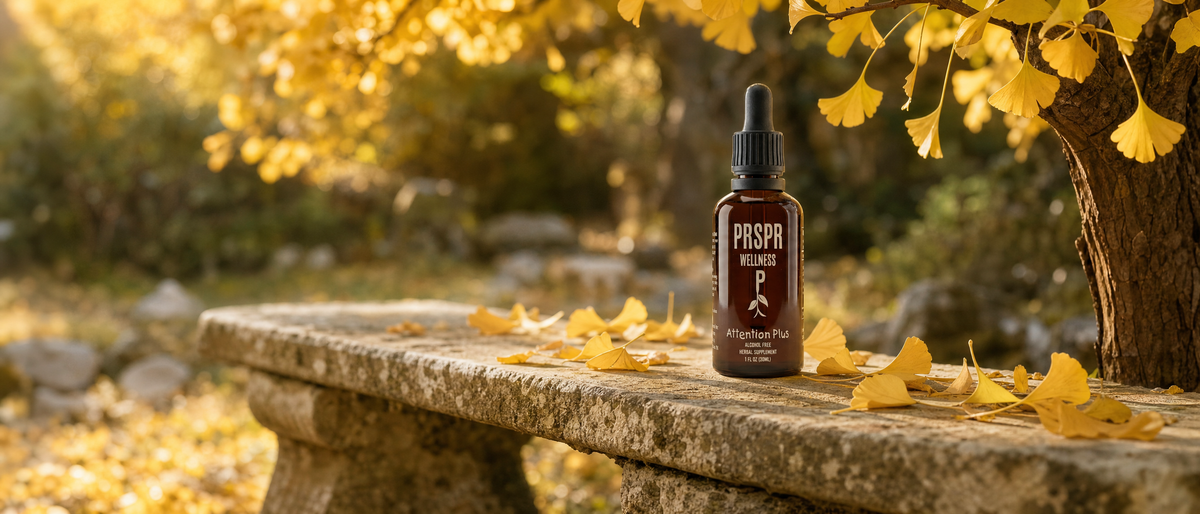
Somebody out there just stepped on a ginkgo seed, and now they want to know about the female ginkgo tree. The searches this week read like a walk under one: ginkgo biloba tree carries a volume score of 97, ginkgo tree leaf 45, ginkgo tree fruit 39, male ginkgo tree 24, oldest ginkgo tree 21, and female ginkgo tree 19.
Look at how those line up. First the whole tree. Then the leaf, which is the part everyone recognizes. Then the fruit, which is the part everyone smells. Then the question that ties the smell to the tree: why is there a male tree and a female tree at all? And finally, how old can one of these things get?
This is a season-shaped search. Ginkgo leaves turn and fall in autumn, and so do the seeds, so every fall a fresh crop of people meets the tree on a sidewalk and goes looking for answers.
We are staying on the botany here: the tree, the leaf, the seed and the history. That is what these searches are asking, and it is answerable from any good arboretum or extension page.
The ginkgo biloba tree is a deciduous tree, which means it drops its leaves every year. The Rowan University Arboretum notes that its leaves turn a vibrant yellow before dropping each fall.
What makes it unusual is how alone it is. Rowan describes Ginkgo biloba as the remaining species of an entire phylum of plants, the Ginkgophyta. Most trees you know have close living relatives. The ginkgo has none in its own group. It is the last one standing.
It is also a gymnosperm. A Biology LibreTexts botany text places ginkgo among the oldest living gymnosperms, and describes its reproductive parts as cones rather than flowers: pollen-producing on one tree, seed-producing on another. That detail explains a lot of what confuses people about its "fruit," which we will get to.
If the name itself trips you up, we covered how to say and spell it in our piece on ginkgo, gotu kola and rhodiola. This one is about the tree the name belongs to.
The ginkgo tree leaf is the easiest leaf in the park to identify. Rowan describes the leaves as fan-shaped and leathery to the touch.
Look closely at the veins and you will see why it stands out. Rowan notes the veins run almost parallel and sometimes split, rather than branching into the net pattern you see on a maple or an oak. Many leaves also carry a notch in the middle of the outer edge, dividing the fan into two lobes. That shape is in the name: the same LibreTexts botany text notes that the species name biloba means two lobes.
Clemson Cooperative Extension's Home and Garden Information Center adds that the fan-shaped leaves resemble the foliage of the maidenhair fern, which is why ginkgo is also called the maidenhair tree.
Once you know the fan shape, you will start spotting ginkgo leaves printed on everything from logos to tableware. It is one of the few leaves that works as a symbol on its own.
Here is the fact at the center of this week's searches. Ginkgo trees come in two kinds.
Rowan explains that ginkgo is dioecious, meaning male and female reproductive structures exist on separate trees. A male ginkgo tree produces pollen. A female ginkgo tree produces ovules, which Rowan notes develop into seeds after fertilization.
So a ginkgo is either one or the other, for life. The difference becomes obvious once the tree is old enough to reproduce and the female starts dropping seeds.
That is why so many planted ginkgoes are male. Harvard's Arnold Arboretum notes that ginkgoes sold commercially are cloned male trees, while the arboretum's own seed-grown ginkgoes came out as a mix of males and females. Clemson's extension page makes the same point: nurseries mainly sell male trees because of what the female tree drops in autumn.
So when a female ginkgo tree turns up on a city street, it is usually either an older planting or a mix-up. Either way, the neighbors find out in the fall.
People search ginkgo tree fruit, and that is the everyday name. Botanically, it is a seed, not a fruit. The Arnold Arboretum and the LibreTexts botany text both describe it the same way: a seed with a fleshy coating. What falls from a female ginkgo is a seed wrapped in that soft outer coat.
The Arnold Arboretum describes it this way: the yellow fleshy seed coat is full of butyric acid, the same chemical that dominates the smell of rancid butter and vomit. That is the famous smell, named plainly. The Rowan University Arboretum adds that the seeds can smell putrid as they decompose on the ground, and LibreTexts notes the foul odor as the fleshy coating decays is why the pollen-producing trees are the more popular choice.
Under that coat, the Arnold Arboretum notes, the embryo is housed inside a very hard shell. So the "fruit" is really two layers around a seed: soft and smelly outside, hard inside.
Whether any part of that seed is safe to handle or eat is a question for a qualified healthcare professional, and we are not going to answer it here. The botany is the part we are covering.
The oldest ginkgo tree question has two answers, depending on whether you mean one tree or the whole line.
The line first. The Rowan University Arboretum calls ginkgo a living fossil and says it has existed largely unchanged for 200 to 250 million years. Clemson's extension page describes it as the only surviving species of a group of trees that existed before dinosaurs.
Clemson also tells the story of how the West met it. Thought to be extinct, the tree was found in Japan in 1691 by the German physician Engelbert Kaempfer, and Clemson says ginkgoes had survived in the mountainous regions of China, where Buddhist monks considered them sacred.
Now one tree. Clemson reports that William Hamilton of Philadelphia brought the first three ginkgoes to Philadelphia in 1785, and that the one he gave to William Bartram can still be seen at Bartram's Garden. Philadelphia Parks and Recreation calls that tree the oldest living ginkgo specimen in North America. Famous old ginkgoes in Asia are a longer story, and we are not going to put an age on any of them without a source we can check.
Here is where the botany meets a label.
When you see "Ginkgo" on a supplement listing, that single word is standing in for this whole tree. The label does not tell you whether the plant material came from a male or female tree, and it does not name the part of the tree it came from unless it says so. One word carries the fan leaf, the two kinds of tree and the whole long lineage.
Our own Attention Plus listing reads that way. It names "a blend of Ginkgo, Gotu Kola, Rhodiola, Licorice Root, and Lobelia." It does not say which part of the ginkgo tree, and we are not going to fill that in by guessing. Read it at the size it is written.
That is the same habit we recommend with every botanical: know the plant behind the name. If you want to go further with the other plants in that blend, our piece on what lobelia is does the same job for another name on the list.
Ginkgo is a tree before it is an ingredient, and it is a remarkable tree.
It is the last of its phylum. It splits into male and female trees. Its leaf is a fan with veins unlike almost anything else in a park. And the female tree drops seeds so pungent that cities plant males on purpose. None of that needs any exaggeration.
We also think botanical labels could say more. "Ginkgo" is a genus and a species and a story, and one word on a panel flattens all of it. That includes our own listing, which names the plant and not the plant part. We would rather point that out ourselves.
So here is the habit. Next time you see ginkgo on a label, picture the fan leaf. Then ask what part of the tree the label is naming.
Attention Plus is, in the listing's own words, "a liquid botanical supplement made with a blend of Ginkgo, Gotu Kola, Rhodiola, Licorice Root, and Lobelia." That is the whole of what we say the product is.
What we will add in our own voice is how it is made. Attention Plus is manufactured in a GMP-certified facility and third-party batch tested, so what's on the label is what's in the bottle. No guessing, no filler.
To see the ginkgo line for yourself, open the Attention Plus page and read the ingredient panel as written, browse the vitamins and supplements collection, or take the build-your-stack quiz to see where it fits alongside everything else we carry.
Answer all five questions to unlock a clear wellness plan made around your goal, schedule, preferred supplement format, and biggest roadblock.
Get clarity on what matters most right now.
See the product and routine connected to your goal.
Simple next steps you can use right away.
Pick the one you would fix first if you could.
This helps us make the guide easier to follow.
Consistency beats the “perfect” routine you never follow.
Be honest. We’re building something you’ll actually use.
Your guide will include one simple way around it.
Answer two more questions to unlock your product starting point, five-step plan, two-week routine, and one practical tip for your biggest roadblock.
Enter your details to open your five-step plan.
Verified PRSPR customer reviews
Expires when you close this page
*Your personal credit for completing the quiz. It's applied automatically at checkout on one-time purchases and expires when the timer runs out.
View full product detailsEverything in your plan, together — one add to cart.
Expires when you close this page
*Your personal credit for completing the quiz. It's applied automatically at checkout on one-time purchases and expires when the timer runs out.
View full product details Mind vocabulary
What is cognition? You have probably seen the word "cognitive" printed on a label, in a headline, or in a product name, and kept scrolling. It is o...
 Biology vocabulary
What is metabolism? You see the word on labels, in gym talk and in nutrition headlines, almost always used as if it were a single setting. Read eno...
 Sleep vocabulary
What are sleep cycles? You hear the phrase on podcasts, see it on sleep trackers, and read it in articles that assume you already know what it mean...