
◎
Get clear
Get clarity on what matters most right now.

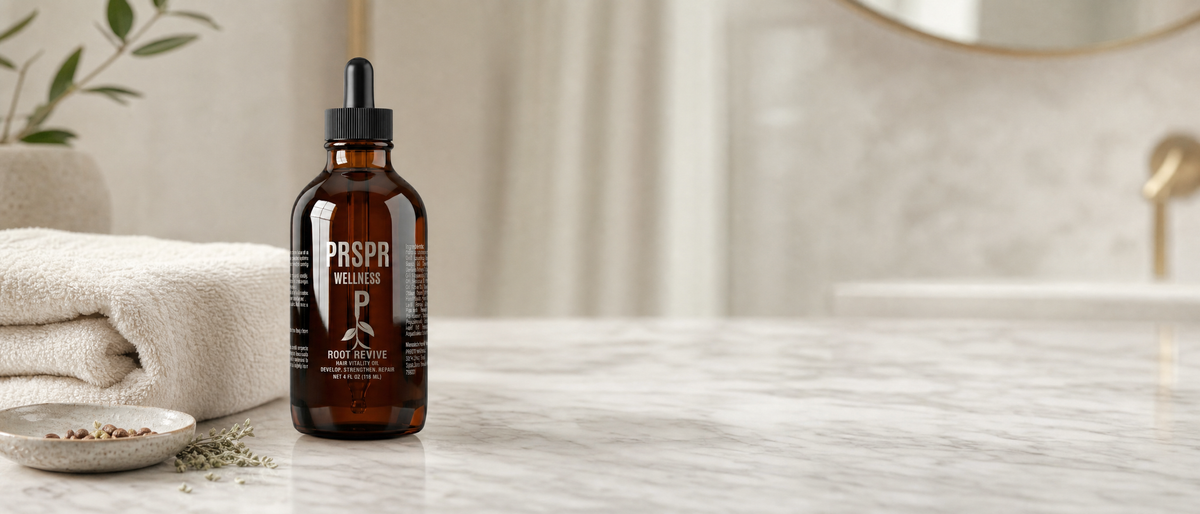
Is castor oil a carrier oil is up 60 percent this week, and it is the most useful question in the whole hair oil cluster. Around it: castor oil for hair growth and oil for hair growth are both maxed out, castor oil hair growth is at 99, castor oil good for hair at 79, is castor oil good for hair at 70, what is castor oil at 34, and two how-to and outcome questions climbing on the rising side.
Nearly all of that traffic is asking what castor oil does. The carrier oil question is asking something different and better: what role castor oil plays inside a formulation. That is a question about how a blend is built, and it has a real answer that does not require anyone to promise anything about hair.
So this is an ingredient article. What castor oil is, what a carrier oil is and whether castor counts as one, and what else is named in a multi-oil blend.
Define the term first, because carrier oil is a piece of formulation vocabulary rather than a botanical category.
A carrier oil is a base oil used to dilute and deliver something else, most often an essential oil. Essential oils are volatile, highly concentrated aromatic extracts, and they are conventionally not applied undiluted. A carrier is the fixed, non-volatile oil they get dispersed into so they can be spread across skin or hair at a workable strength. Sweet almond, jojoba, grapeseed and fractionated coconut are the ones most often named in that role.
So can castor oil serve as one. Technically yes, in that it is a fixed vegetable oil rather than a volatile one, and it is used as a base in plenty of formulations. In practice it is an awkward carrier used alone, and the reason is physical: castor oil is unusually thick and unusually sticky compared with the standard carriers. It has a high viscosity, and it does not spread thinly or absorb quickly the way jojoba or grapeseed do.
Which is why, in most real formulations, castor is blended rather than used neat. Thinner oils cut its viscosity into something spreadable while castor contributes the body. That makes it something between a carrier and an active component of the texture, and it is the honest answer to the search: castor oil can be a carrier oil, and it is usually not used as one on its own.
Castor oil is pressed from the seeds of Ricinus communis, the castor bean plant, a fast-growing member of the spurge family cultivated across tropical and subtropical regions. The seeds are not beans in the botanical sense, and they are strikingly mottled, which is where the plant gets a good deal of its ornamental appeal.
The oil's distinguishing feature is chemical. It is dominated by ricinoleic acid, an unusual fatty acid carrying a hydroxyl group along its chain, and that extra group is what makes castor oil behave so differently from other plant oils. It is why it is thicker, why it is stickier, why it is more soluble in alcohol than most oils, and why it has had such a wide range of industrial uses alongside its cosmetic ones.
It is also an extremely old commodity. Castor oil has been produced for thousands of years, with archaeological evidence of castor seeds in ancient Egyptian contexts, and it has been used as a lamp fuel, a lubricant and a cosmetic base across that entire span.
Two grades turn up on shelves and the difference is worth recognising. Cold pressed castor oil is pale and mild. The darker, stronger-smelling version sold as black castor oil is produced by roasting the seeds before pressing, which is a processing difference rather than a different plant or a different species. Both are castor oil. If a listing does not say which it used, that is a gap in the description rather than a secret.
Here is the bridge, and it is the reason the carrier question matters for reading a label rather than just for trivia.
Root Revive is described on its listing as an organic hair growth oil built from 13 botanical oils and extracts. Thirteen. That is a blend, not a single oil in a bottle, and the moment a product is a blend, the interesting question stops being what does ingredient X do and becomes what is ingredient X doing here.
The botanicals named by name across our live pages include castor, pumpkin seed, black seed, amla and fenugreek. Those five are the ones we can point to on our own listings today, and we are not going to list the remaining components from memory or guesswork, because the live pages are the only source we trust for that.
What that mix tells you, structurally, is that several different kinds of ingredient are present. Pressed seed oils like pumpkin seed and black seed behave one way. Castor behaves as described above. Extracts like amla and fenugreek are a different category again, being plant material prepared into a liquid rather than an oil pressed from a seed. A blend is not thirteen versions of the same thing.
And here is the boundary we are keeping. How to use black seed oil for hair growth is up 50 percent, and it is a how-to question about an outcome, so it goes the same way as the rest. Castor oil for hair growth, oil for hair growth, castor oil good for hair, is castor oil good for hair, what does castor oil do for your hair: five of this week's nine terms are outcome questions about hair, and they are the highest-volume ones. We are not answering them in our own voice. Hair questions overlap with medical ones more often than the category admits, and the right person for them is a qualified healthcare professional. What we can tell you is what the oils are.
One practical consequence of all that viscosity, since it is the most common complaint about this whole category. A thick oil takes longer to work through hair and longer to wash out, and how much a scalp will comfortably take is genuinely individual. That is the sort of thing worth discovering with a small amount on a day you are not going anywhere, rather than on the morning of something.
Blends get sold badly. The usual approach is to pick the most recognisable ingredient, put it on the front, and let the shopper assume the bottle is mostly that. Castor is exactly the kind of name that gets used this way, because it is the one everybody has heard of.
The better habit, for any multi-ingredient product, is to ask what each named component contributes structurally. Is it there for texture. Is it a carrier. Is it an extract rather than an oil. Those questions have factual answers, they are answerable from an ingredient list, and they will tell you more about whether two products are actually comparable than any front-of-bottle promise will. We took the same approach to a different hair shelf in our hair, skin and nails label piece.
Root Revive is an organic hair growth oil, and its listing states plainly that it is built from 13 botanical oils and extracts rather than presenting itself as a single-oil product. It is manufactured in a GMP-certified facility and third-party batch tested, so what is on the label is what is in the bottle.
The listing is on the Root Revive page, and it sits with the rest of that shelf on our hair and skin health page. If you want a hand working out where a topical oil fits alongside anything you already take, take the quiz.
Answer all five questions to unlock a clear wellness plan made around your goal, schedule, preferred supplement format, and biggest roadblock.
Get clarity on what matters most right now.
See the product and routine connected to your goal.
Simple next steps you can use right away.
Pick the one you would fix first if you could.
This helps us make the guide easier to follow.
Consistency beats the “perfect” routine you never follow.
Be honest. We’re building something you’ll actually use.
Your guide will include one simple way around it.
Answer two more questions to unlock your product starting point, five-step plan, two-week routine, and one practical tip for your biggest roadblock.
Enter your details to open your five-step plan.
Verified PRSPR customer reviews
Expires when you close this page
*Your personal credit for completing the quiz. It's applied automatically at checkout on one-time purchases and expires when the timer runs out.
View full product detailsEverything in your plan, together — one add to cart.
Expires when you close this page
*Your personal credit for completing the quiz. It's applied automatically at checkout on one-time purchases and expires when the timer runs out.
View full product details Electrolytes
Salt is having a comparison week. Searches for celtic sea salt vs himalayan pink salt are up about 70 percent, pink himalayan salt vs table salt is...
 Kids
KidsPick up a box of children's snacks and somewhere on the front there is a number with the letter g after it, next to the word fiber. It looks like o...
 Label Reading
It is printed on the front of a lot of mineral bottles and it is one of the least understood words in the supplement business. Chelated. Search int...