
◎
Get clear
Get clarity on what matters most right now.

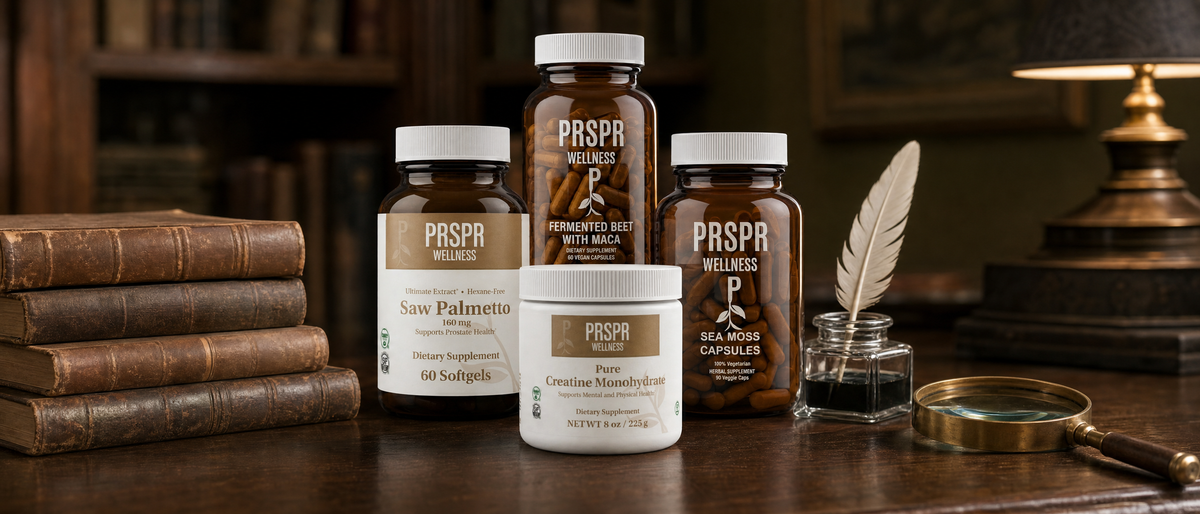
You see the word on a label, a gym wall, or a product name, and it sounds clear until you try to define it. So what is vitality, exactly? It is an English word with a dictionary definition, a Latin root, and a surprisingly long history in science, and once you know that history, the word reads very differently.
In Google Trends data for the US over the past 7 days, top related searches for the seed term "vitality" were led by "what is vitality" with a score of 100, followed by "vitality meaning" (46), "vitality definition" (38), "health and vitality" (27), and "what does vitality mean" (16). Top scores are relative interest scaled so the top term equals 100; they are not search counts. Trends also reports rising queries, where the percentage shows growth in search interest compared with the prior period. In this set, the rising queries were about crossword clues, a gaming team, and shopping, so they are left out here. The pattern in the top list is simple: people want the definition.
According to Merriam-Webster, "vitality" is a noun with two main groups of senses. The first group covers a lively and animated character, and the power of enduring. The second group covers the quality that separates living things from nonliving things, the capacity to live and develop, and, as the dictionary adds, physical or mental vigor, especially when highly developed.
Merriam-Webster dates the first known use of the word to 1592, and it ties that earliest use to the "living versus nonliving" sense. That detail matters. The oldest job of the word was not to describe a mood or a busy schedule. It was to name the difference between something alive and something that is not.
So if you searched "vitality meaning" or "vitality definition," the plain answer is this: the dictionary gives you several related senses, from "the property of being alive" to "liveliness" to "the power to last." Which one a writer means depends on the sentence it sits in.
The Online Etymology Dictionary traces "vitality" to the 1590s and to the Latin vitalitas, which it glosses as "vital force, life." That word is built on the Latin adjective vitalis, "pertaining to life," which comes from vita, "life," a word related to the verb vivere, "to live."
The same root shows up in words you already use. "Vital" comes from vitalis. Even "vitamin" borrows it: according to Dictionary.com and Indiana Public Media's A Moment of Science, the biochemist Casimir Funk coined "vitamine" in 1912 by joining Latin vita with "amine," and the final "e" was dropped around 1920 once researchers found the substances were not all amines.
The Online Etymology Dictionary also records how the meaning of "vitality" spread over time:
| Date | Sense recorded | Source |
|---|---|---|
| 1590s | The display of the capacities for animation or life | Online Etymology Dictionary |
| 1592 | First known use, in the "living versus nonliving" sense | Merriam-Webster |
| By 1844 | Capacity for enduring and performing | Online Etymology Dictionary |
| By 1858 | Figurative sense: activity, animation, liveliness | Online Etymology Dictionary |
Read top to bottom, the table shows the drift. A word that began as a label for being alive picked up a sense about lasting, and then a looser, figurative sense about liveliness. That last sense is the one you hear most often in everyday speech.
The Latin gloss "vital force" points to a real chapter in the history of science. For centuries, many thinkers held a view now called vitalism. Encyclopaedia Britannica describes vitalism as a school of thought, with roots it traces back to Aristotle, holding that life comes from a special force found only in living things. In that view, the force guided an organism's form and development. Britannica sets vitalism against mechanism, the view that living things can be explained by the same physical and chemical laws as everything else.
The Stanford Encyclopedia of Philosophy, in its entry on life, calls vitalism a mixed philosophical position whose followers shared mainly one thing: doubt about a purely mechanical account of life. It notes there were many responses of this kind to Descartes over the following three centuries, with some versions proposing immaterial causes or a special life fluid.
The story you often hear is that vitalism ended in 1828, when the chemist Friedrich Wöhler made urea, an organic compound, from inorganic starting materials. Britannica cites that synthesis as evidence that organic substances could be made without any special life force. The Stanford Encyclopedia adds an important correction: the textbook version is too tidy. The view persisted for decades afterward, and some thinkers kept developing vitalist theories well into the 20th century, including the embryologist Hans Driesch.
How did it finally fade? Britannica says vitalism lost prestige as researchers showed the chemical and physical nature of more and more processes once credited to a vital force. The Stanford Encyclopedia notes that the mechanist and vitalist divide dissipated over the 20th century. Today vitalism is a topic in the history and philosophy of science, not a working idea in biology.
Here is the bridge between the search data and the history. The word on the front of a product carries all of that baggage at once. It started as a term for the line between living and nonliving. It served for a long stretch as the name of a supposed force behind that line. It then softened into a figurative word for liveliness, the sense most people mean when they say a city or a conversation has vitality.
When you see phrases like "health and vitality," you are seeing that softer, figurative English at work: two broad nouns paired for their sound and feel. Neither one is a measurement. Neither one is a line on a Supplement Facts panel. In a product name, "vitality" works the way any name does: it tells you what the maker chose to call the product, and nothing more specific than that.
That is why the question "what does vitality mean" has more than one answer. The dictionary gives several senses. The history adds a scientific idea that has since been set aside. The product shelf adds a name. Knowing which one you are reading is the useful part.
Words like this have company. If you like this kind of explainer, our piece on where the word aphrodisiac comes from traces another term back to its classical root, and our breakdown of stamina vs endurance separates two words that often get used as if they were the same.
We think "vitality" is worth knowing as a word, precisely because it is so broad. It has a Latin root, a dictionary entry with several senses, and a place in the history of science that most people never hear about. That is a lot of meaning packed into four syllables.
We also think a name should be read as a name. When a word like this shows up on a product, the definition lives in the dictionary and the contents live on the label. Read the name for what it is, then turn the package over and read the panel. That habit works for every product on every shelf, including ours.
Our Men’s Vitality Stack - Men's Essentials takes its name from the word this article covers. Here is what the listing states:
It is made in a GMP-certified facility and third-party batch tested. Now you know where the word on its name comes from. You can see it alongside our other sets in Bundles.
See the Men’s Vitality Stack and its current availability at PRSPR
According to Merriam-Webster, vitality is a noun whose senses include the quality that separates living things from nonliving things, the capacity to live and develop, a lively and animated character, and the power of enduring. Its first known use dates to 1592.
In everyday speech it usually carries the figurative sense of liveliness or animation. The Online Etymology Dictionary records that figurative sense by 1858, after an earlier sense about enduring and performing appeared by 1844.
Per the Online Etymology Dictionary, it entered English in the 1590s from the Latin vitalitas, "vital force, life," built on vitalis, "pertaining to life," from vita, "life."
Encyclopaedia Britannica describes vitalism as a historical school of thought holding that life comes from a special force found only in living things. The Stanford Encyclopedia of Philosophy notes it persisted for decades after Wöhler's 1828 urea synthesis before the divide faded in the 20th century.
Answer all five questions to unlock a clear wellness plan made around your goal, schedule, preferred supplement format, and biggest roadblock.
Get clarity on what matters most right now.
See the product and routine connected to your goal.
Simple next steps you can use right away.
Pick the one you would fix first if you could.
This helps us make the guide easier to follow.
Consistency beats the “perfect” routine you never follow.
Be honest. We’re building something you’ll actually use.
Your guide will include one simple way around it.
Answer two more questions to unlock your product starting point, five-step plan, two-week routine, and one practical tip for your biggest roadblock.
Enter your details to open your five-step plan.
Verified PRSPR customer reviews
Expires when you close this page
*Your personal credit for completing the quiz. It's applied automatically at checkout on one-time purchases and expires when the timer runs out.
View full product detailsEverything in your plan, together — one add to cart.
Expires when you close this page
*Your personal credit for completing the quiz. It's applied automatically at checkout on one-time purchases and expires when the timer runs out.
View full product details Botany
You pick up a fallen leaf on a walk, or you read a product label that says a botanical comes from a leaf, and you realize you do not have the words...
 Food Science
You are fine, you just ate, and then one specific food lands in your head and will not leave. Not food in general. That food. Researchers have a na...
 Fitness Terms
You have heard it from a coach, a gym sign-up form, a friend who just bought a set of dumbbells. Strength training. Resistance training. Hypertroph...