
◎
Get clear
Get clarity on what matters most right now.

Two products sit next to each other on the same shelf, cost about the same, and are frequently bought by the same person on the same day. One is a liquid in a dropper bottle. The other is a solid in a tin. They are not the same thing and the difference is not subtle once you know what you are looking at.
Search interest in the category is climbing fast. On the volume side, what is beard oil ran at 23 over the past week, oil for beard at 100 and beard balm at 28. On the rising side, best mens beard oil rose 400 percent, how to trim a beard rose 350 percent, should i use beard oil everyday rose 170 percent, how often should you use beard oil rose 100 percent, and what is beard oil used for rose 80 percent.
Look at that list again. Five of the eight are questions, and four of the five are about frequency or definition rather than results. That is a category where people have already decided to buy something and are now trying to work out how to use it.
A beard oil is a blend of liquid oils, and structurally that is all it is. There is a base of carrier oils, which are the plant derived oils that make up most of the volume, and usually a much smaller quantity of aromatic or botanical ingredients. Nothing in it is water based and nothing in it is emulsified, which is why it pours, spreads and absorbs the way it does.
The carrier oils are the same family of ingredient used across the whole topical botanical tradition. Jojoba, argan, sweet almond, grapeseed and castor are the common ones, and they differ from each other in thickness, absorption speed and shelf stability. A formulator choosing between them is choosing a texture and a keeping quality as much as anything else.
That is what beard oil is used for as a product type, and it is the honest limit of what we will say about it. What people are asking with that phrase is a use question, and it is not one we are going to answer with a promise. This is a cosmetic format description, not a statement about what an oil does to hair or skin.
Beard balm at 28 is a solid, and the reason it is a solid is the whole difference between the two products.
A balm is built by adding a wax to an oil base. Beeswax is the traditional choice, candelilla and carnauba are the common plant based alternatives. Wax raises the melting point of the mixture, so at room temperature the product holds its shape in a tin and only becomes spreadable when you warm it between your fingers. Many balms also carry a butter, most often shea or cocoa, which sits between an oil and a wax in consistency and softens the final texture.
So an oil is a liquid that spreads and absorbs. A balm is a semi solid that spreads and stays. That is a difference in physical behaviour, not in marketing, and it is why the two are commonly sold as a pair rather than as alternatives. The person buying both is buying two different physical properties.
The historical order matters too. Wax based dressings for hair and beards are old. Pomades and moustache waxes were standard barbershop stock throughout the nineteenth and early twentieth centuries, at a point when a separate liquid beard oil category did not exist in Western retail. The oil is the newer commercial product of the two, despite feeling like the more traditional one.
Here is the pattern that makes this category unusual, and it is the bridge to the whole point of this piece.
Should i use beard oil everyday. How often should you use beard oil. Both rising sharply, both asking the same thing. Meanwhile how to trim a beard, rising 350 percent, is a technique question, and best mens beard oil, rising 400 percent, is a shopping question that got answered by the brands long ago.
What is almost absent from the rising list is any question about whether the products work. People have accepted the category. What they have not been given is a usage convention, because unlike shampoo, which arrives with decades of shared habit attached, beard grooming products entered mainstream retail recently enough that no default routine came with them. So the questions are procedural.
We are not going to answer them, and we want to be plain about why rather than leaving it as an odd silence. Telling you how often to apply something is guidance, guidance implies an outcome you are working toward, and describing that outcome is not something we will do here. What we can tell you is what is in a bottle and what kind of thing it is. The rest is genuinely yours, and a barber will have better opinions about it than a supplement company will.
The oil and balm distinction is one of the few places in personal care where the product names are actually accurate, and we think that is worth defending.
An oil is called an oil because it is one. A balm is called a balm because wax has been added. Neither name is a coined marketing term and neither one implies a result. Compare that with most of the shelf around them, where the product name is a promise and the format is buried in the small print.
So when a category gets its vocabulary right, use it. Knowing that the difference between those two tins is wax tells you more about which one you want than any amount of front of pack copy will.
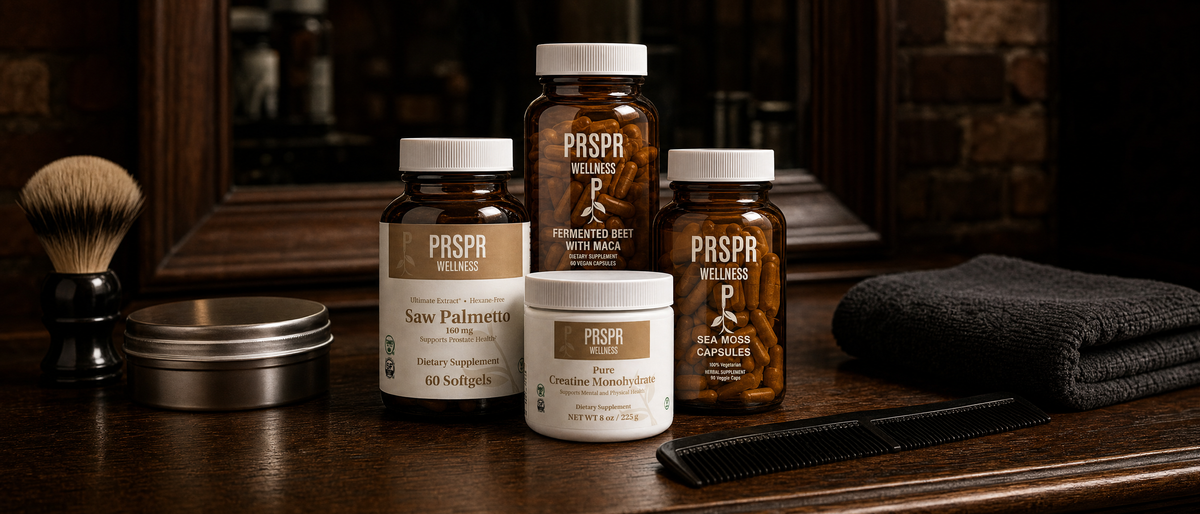
The Men's Vitality Bundle includes Root Revive, which our listing describes as a scalp and beard oil, alongside capsules. It sits in our bundles collection.
What we will state about it is what we can verify. The capsules in the bundle are manufactured in a GMP certified facility and third party batch tested, and every label prints its amounts where you can read them instead of hiding them inside a blend name. Clear amounts, no guesswork. That is the standard and it is the only thing this page is asking you to take on faith.
If you want the ingestible side of the same shelf explained, our piece on what a DHT blocker means as a label phrase covers it. And if you would rather work out what belongs in your routine than assemble it from a trending search, take the quiz and build your own stack.
A blend of liquid plant oils, with a base of carrier oils making up most of the volume and usually a smaller quantity of aromatic or botanical ingredients. It contains no water and is not emulsified, which is why it stays a pourable liquid.
It is a leave on topical grooming product for facial hair and the skin underneath it. We describe the format rather than the effect.
These are the two fastest rising questions in the category and we are deliberately not answering either. A frequency instruction implies a result you are working toward, and describing that result is exactly what we cannot do honestly here. Your barber, or a qualified healthcare professional if skin is the concern, is the better source.
Wax. A balm is an oil base with beeswax or a plant wax added, often with a butter such as shea or cocoa. The wax raises the melting point so the product holds its shape in a tin and softens with warmth.
A grooming one, and it is rising 350 percent alongside the product searches. It belongs with a barber rather than with anything sold in a bottle, and we mention it only because it shows how much of this category's search growth is procedural rather than commercial.
Answer all five questions to unlock a clear wellness plan made around your goal, schedule, preferred supplement format, and biggest roadblock.
Get clarity on what matters most right now.
See the product and routine connected to your goal.
Simple next steps you can use right away.
Pick the one you would fix first if you could.
This helps us make the guide easier to follow.
Consistency beats the “perfect” routine you never follow.
Be honest. We’re building something you’ll actually use.
Your guide will include one simple way around it.
Answer two more questions to unlock your product starting point, five-step plan, two-week routine, and one practical tip for your biggest roadblock.
Enter your details to open your five-step plan.
Verified PRSPR customer reviews
Expires when you close this page
*Your personal credit for completing the quiz. It's applied automatically at checkout on one-time purchases and expires when the timer runs out.
View full product detailsEverything in your plan, together — one add to cart.
Expires when you close this page
*Your personal credit for completing the quiz. It's applied automatically at checkout on one-time purchases and expires when the timer runs out.
View full product details Electrolytes
Salt is having a comparison week. Searches for celtic sea salt vs himalayan pink salt are up about 70 percent, pink himalayan salt vs table salt is...
 Kids
KidsPick up a box of children's snacks and somewhere on the front there is a number with the letter g after it, next to the word fiber. It looks like o...
 Label Reading
It is printed on the front of a lot of mineral bottles and it is one of the least understood words in the supplement business. Chelated. Search int...