
◎
Get clear
Get clarity on what matters most right now.

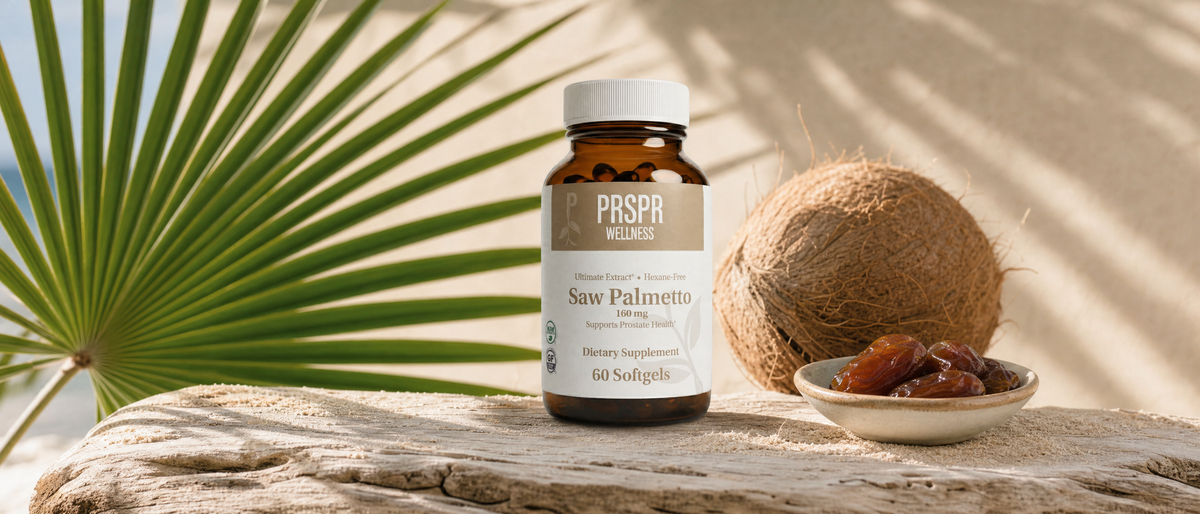
Are palm trees trees? It sounds like a trick question, and the botanical answer is more interesting than a yes or no. A palm tree has a tall trunk, a crown of leaves and a shadow you can stand in. What it does not have is the inner machinery that makes an oak or a pine a tree in the strict botanical sense. Once you see how a palm is built, the rest of the family starts to make sense too.
People are asking. In Google Trends data for the US over the past 7 days, related searches to "palm trees" were led by "are palm trees trees" at the top score of 100, with "palm tree" at 64. On the rising side, "how many species of palm trees are there" and "do all palm trees produce coconuts" both showed as Breakout, and "where can the world's tallest palm trees be found?" was up +850%. These numbers are relative: top scores are interest scaled to 100, and rising figures are growth rates, not search counts. Below are straight answers to those questions, plus where one low, scrubby palm of the US Southeast fits in.
Palms belong to the family Arecaceae, also called Palmae, per Mississippi State University Extension's publication "Palms and Cycads for the Midsouth Landscape." The same publication puts it simply: palms are monocots, like grasses.
That one word does most of the work. Typical trees, the ones we picture in a forest, are dicots or conifers. They carry a vascular cambium, a thin layer that adds new xylem and phloem every year. UF/IFAS Extension's "Palm Morphology and Anatomy" (ENH1212, by T. K. Broschat) states that palms have no lateral meristems or vascular cambium. No cambium means no yearly layers, so a palm trunk has no annual growth rings to count.
Larry Figart, an urban forestry agent with UF/IFAS Extension Duval County, makes the same point in his post "Are palm trees really trees?": palms do not have layers of phloem and xylem with annual rings, and they do not increase in diameter as they get older. His verdict is that palms are closer to tall grasses than they are to trees.
So the honest answer depends on the definition. If "tree" means any tall plant with a single woody looking trunk, a palm qualifies. If it means a plant that builds true wood ring by ring, it does not. Compare a ginkgo, a true tree that builds wood, which we covered in our post on male and female ginkgo trees.
A palm grows from the top, and only from the top. Per UF/IFAS "Palm Morphology and Anatomy," each palm stem has a single apical meristem or growing point, also called the bud or heart.
That design has a hard limit. The same UF/IFAS publication notes that the death of the apical meristem means the death of the stem. In a single-trunk palm, that is the end of the plant. In clustering palms, only the affected stem is lost. An oak can lose its top and sprout new branches. A palm cannot.
Width works differently too. UF/IFAS describes young palms expanding in diameter incrementally with each new leaf, which is why many trunk bases look like a V. Once a palm reaches its maximum diameter, further stem diameter enlargement essentially ceases, and growth goes into height. That is why many mature palm trunks look about the same thickness from just above the base to the crown.
Mississippi State University Extension counts more than 200 genera and around 2,600 species of palms, and notes that at least 100 are endangered. Counts vary by source because botanists keep revising which plants count as separate species, so treat any palm number as a current estimate rather than a fixed total.
So where do palm trees grow naturally? The same MSU publication places palms in warm regions, from tropical to warm-temperate, in both hemispheres, and from wet to dry habitats, seashore to inland, lowlands to mountains. That range explains why you can find native palms at the seashore, at dry inland sites and on mountain slopes.
The fastest way to sort the types of palm trees is by the leaf. UF/IFAS "Palm Morphology and Anatomy" describes three main leaf forms:
| Leaf type | Also called | What it looks like (per UF/IFAS) |
|---|---|---|
| Palmate | Fan | Leaf segments joined side by side for some or most of their length, spreading like a hand |
| Pinnate | Feather | Leaflets entirely separated from each other along a central stalk |
| Costapalmate | Intermediate | Between pinnate and palmate |
The coconut palm is a feather palm. Virginia Tech's dendrology fact sheet for Cocos nucifera lists its leaves as pinnately compound and up to 18 feet long, on a trunk reaching up to 80 feet tall. Saw palmetto, covered below, is a fan palm.
Not every palm is tall. Saw palmetto, Serenoa repens, is a full member of Arecaceae that usually stays low to the ground. The US Forest Service Fire Effects Information System review of the species (Van Deelen, 1991) describes it as a small shrub with creeping, horizontal, many-branched stems, usually 2 to 7 feet tall and occasionally growing as a small tree. Its leaves are fan-shaped, evergreen and about 3 feet wide.
Its home turf is narrow compared with most palms. Per that FEIS review, saw palmetto is endemic to peninsular Florida and the coastal plains from southeastern Louisiana to southern South Carolina, with records in Alabama, Florida, Georgia, Louisiana, Mississippi and South Carolina. Mississippi State University Extension adds that it occurs naturally in southern Mississippi on sandy soils and spreads sideways along the ground, so it needs room over time.
Picture a palm that grows outward instead of up, forming low fan-leaved patches across sandy ground. It is the opposite end of the family from the wax palms of Colombia. For the full profile of the plant itself, read our guide to Serenoa repens.
We like this question because the answer is better than a yes or no. A palm tree is a giant monocot, closer to grass than to oak, building its height from one growing point it can never replace. That one fact explains the missing rings, the steady trunk width and why a damaged crown matters so much.
We also think the palm family is a good reminder that common names and botanical names do not always agree. "Tree," "palm" and even "berry" get used loosely in everyday speech, and botany draws the lines in different places. If that kind of mismatch interests you, see what counts as a berry.
And we like that the same family holds a palm measured at 194 feet tall by Guinness World Records and a shrub you could step over. Saw palmetto is the low one, and it is the one we know best.
We carry Saw Palmetto because this fan palm of the Southeast is a plant people already know and ask about. Ours is a plant-based dietary supplement made with saw palmetto extract, sold in a jar of 60 softgels for $44.99.
It is made in a GMP-certified facility and third-party batch tested, so what's on the label is what's in the bottle. You can find it alongside the rest of our range in the vitamins and supplements collection.
No. Coconuts come from one species, Cocos nucifera. The 2017 GigaScience paper "The genome draft of coconut (Cocos nucifera)" describes it as the only species in the genus Cocos in the family Arecaceae. The other palms produce their own fruits, such as dates, which Mississippi State University Extension also lists as a palm crop.
Yes, from the coconut palm. Mississippi State University Extension states that coconuts and true dates come from palms. The GigaScience genome paper notes the coconut palm is widely cultivated in tropical regions across 93 tropical countries.
In Colombia. Guinness World Records lists the Quindío wax palm, Ceroxylon quindiuense, as the tallest living palm tree, with a specimen measured at 59.2 meters (194 feet 2.7 inches) in 2017 by a team led by Colombian botanist Rodrigo Bernal at La Carbonera in the Tochecito River valley. A 1995 paper in the journal Elaeis by S. Madriñán and R. E. Schultes notes the species has been adopted as Colombia's national tree and grows on Andean slopes at altitudes up to 3,150 meters.
Per Guinness World Records, the next tallest is Roystonea oleracea, reaching up to 57 meters (187 feet), followed by Pigafetta elata and Pigafetta filaris at up to 50 meters (164 feet).
Answer all five questions to unlock a clear wellness plan made around your goal, schedule, preferred supplement format, and biggest roadblock.
Get clarity on what matters most right now.
See the product and routine connected to your goal.
Simple next steps you can use right away.
Pick the one you would fix first if you could.
This helps us make the guide easier to follow.
Consistency beats the “perfect” routine you never follow.
Be honest. We’re building something you’ll actually use.
Your guide will include one simple way around it.
Answer two more questions to unlock your product starting point, five-step plan, two-week routine, and one practical tip for your biggest roadblock.
Enter your details to open your five-step plan.
Verified PRSPR customer reviews
Expires when you close this page
*Your personal credit for completing the quiz. It's applied automatically at checkout on one-time purchases and expires when the timer runs out.
View full product detailsEverything in your plan, together — one add to cart.
Expires when you close this page
*Your personal credit for completing the quiz. It's applied automatically at checkout on one-time purchases and expires when the timer runs out.
View full product details Botany
You pick up a fallen leaf on a walk, or you read a product label that says a botanical comes from a leaf, and you realize you do not have the words...
 Food Science
You are fine, you just ate, and then one specific food lands in your head and will not leave. Not food in general. That food. Researchers have a na...
 Fitness Terms
You have heard it from a coach, a gym sign-up form, a friend who just bought a set of dumbbells. Strength training. Resistance training. Hypertroph...