
◎
Get clear
Get clarity on what matters most right now.

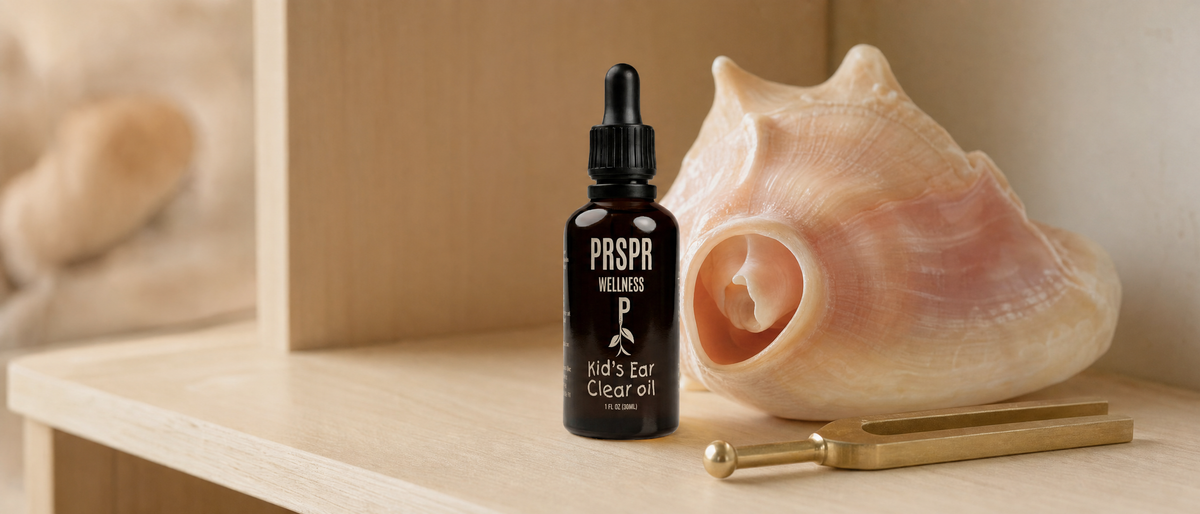
Point to your ear and you are pointing at maybe a third of it. The part you can see, the curved flap on the side of your head, is only the front door. Behind it runs a short tunnel, then a thin drum, then a tiny chamber of bones, then a coiled, fluid-filled maze tucked inside the skull. So what is the ear canal, and where does it lead? It is the tunnel in that list, and it connects the part of your ear you can touch to the parts you never will.
This is a tour for curious parents and the kids who keep asking "but what's in there?" We start at the earlobe and walk inward, one named part at a time.
Plenty of people are taking the same walk right now. On Google Trends this week (US, past seven days, seed term "ear canal"), "what is the ear canal" holds the top relative volume score of 100. "External ear canal" scores 55, "auditory canal" scores 52, "middle ear" scores 44, and "outer ear canal" and "outer ear" each score 41. "Eardrum" and "tympanic membrane" each score 31. Two searches are climbing fast: "how deep is your ear canal" is up +450%, and "semicircular canals" is up +70%. Those scores are relative within the ear canal seed, not absolute search counts.
Anatomy books split the ear into three sections: the outer ear, the middle ear and the inner ear. The open textbook Anatomy and Physiology 2e from OpenStax puts the boundary of the first one plainly: "The auricle, ear canal, and tympanic membrane are often referred to as the external ear."
Think of it like a house. The outer ear is the porch and the hallway. The eardrum is a door at the end of the hall. The middle ear is a small room behind that door. The inner ear is the back of the house, built right into the bone.
The flap on the side of your head has two names. Kenhub, the anatomy learning site, says the external ear has two components: a cartilaginous portion "known as the pinna or auricle" and a bony, tubular segment called the external acoustic meatus. Pinna and auricle are the same thing. Cartilage is the bendy material you can feel when you fold the top of your ear forward.
The word auricle is older than most people guess. According to the Online Etymology Dictionary, "auricle" was first recorded for the external ear in the 1650s, from Latin auricula, a diminutive of auris, "ear." So the formal name for the outer flap is, more or less, "little ear."
That flap is not one smooth shape. Kenhub lists named landmarks on it, including the helix (the curled outer rim), the antihelix, the tragus (the small bump in front of the opening), the concha (the bowl that leads into the canal) and the lobule, the soft lower part most of us call the earlobe. That is where our tour starts.
OpenStax describes the job of all those curves in one line: "The C-shaped curves of the auricle direct sound waves toward the auditory canal." The shape is a funnel.
The ear canal is the tunnel that runs from the bowl of your outer ear to your eardrum. It goes by several names, and the trending searches use most of them. "Ear canal," "outer ear canal," "external ear canal," "auditory canal" and "external auditory canal" all point to the same passage. The formal anatomy name is the external acoustic meatus. "Meatus" is simply the anatomy word for a passage or opening.
The U.S. National Institute on Deafness and Other Communication Disorders (NIDCD) describes it as "a narrow passageway called the ear canal, which leads to the eardrum." OpenStax adds where it goes in the skull: "The canal enters the skull through the external auditory meatus of the temporal bone."
It is not a straight pipe. Kenhub calls the external acoustic meatus "an S-shaped tubular structure," with three named parts along its length. It is also built from two materials. According to Kenhub, the outer third of the canal is cartilage and the inner two-thirds is bone.
The canal is also where earwax lives. If you have ever wondered what that stuff actually is, we covered it in our explainer on what earwax is made of, from its proper name to the glands that produce it.
This is the fastest-climbing search in the group, and it has a measured answer. According to Kenhub, the external acoustic meatus is about 4 cm long when measured from the tragus, and about 2.5 cm when measured from the concha of the auricle. The two numbers start from different landmarks.
Kenhub also splits that length by material: the bony inner two-thirds is about 16 mm long, and the cartilage outer third is about 8 mm. Those are adult reference figures from an anatomy source, not a ruler for anyone's own ear. A child's ear is still growing, and any question about your child's ears belongs with your pediatrician.
At the far end of the canal is a thin, tight sheet of tissue. Kenhub says the external acoustic meatus "is occluded medially by the tympanic membrane." In plain words, the eardrum closes off the inner end of the tunnel.
"Eardrum" and "tympanic membrane" are two names for the same structure, which is why they share a score in the trend data. OpenStax uses both in one sentence: "At the end of the auditory canal is the tympanic membrane, or ear drum, which vibrates after it is struck by sound waves."
The formal name is a drum, too. According to the Online Etymology Dictionary, tympanum came into English in the 1610s for the "drum of the ear," from Latin tympanum, "a hand-drum, timbrel, tambourine," from Greek tympanon, "a kettledrum." The same source says the anatomical sense was introduced by the Italian anatomist Gabriello Fallopio. So "eardrum" and "tympanic membrane" are the same idea in two languages.
Behind the eardrum is the middle ear, a small air-filled space. OpenStax describes it as "a space spanned by three small bones called the ossicles," and names them: the malleus, the incus and the stapes. NIDCD describes the chain in order: the eardrum "sends these vibrations to three tiny bones in the middle ear."
Kids tend to love the names, because each one is a picture:
Hammer, anvil, stirrup. A blacksmith's shop and a horse's saddle, all inside a space behind your eardrum. OpenStax notes that the stapes is attached to the inner ear, which is the last stop on the tour.
OpenStax describes the inner ear as "a bony labyrinth," a series of canals embedded within the temporal bone, with two separate regions: the cochlea and the vestibule.
The cochlea is the hearing part. NIDCD calls it "a snail-shaped structure filled with fluid." The name fits the shape: according to the Online Etymology Dictionary, "cochlea" comes from Latin cochlea, "snail shell," from Greek kokhlias, "snail, screw."
The semicircular canals are the other trending search, up +70%, and they are not part of hearing at all. They belong to the vestibule, the movement-sensing side of the inner ear. OpenStax describes them this way: "The semicircular canals are three ring-like extensions of the vestibule. One is oriented in the horizontal plane, whereas the other two are oriented in the vertical plane."
OpenStax gives a kid-friendly example: the hair cells at the base of each canal respond to rotational movement, "such as turning the head while saying 'no.'" Shake your head and you have just put all three loops to work.
The ear canal is the passage from the outer ear to the eardrum. Its formal anatomy name is the external acoustic meatus, and it is also called the external ear canal, outer ear canal or auditory canal. According to Kenhub, it is S-shaped, with cartilage in its outer third and bone in its inner two-thirds.
According to Kenhub, the external acoustic meatus is about 4 cm long measured from the tragus and about 2.5 cm measured from the concha. These are adult anatomy reference figures. Any "should I" question about a child's ears is one for your pediatrician.
Yes. OpenStax uses the two names together: "the tympanic membrane, or ear drum." Tympanic comes from the Greek word for a drum.
We like the ear because every part has a name that tells you what it looks like. A little ear on the outside. A drum at the end of a tunnel. A hammer, an anvil and a stirrup in a room behind it. A snail shell and three rings in the back. Anatomy did not have to be this friendly, and it is.
So when your kid asks what is in there, you now have the whole tour. Start at the earlobe and keep walking inward. Every stop has a name worth saying out loud.
Kids Ear Clear Oil is, in the words of its listing, an ear oil made with organic, wild-harvested herbs combined with Extra Virgin Olive Oil. According to its label, it comes in a 1 fl oz (30 mL) dropper bottle. If you want the story behind the herbs, read our piece on mullein and its very old job, and for the base, our explainer on what makes olive oil extra virgin.
Kids Ear Clear Oil is manufactured in a GMP-certified facility and third-party batch tested, so what's on the label is what's in the bottle.
You can read the full listing on the Kids Ear Clear Oil product page, or browse it in our Vitamins & Supplements collection. Whether a product is right for your child is a question for your pediatrician. Want to see where it fits with everything else your family uses? Take the PRSPR Wellness quiz and build a stack around your own routine.
Answer all five questions to unlock a clear wellness plan made around your goal, schedule, preferred supplement format, and biggest roadblock.
Get clarity on what matters most right now.
See the product and routine connected to your goal.
Simple next steps you can use right away.
Pick the one you would fix first if you could.
This helps us make the guide easier to follow.
Consistency beats the “perfect” routine you never follow.
Be honest. We’re building something you’ll actually use.
Your guide will include one simple way around it.
Answer two more questions to unlock your product starting point, five-step plan, two-week routine, and one practical tip for your biggest roadblock.
Enter your details to open your five-step plan.
Verified PRSPR customer reviews
Expires when you close this page
*Your personal credit for completing the quiz. It's applied automatically at checkout on one-time purchases and expires when the timer runs out.
View full product detailsEverything in your plan, together — one add to cart.
Expires when you close this page
*Your personal credit for completing the quiz. It's applied automatically at checkout on one-time purchases and expires when the timer runs out.
View full product details Mind vocabulary
What is cognition? You have probably seen the word "cognitive" printed on a label, in a headline, or in a product name, and kept scrolling. It is o...
 Biology vocabulary
What is metabolism? You see the word on labels, in gym talk and in nutrition headlines, almost always used as if it were a single setting. Read eno...
 Sleep vocabulary
What are sleep cycles? You hear the phrase on podcasts, see it on sleep trackers, and read it in articles that assume you already know what it mean...