
◎
Get clear
Get clarity on what matters most right now.

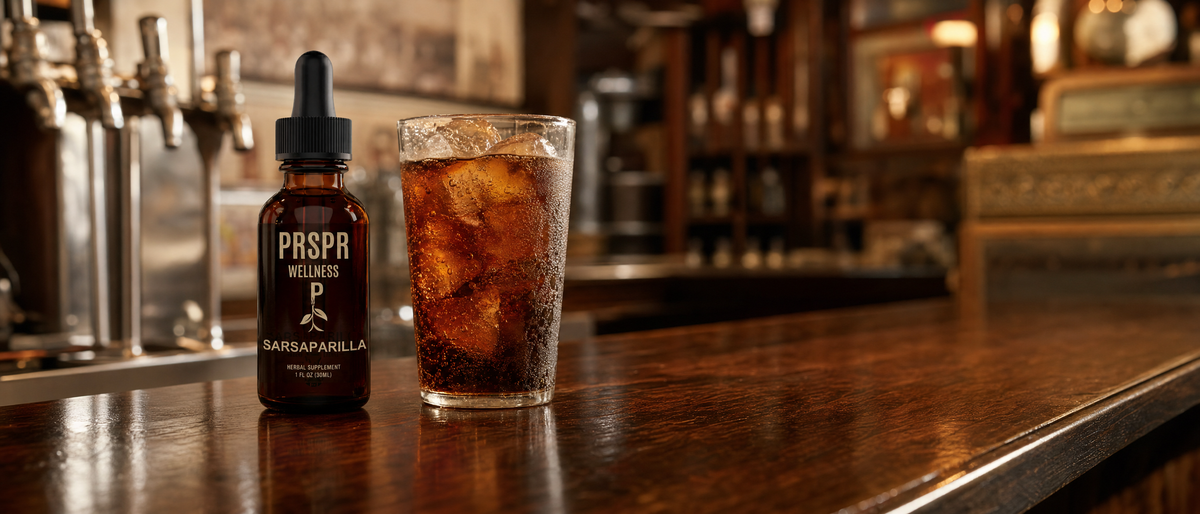
Is sarsaparilla the same as root beer is up 90 percent this week. What is sarsaparilla soda is up 60 percent. Sarsaparilla taste is up 50 percent, sarsaparilla vs root beer is holding at 31, and behind all of them sit the plant searches: sarsaparilla root maxed out, smilax vine maxed out, what is sarsaparilla at 43, smilax plant at 37.
That is a search cluster split straight down the middle, and the split is between a drink and a plant. Most of the fast-moving traffic is about soda. Most of the steady traffic is about a root. They are related, but they are not the same thing, and the results page does a poor job of telling anyone which one they have landed on.
Our bottle is on the plant side of that line. So this article does the disambiguation properly: what the soda is, what the root is, how the two ever got connected, and which one is actually in a supplement.
Short answer first: no. Sarsaparilla and root beer are two different soft drinks, historically flavoured from different sources, though they are close enough in style and era that people who grew up with one often assume the other is a regional name for it.
Both belong to a family of American soft drinks that emerged from nineteenth century pharmacy and soda fountain culture, built on flavours extracted from roots, barks and aromatic plants. That shared origin is why they taste like relatives. Root beer's traditional flavour profile was historically associated with sassafras root bark, while sarsaparilla was named for the sarsaparilla root it originally drew on. Both drinks are, today, overwhelmingly made with flavourings that need not involve the original plant at all.
That last point matters more than anything else in this section. A sarsaparilla soda on a shelf today is a flavour profile, a category of taste, and in most cases it contains no sarsaparilla root. The name survived the ingredient. That is not unusual in the soft drink aisle, but it is the direct cause of this week's confusion.
As for sarsaparilla taste, the profile people describe is sweet, faintly medicinal, with wintergreen and vanilla-adjacent notes and a slightly bitter finish. If you have tasted American root beer you are within range of it. If you have not, it is a taste that surprises most people the first time.
There is a regional wrinkle worth knowing, because it makes the search results even messier. In some countries, particularly across parts of Asia and Australasia, the word sarsaparilla is applied to soft drinks that an American drinker would simply call root beer, while in the United States the two are shelved as separate flavours. So the honest full answer to the question depends slightly on where the person asking it is standing.
Now the plant side. Sarsaparilla in the botanical sense refers to species in the genus Smilax, which is where the smilax vine and smilax plant searches are pointing.
Smilax is a genus of climbing, often thorny vines, widespread across tropical and temperate regions, with a number of species growing across Central and South America and others across Asia and North America. The plants climb using tendrils, many carry prickles on their stems, and they produce tough, sprawling growth. The part named on supplement labels is the root, which is dug, dried and prepared.
The root has a long documented history of traditional use across several of the regions where the vines grow, and it was a significant article of trade into Europe from the sixteenth century onward. That trade history is precisely how the root reached the pharmacies that later became soda fountains, which is the link between the two halves of this article.
One important disambiguation while we are here. Indian sarsaparilla root, which is a fast-rising search of its own, is a different plant entirely. It refers to Hemidesmus indicus, a species in a separate family that acquired the sarsaparilla name by analogy. It is not Smilax. If a listing says sarsaparilla without naming a genus, that ambiguity is live.
Here is the bridge. A shopper arriving from the soda searches and a shopper arriving from the plant searches want completely different objects, and the word sarsaparilla serves both of them badly.
If you came here from is sarsaparilla the same as root beer, the thing you are curious about is a drink, and the answer is that it is a distinct soft drink from root beer, usually flavoured without the root. That is a fine thing to be curious about and it is not what we sell.
What our bottle contains is the other one: a dietary supplement made with Smilax, the sarsaparilla root. Not a soda, not a flavouring, and not Hemidesmus. The listing names the genus, which is the detail that settles it.
We should also be direct about the product's own subtitle. This item is sold as Sarsaparilla with the words Natures Iron attached to the name. That is a product name, and we are not treating it here as a statement about nutrient content. We are not making an iron claim, we are not asserting what this root contains, and any question about nutrients, suitability or effects belongs with a qualified healthcare professional who knows your situation. What this article can tell you is which plant is in the bottle.
The vine itself is also worth picturing, because smilax vine is one of the two biggest terms in this cluster and most people typing it have never seen one. These are not delicate climbers. Many species are vigorous, thorny and difficult to clear, which is why some are treated as troublesome weeds in the places they grow. It is a rough plant with a tough root, and that toughness is exactly why the root has to be dried and prepared rather than simply eaten.
This is our favourite kind of labelling problem because it is entirely solvable and nobody solves it. One genus name printed on a listing collapses the whole thing. Smilax and you are done: not the soda, not the Indian species, not a flavouring. Six letters.
The broader lesson is that common names travel and botanical names do not. A name that has been attached to a drink, a flavour, a trade good and at least two unrelated plants is not a specification, however familiar it sounds. We made the same case about a plant with three names in our elderberry article, and sarsaparilla is the harder version of it, because here the most famous meaning of the word is not even a plant.
Our Sarsaparilla is a dietary supplement made with Smilax, the sarsaparilla root, named by genus on the listing so there is no question which of the several sarsaparillas you are looking at. It is manufactured in a GMP-certified facility and third-party batch tested, so what is on the label is what is in the bottle.
You can read the listing on the Sarsaparilla page, and see the rest of the range on our vitamins and supplements page. If you want help placing a single-botanical supplement next to what you already take, take the quiz.
Answer all five questions to unlock a clear wellness plan made around your goal, schedule, preferred supplement format, and biggest roadblock.
Get clarity on what matters most right now.
See the product and routine connected to your goal.
Simple next steps you can use right away.
Pick the one you would fix first if you could.
This helps us make the guide easier to follow.
Consistency beats the “perfect” routine you never follow.
Be honest. We’re building something you’ll actually use.
Your guide will include one simple way around it.
Answer two more questions to unlock your product starting point, five-step plan, two-week routine, and one practical tip for your biggest roadblock.
Enter your details to open your five-step plan.
Verified PRSPR customer reviews
Expires when you close this page
*Your personal credit for completing the quiz. It's applied automatically at checkout on one-time purchases and expires when the timer runs out.
View full product detailsEverything in your plan, together — one add to cart.
Expires when you close this page
*Your personal credit for completing the quiz. It's applied automatically at checkout on one-time purchases and expires when the timer runs out.
View full product details Electrolytes
Salt is having a comparison week. Searches for celtic sea salt vs himalayan pink salt are up about 70 percent, pink himalayan salt vs table salt is...
 Kids
KidsPick up a box of children's snacks and somewhere on the front there is a number with the letter g after it, next to the word fiber. It looks like o...
 Label Reading
It is printed on the front of a lot of mineral bottles and it is one of the least understood words in the supplement business. Chelated. Search int...