
◎
Get clear
Get clarity on what matters most right now.

You look at a flower and see color. A botanist looks at the same flower and sees a set of named structures, each in a fixed place, each with a job. Learning the parts of the flower is mostly learning those names: sepal, petal, stamen, anther, filament, pistil, stigma, style and ovary. Once you know where each one sits, a flower stops being one shape and becomes a small, readable diagram.
The names also turn up in places you might not expect, including the ingredient line on a supplement label. We will get to that. First, the anatomy.
In Google Trends data for the US over the past 7 days, related searches for the seed term "parts of a flower" included three rising terms: "which part of the flower produces pollen" (+250%), "sepal" (+80%) and "anther" (+60%). Rising percentages show growth in interest compared with the previous period. A term marked "Breakout" would mean very large growth; none of these was. The top related searches were "parts of the flower" with a score of 100, followed by "what are the parts of a flower" (46), "male parts of a flower" (25), "female parts of a flower" (25), "male and female parts of a flower" (16), "reproductive parts of a flower" (16) and "parts of a flower and their functions" (3). Top scores are relative interest, scaled so the most popular term in the set equals 100. They are not search counts. The pattern is plain: people want the list of names, then they want to know which parts are male, which are female, and where pollen comes from.
The easiest way to learn flower anatomy is to start at the outside and work in. Oregon State University Extension Service describes a complete flower as one that has a stamen, a pistil, petals and sepals. Those four groups sit in rough rings, one inside the next.
Oregon State adds the other side of that definition: if one of these parts is missing, the flower is called incomplete. So "complete" is a description of which parts are present, not a judgment about the flower.
Sepal. Oregon State University Extension Service describes sepals as small, green, leaflike structures located at the base of a flower. UF/IFAS Gardening Solutions, from the University of Florida, says sepals are leaf-like and usually connected at the very base of the flower. Taken together, the sepals have their own collective name: Oregon State calls them the calyx.
Petal. Oregon State describes petals as generally the highly colored portions of a flower, and calls the petals, taken together, the corolla. UF/IFAS notes that these brightly colored, leaf-like parts attract pollinators. Petal shape and color are often the first thing people use to tell similar flowers apart. Our piece on which coneflower is echinacea works through one of those look-alike groups.
Neither the sepal nor the petal makes pollen or seeds. They are the outer layers. The reproductive parts of a flower sit inside them.
Oregon State University Extension Service calls the stamen the male reproductive organ. UF/IFAS Gardening Solutions phrases it a little more carefully: some scientists call the stamen the male reproductive structure. Either way, the stamen is the part people mean when they search for the male parts of a flower.
Each stamen has two pieces. Per Oregon State, it consists of a pollen sac (the anther) and a long filament beneath it.
The anther. Both UF/IFAS Gardening Solutions and Oregon State University Extension Service place pollen in the anther, which sits at the tip of the filament.
At the center of the flower is the pistil. Oregon State University Extension Service calls the pistil a plant's female part, and UF/IFAS Gardening Solutions says it is sometimes called the female reproductive structure. The pistil has three named sections, top to bottom.
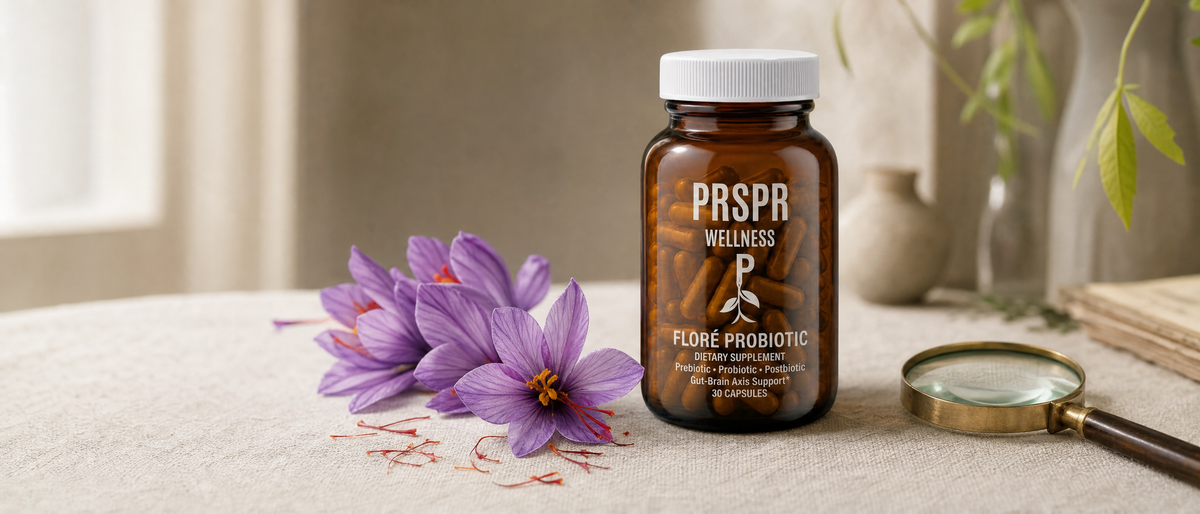
One worked example makes the stigma easy to picture. The saffron crocus, Crocus sativus, is a member of the iris family (Iridaceae). Its botanical record in the PROTA database (Plant Resources of Tropical Africa, published through Pl@ntUse) describes a style divided into 3 brilliant orange-red stigmas, and identifies the saffron of commerce as the dried upper part of the style with those 3 red stigmas attached. In other words, the spice is a female flower part, picked from the flower. For the plant itself, its origin and its harvest, see our profile of what saffron crocus is.
Here are the parts of a flower and their functions in one place, using the wording of the two extension services cited above.
| Part | Group | Where it sits | What it does (per extension sources) |
|---|---|---|---|
| Sepal | Calyx (outer ring) | Base of the flower | Small, green, leaflike structures (Oregon State) |
| Petal | Corolla | Inside the sepals | Brightly colored parts that attract pollinators (UF/IFAS) |
| Anther | Stamen (male) | Top of the filament | Produces pollen (UF/IFAS) |
| Filament | Stamen (male) | Below the anther | Holds the anther in position (Oregon State) |
| Stigma | Pistil (female) | Top of the pistil | Sticky tip that catches pollen (UF/IFAS) |
| Style | Pistil (female) | Middle of the pistil | Holds the stigma up, connects it to the ovary |
| Ovary | Pistil (female) | Base of the pistil | Contains the ovules (Oregon State) |
The connection between the two sides is pollination. Oregon State University Extension Service defines pollination as the movement of pollen from an anther to a stigma, carried either by wind or by pollinators. UF/IFAS describes what happens next: if pollen reaches the stigma, it works its way down through the style to the ovule.
Not every flower carries both sets of reproductive parts. Oregon State University Extension Service uses four terms worth knowing:
The same idea scales up to whole plants. Per Oregon State, monoecious plants have separate male and female flowers on the same plant, and dioecious species have separate male and female plants. UF/IFAS gives a useful example of how "perfect" and "complete" differ: dogwood has both pistils and stamens but is missing sepals or petals, so it is a perfect flower that is not complete.
We think flower anatomy is one of the most useful small vocabularies you can learn. It is a short list of names, laid out in rings from the outside in, and every name points to one place on the flower. Learn the order (sepal, petal, stamen, pistil) and the rest falls into line.
We also like that the words travel. Once you know a stigma is the tip of the pistil, a label that lists a "stigma extract" stops being a mystery word and becomes a precise description of which part of which flower was used.
That is the bridge to the FLORÉ Probiotic. The only flower part named on its label is a stigma: the listed contents include Affron® saffron stigma extract, 28 mg. Now you know exactly which part of the flower that word refers to.
Here is the full list of listed contents, as it appears for the product:
The format is simple: the label shows 30 capsules, and the listing shows 30 servings at 1 capsule daily. The price is $61.36. It is made in a GMP-certified facility and third-party batch tested. You can see it alongside other recent additions in New Arrivals.
See the FLORÉ Probiotic at PRSPR
The main parts are the sepals, petals, stamens and pistil. Oregon State University Extension Service calls a flower with all four a complete flower; each stamen has an anther and a filament, and the pistil has a stigma, style and ovary.
The anther. UF/IFAS Gardening Solutions states that the anther produces pollen, and Oregon State University Extension Service describes the anther as the pollen sac at the top of the stamen.
The stamen (anther plus filament) is the male part, and the pistil (stigma, style and ovary) is the female part, per Oregon State University Extension Service. A flower with both is called a perfect flower.
A sepal is one of the small, green, leaflike structures at the base of a flower, as Oregon State University Extension Service describes them. Together, the sepals form the calyx.
Answer all five questions to unlock a clear wellness plan made around your goal, schedule, preferred supplement format, and biggest roadblock.
Get clarity on what matters most right now.
See the product and routine connected to your goal.
Simple next steps you can use right away.
Pick the one you would fix first if you could.
This helps us make the guide easier to follow.
Consistency beats the “perfect” routine you never follow.
Be honest. We’re building something you’ll actually use.
Your guide will include one simple way around it.
Answer two more questions to unlock your product starting point, five-step plan, two-week routine, and one practical tip for your biggest roadblock.
Enter your details to open your five-step plan.
Verified PRSPR customer reviews
Expires when you close this page
*Your personal credit for completing the quiz. It's applied automatically at checkout on one-time purchases and expires when the timer runs out.
View full product detailsEverything in your plan, together — one add to cart.
Expires when you close this page
*Your personal credit for completing the quiz. It's applied automatically at checkout on one-time purchases and expires when the timer runs out.
View full product details Botany
You pick up a fallen leaf on a walk, or you read a product label that says a botanical comes from a leaf, and you realize you do not have the words...
 Food Science
You are fine, you just ate, and then one specific food lands in your head and will not leave. Not food in general. That food. Researchers have a na...
 Fitness Terms
You have heard it from a coach, a gym sign-up form, a friend who just bought a set of dumbbells. Strength training. Resistance training. Hypertroph...