
◎
Get clear
Get clarity on what matters most right now.

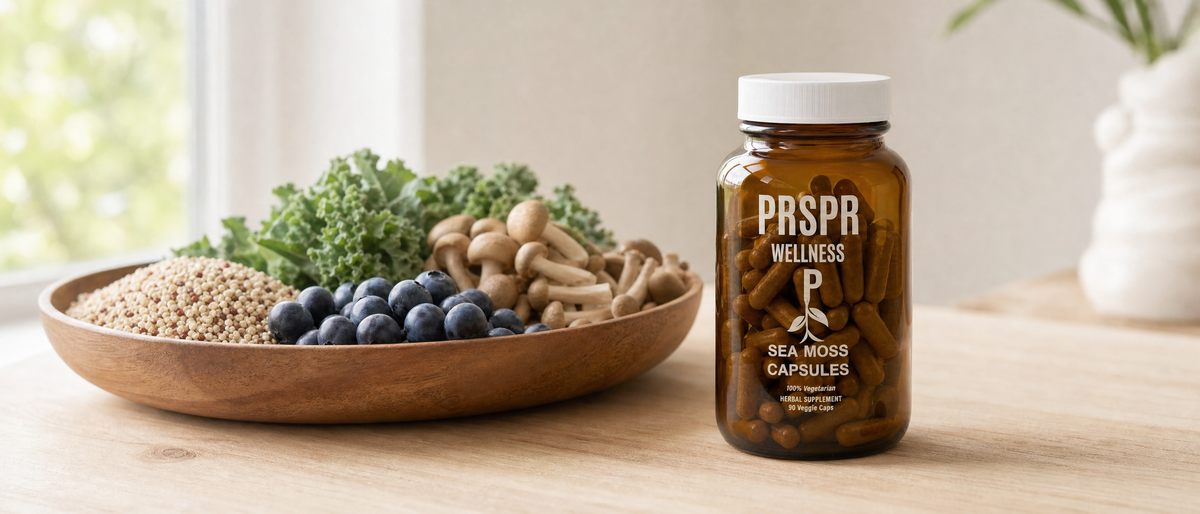
What is a superfood? It is one of the most familiar words in the grocery aisle, and one of the least explained. It shows up on smoothie menus, powder tubs, magazine covers and supplement labels, usually with no footnote. This week a lot of people stopped and asked what it actually means.
According to Google Trends, for US searches over the past seven days related to the seed term "superfood," the top related queries included "what is superfood" at 89, "what is a superfood" at 42 and "superfoods" at 28. Among rising queries, "list of superfoods" was marked Breakout, "is quinoa a superfood" was up 190% and "are mushrooms a superfood" was up 170%.
A quick note on those numbers. Google Trends scores are relative within each seed term: 100 marks the most searched query in that set, and the others are scaled against it. They are not search counts. A rising percentage measures growth in interest, not volume.
So people want two things: a definition, and a verdict on specific foods. This piece covers the first one properly and explains why the second one has no clean answer. We will look at where the word came from, who defines it (and who does not), why every list of superfoods looks different, and how to read the word when it appears on a label, including our own.
Start with the dictionary. Dictionary.com lists "superfood" as a noun, built from the prefix super- plus food. Its definition describes a food that is "considered" to be exceptional. That one verb is worth noticing. A dictionary records how a word is used, and "considered" tells you the word describes a reputation, not a result from a test.
Now the rulebook, and this is where the answer gets short. The Nutrition Source at the Harvard T.H. Chan School of Public Health, in its page "Superfoods or Superhype?", puts it plainly: "There's no scientifically based or regulated definition for superfood."
The British Dietetic Association has said much the same. In a December 2013 report in the trade publication Food Manufacture, BDA spokeswoman and registered dietitian Sioned Quirke said the term "has no regulatory approval and is not a legally recognised term." She also called it "simply a marketing term that has become trendy over the last few years."
So what is a superfood? It is a word with an everyday meaning and no official one. There is no agency threshold a food crosses, no lab number, no seal. That is the whole definition, and it is more useful than it sounds.
The word is older than most people guess. Dictionary.com says "superfood" was first recorded in 1910 to 1915.
Harvard's Nutrition Source traces the early use to advertising, not science. It says "The earliest recorded example may have taken place in the early 20th century around World War I" and that the term was used as part of a food marketing strategy. The example it gives is the United Fruit Company, which, in Harvard's words, "initiated an enthusiastic advertising campaign to promote its major import of bananas." Harvard notes the company "published informational pamphlets including Points About Bananas and the Food Value of the Banana," and its reference list dates Food Value of the Banana to 1917.
That origin explains a lot about the word today. It was born on the selling side of the shelf. Harvard's page is direct about the incentive: "The food industry certainly has the incentive to market a product as a superfood," and "Superfoods often translate into super sales that have created a billion-dollar industry."
Search "list of superfoods" and compare the first five results. The lists overlap a little and disagree a lot. One is heavy on berries, another on seeds, another on seaweeds, grains or fungi. That is not sloppiness. It follows directly from the definition problem.
If there is no agreed definition, there is no agreed test, and if there is no agreed test, every list is an editorial choice. The writer picks the criteria, then picks the foods. Harvard's page describes the foods that end up on these lists in terms of how they are "generally perceived," which is a description of reputation and popularity, not a shared standard.
That also answers the rising questions in the search data. "Is quinoa a superfood?" and "Are mushrooms a superfood?" sound like yes-or-no questions, but they are really questions about a word. Quinoa and mushrooms appear on some superfoods lists and not on others, because the word has no fixed definition for any food to meet. A list including a food tells you about the list. It does not tell you about a measurement.
Outside the US, the rules around food wording get more specific, and they are worth knowing if you read imported labels.
The European Union's Regulation (EC) No 1924/2006 of the European Parliament and of the Council of 20 December 2006 on nutrition and health claims made on foods does not use the word "superfood." What it does contain is a rule about vague wording. As published on legislation.gov.uk (the UK's retained version of the regulation), Article 10(3) covers references to "general, non-specific" benefits of a nutrient or food, and says such references "may only be made if accompanied by a specific health claim" that has been authorised under the regulation.
In plain terms, that regulation separates general, catch-all wording from specific claims, and ties the first to the second. You do not need to memorize the article number. The useful takeaway is that in some markets, the vaguest words on a label are the ones the rules look at most closely.
We think "superfood" is a word worth reading slowly, because it is easy to read fast.
Here is what it tells you: the seller or the writer wants you to think of a food as special. Here is what it does not tell you: what is in the product, how much, where it came from, or how it was made. Those answers live elsewhere on the label, in the ingredient list, the supplement facts panel and the certifications.
So when you see the word, treat it like a shelf sign. It names a category of marketing. Then read the rest of the label for the facts. The botanical name, the form, the organic seal if there is one: those are words with definitions you can check.
Sea moss is a good example. "Sea moss," "Irish moss" and Chondrus crispus are all names you can look up, and our explainer on why Irish moss and sea moss are the same seaweed walks through how those names relate. If you want to place it in its botanical family, our piece on red, brown and green seaweeds covers where Irish moss sits. And if "organic" is the word you want to check, our guide to what the USDA Organic seal means explains the label tiers behind it. Questions about your own body belong with a clinician.
This piece started with a word on our own shelf. Our product is called Seamoss Capsules: Irish Moss Superfood, and yes, "Superfood" is right there in the name. Read it the way we just described: it is part of a product name and a category word on the label, not a measured property and not a standard the capsules were tested against.
What the listing describes is specific. It is a dietary supplement made with organic Irish moss (Chondrus crispus). Those are the words with definitions behind them.
Like everything we carry, it is made in a GMP-certified facility and third-party batch tested, so what's on the label is what's in the bottle. It is listed at $44.99 and sits in our Vitamins & Supplements collection.
If you want to read the full label for yourself, read the Seamoss Capsules: Irish Moss Superfood listing at PRSPR.
It is an everyday word with no official definition. Harvard's Nutrition Source says "There's no scientifically based or regulated definition for superfood," and a British Dietetic Association spokeswoman has called it "not a legally recognised term."
Dictionary.com says the word was first recorded in 1910 to 1915. Harvard's Nutrition Source traces early use to food advertising around World War I, citing the United Fruit Company's banana promotions.
No. Because the term has no scientifically based or regulated definition, according to Harvard's Nutrition Source, every list of superfoods reflects its author's own criteria. That is why lists disagree.
The word has no fixed definition, so there is no standard quinoa can meet or miss. It appears on some superfoods lists and not others, depending on who wrote the list.
Same answer. Without a scientific or regulatory definition of the term, as Harvard's Nutrition Source notes, "superfood" describes how a food is marketed or listed, not a category mushrooms can qualify for.
Regulation (EC) No 1924/2006 does not name the word, but its Article 10(3) says references to "general, non-specific" benefits of a nutrient or food "may only be made if accompanied by a specific health claim" authorised under that regulation.
Answer all five questions to unlock a clear wellness plan made around your goal, schedule, preferred supplement format, and biggest roadblock.
Get clarity on what matters most right now.
See the product and routine connected to your goal.
Simple next steps you can use right away.
Pick the one you would fix first if you could.
This helps us make the guide easier to follow.
Consistency beats the “perfect” routine you never follow.
Be honest. We’re building something you’ll actually use.
Your guide will include one simple way around it.
Answer two more questions to unlock your product starting point, five-step plan, two-week routine, and one practical tip for your biggest roadblock.
Enter your details to open your five-step plan.
Verified PRSPR customer reviews
Expires when you close this page
*Your personal credit for completing the quiz. It's applied automatically at checkout on one-time purchases and expires when the timer runs out.
View full product detailsEverything in your plan, together — one add to cart.
Expires when you close this page
*Your personal credit for completing the quiz. It's applied automatically at checkout on one-time purchases and expires when the timer runs out.
View full product details Botany
You pick up a fallen leaf on a walk, or you read a product label that says a botanical comes from a leaf, and you realize you do not have the words...
 Food Science
You are fine, you just ate, and then one specific food lands in your head and will not leave. Not food in general. That food. Researchers have a na...
 Fitness Terms
You have heard it from a coach, a gym sign-up form, a friend who just bought a set of dumbbells. Strength training. Resistance training. Hypertroph...