
◎
Get clear
Get clarity on what matters most right now.

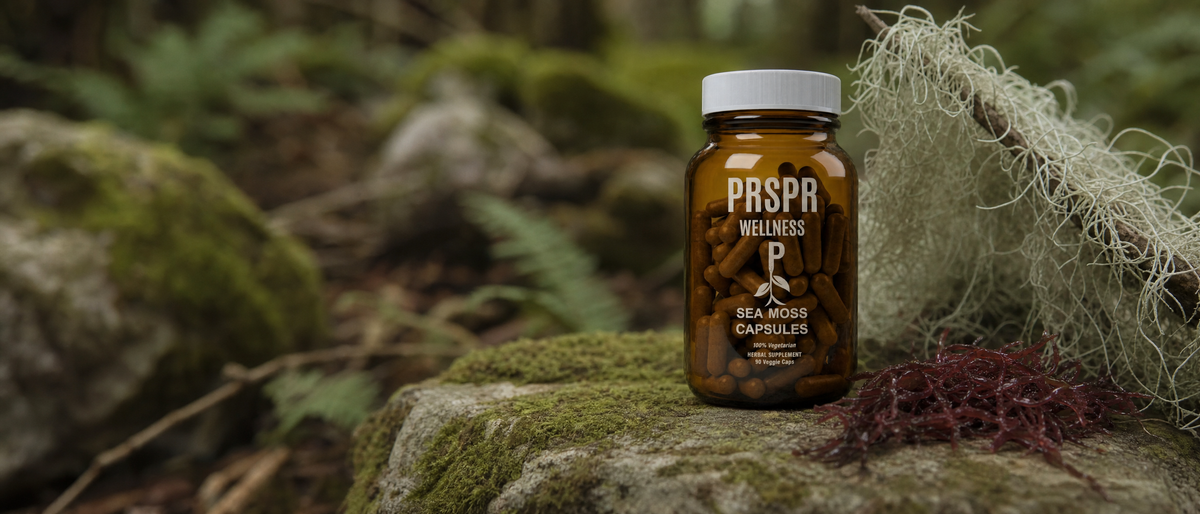
You run a hand over a green carpet on a shaded rock, pick up a bag of peat moss at the garden center, or walk under oaks draped in gray Spanish moss. Then you see a jar labeled Irish moss. Same word, four very different things. So what is moss, really? Botanists give a precise answer, and once you know it, you can tell at a glance which "mosses" are mosses and which only borrowed the name.
Plenty of people are asking. In Google Trends data for the US over the past 7 days, top related searches for the seed term "moss" included "what is moss" with a score of 36, "green moss" (27), "peat moss" (16), "spanish moss" (14), and "sphagnum moss" (8). For the seed term "shrubs," the rising search "mosses" showed growth of +60%. Top scores are relative interest, scaled so the top related search for a seed equals 100; they are not search counts. A rising percentage shows growth in search interest compared with the prior period, and "Breakout" is the label Google uses when growth is too large to show as a percentage. None of these terms reached Breakout. People want the definition first, then the specific mosses they keep running into.
A true moss is a small, simple land plant in a group botanists call bryophytes. The National Park Service, in its nature pages for Rocky Mountain National Park, puts it plainly: mosses and liverworts are non-vascular plants known as bryophytes. The University of California Museum of Paleontology, in its introduction to the Bryophyta, the scientific name for the mosses, adds that they have no vascular tissue or wood to lend them structural support.
That missing plumbing is the whole story. Vascular plants, like trees, grasses, and ferns, move water through internal tubes. Mosses do not. The University of Wisconsin forestry extension, in its article "Consider the Moss," explains that without vascular tissue, every cell in a moss plant needs direct contact with water to photosynthesize effectively. The same article notes that mosses have no roots, seeds, bark, or flowers.
Mosses are also a big group. The University of California Museum of Paleontology counts more than 10,000 species in 700 genera. The University of Arkansas Cooperative Extension Service, in a plant of the week feature on moss, refers to 12,000 species. Counts vary by source, but either way it is a large group.
Look closely at the base of a moss and you will find thin, rootlike threads. These are rhizoids, and they are not roots. The National Park Service describes them as rootlike, single cell rhizoids which anchor the moss to the surface it lives on. The University of Arkansas extension feature makes the same point: the rootlike structure is mainly used for anchoring the plant in place, not for taking up water and nutrients.
So how does a moss drink? Through its surface. The National Park Service page for Grand Teton National Park says bryophytes have no transporting stems or roots and take in nutrients through their surfaces. The Arkansas feature adds a detail that explains a lot: moss leaves are a single cell thick and lack a protective epidermis. That is why mosses favor damp, shady spots.
Mosses do not flower and do not make seeds. They reproduce with spores. The Grand Teton page explains that fertilization produces spores, which are then dispersed by wind to form new colonies. The Wisconsin extension article adds that moss reproduction requires water as a medium, because the male cells literally swim through water droplets to reach the female cells. The University of Arkansas feature notes that mosses release their spores from reproductive capsules.
When most people search "green moss," they mean the soft green mats on rocks, logs, roofs, and the base of trees. Most of the time, that is a true moss. The University of Arkansas extension notes that mosses are most often found in moist, shaded locations and usually grow perched atop a rock, board, or the base of a tree.
The green comes from the same place it does in any plant: chlorophyll in the cells doing photosynthesis. A quick test you can run yourself: true mosses have tiny leaves along a stem, even if you need a close look to see them. If what you are looking at is crusty, flat, gray-green, or branched like a miniature shrub with no leaves, there is a good chance it is a lichen instead. More on that below.
Two of the most searched mosses are really one plant at two stages. Sphagnum is a genus of true moss. Peat is what builds up when sphagnum and other wetland plants die and pile up faster than they break down.
The University of New Hampshire Cooperative Extension, in its guide to peatlands, defines peat as a spongy, organic material formed by partially decayed wetland plants. It says the most common type is sphagnum peat, made up of layers of sphagnum moss. Sphagnum plants spread over pond and stream edges; older plants die beneath newer growth, and new plants grow on top, thickening the peat mat.
The Australian National Botanic Gardens, in a panel titled "When is a Moss not a Moss?", flags "peat moss" as a confusing expression. It can mean live or dead sphagnum, which is definitely a moss. It can also mean the dead, half-decomposed contents of peat bogs harvested for potting mix. So the bag at the garden center and the living plant in the bog share a name, but one is a living moss and the other is mostly its remains.
Here is where the naming gets messy. Common names stuck long before modern botany sorted things out. The Australian National Botanic Gardens panel and the Wisconsin extension article both list several of these. Here are the ones you are most likely to meet.
| Common name | What it actually is | Source |
|---|---|---|
| Spanish moss | A flowering plant, Tillandsia usneoides, in the pineapple family, Bromeliaceae | Australian National Botanic Gardens; Cornell University Conservatory |
| Irish moss | A red alga (seaweed), Chondrus crispus | University of New Hampshire Phycokey; Australian National Botanic Gardens |
| Reindeer moss | A lichen, Cladina rangifera | Australian National Botanic Gardens; University of Wisconsin extension |
| Iceland moss | A lichen, Cetraria islandica | Australian National Botanic Gardens |
| Club moss | Vascular fern relatives in the family Lycopodiaceae | Australian National Botanic Gardens; University of Wisconsin extension |
Spanish moss is the most famous impostor. The Australian National Botanic Gardens identifies it as a flowering plant, Tillandsia usneoides, belonging to the pineapple family, the Bromeliaceae. The Cornell University Conservatory says it is not a moss at all. It is an epiphyte, meaning it lives on the surface of other plants, and it most often grows on Southern live oak. It draws moisture and nutrients from the air, rain, and debris that collects around it. A true moss has no flowers. Spanish moss does, which settles the question.
Reindeer moss is a lichen. The Australian National Botanic Gardens names it as the lichen Cladina rangifera, and the Wisconsin extension article lists it as a lichen, not a moss. Club mosses go the other way: they are real plants, but vascular ones. The Wisconsin article calls them vascular plants, not bryophytes, and the Australian National Botanic Gardens describes them as fern relatives in the family Lycopodiaceae.
Irish moss is not a plant in the moss sense either. It is a seaweed. The University of New Hampshire's Phycokey, a guide to algae, places Chondrus crispus in the red algae and describes it as deep red to purple, with a blue iridescence when submerged. It is a perennial seaweed that forms dense stands on rocky ledges of exposed North Atlantic coasts, and its other common names include carrageen and Dorset weed. If you want the bigger picture of where red algae sit among the seaweeds, our guide to red algae and seaweed types covers the classification.
We like a definition that does real work. "Moss" in botany does. It means a non-vascular bryophyte with tiny leaves, rhizoids instead of roots, and spores instead of seeds. Everything else that carries the name is a nickname.
We think the fastest way to sort any "moss" is three questions. Does it flower? Then it is not a moss. Did it come from the sea? Then it is almost certainly an alga. Is it crusty or leafless and branching? Then look closer, because it may be a lichen. Run those three and you will rarely get it wrong.
We also think the nicknames are worth keeping. They are history. Just read them as names, not as biology.
We wrote this botany guide as part of our Learn library, and it sits alongside our Seamoss Capsules. This article is about what a true moss is and why Irish moss only shares the name, nothing more. For more on the alga itself, see our explainer on what sea moss is. Here is what the listing states about the product:
It is made in a GMP-certified facility and third-party batch tested. You can see it with the rest of our line in the Vitamins & Supplements collection.
The National Park Service describes mosses as non-vascular plants known as bryophytes. The University of Wisconsin forestry extension notes they have no roots, seeds, or flowers; they anchor with rhizoids and reproduce with spores.
No. The Australian National Botanic Gardens identifies Spanish moss as a flowering plant, Tillandsia usneoides, in the pineapple family, Bromeliaceae. The Cornell University Conservatory describes it as an epiphyte that lives on the surface of other plants.
Sphagnum is a genus of true moss. Peat, as the University of New Hampshire Cooperative Extension defines it, is a spongy, organic material formed by partially decayed wetland plants, and the most common type is made of layers of sphagnum moss. "Peat moss" can refer to either the living moss or the harvested, half-decomposed material.
No. The University of New Hampshire's Phycokey classifies Irish moss, Chondrus crispus, as a red alga, a seaweed of North Atlantic coasts.
Answer all five questions to unlock a clear wellness plan made around your goal, schedule, preferred supplement format, and biggest roadblock.
Get clarity on what matters most right now.
See the product and routine connected to your goal.
Simple next steps you can use right away.
Pick the one you would fix first if you could.
This helps us make the guide easier to follow.
Consistency beats the “perfect” routine you never follow.
Be honest. We’re building something you’ll actually use.
Your guide will include one simple way around it.
Answer two more questions to unlock your product starting point, five-step plan, two-week routine, and one practical tip for your biggest roadblock.
Enter your details to open your five-step plan.
Verified PRSPR customer reviews
Expires when you close this page
*Your personal credit for completing the quiz. It's applied automatically at checkout on one-time purchases and expires when the timer runs out.
View full product detailsEverything in your plan, together — one add to cart.
Expires when you close this page
*Your personal credit for completing the quiz. It's applied automatically at checkout on one-time purchases and expires when the timer runs out.
View full product details Botany
You read "geranium" on a plant tag at a garden center, then read it again on an ingredient label, and the two plants look nothing alike. One is a b...
 Anatomy
You reach for a cup, stand up from a chair, or take a breath without thinking about it. Each of those moments runs on the muscular system, and if y...
 Parenting
It is 7:40 on a school morning. One shoe is on, the backpack is somewhere, and you have said "go brush your teeth" three times. A kids routine char...