
◎
Get clear
Get clarity on what matters most right now.

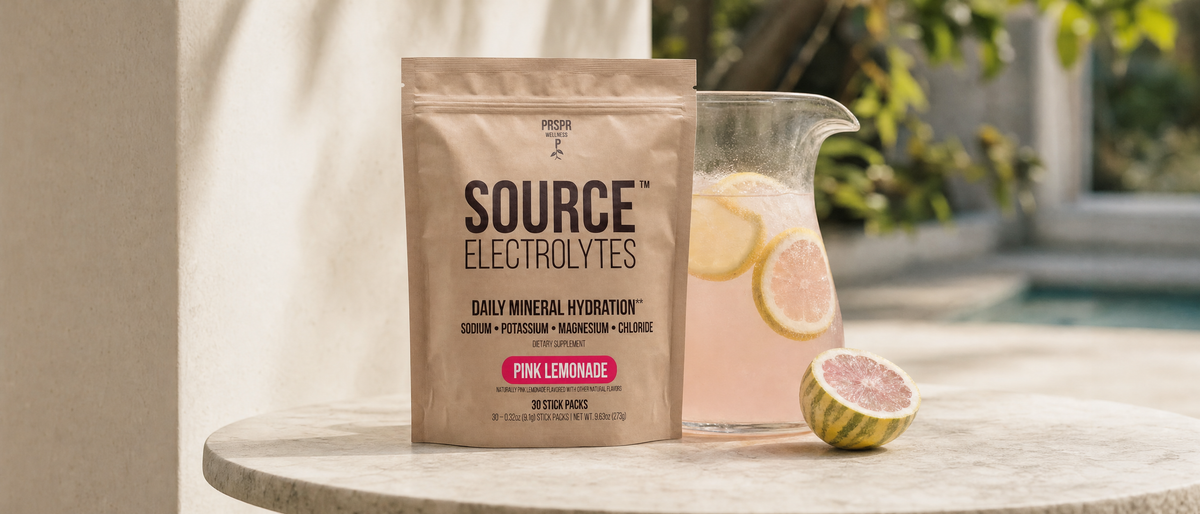
What is pink lemonade? It sounds like a question with a one-word answer, and then you try to give it. Is it strawberry? Is it a different lemon? Is it just food coloring? Ask around and a surprising number of answers involve a circus.
Plenty of people are asking right now. According to Google Trends, for US searches over the past seven days related to the seed term "pink lemonade," the top related queries included "what is pink lemonade" at 100, "pink lemonade flavor" at 34, "what is in pink lemonade" at 29, "pink lemon" at 24, "lemonade vs pink lemonade" at 23, "is pink lemonade strawberry" at 23, "is pink lemonade strawberry lemonade" at 23 and "difference between pink lemonade and lemonade" at 23. The rising query "who invented pink lemonade" was up 180%, and "how do they make pink lemonade" was up 150%.
A quick note on those numbers. Google Trends scores are relative within each seed term: 100 marks the most searched query in that set, and the others are scaled against it. They are not search counts. A rising percentage measures growth in interest, not volume.
So people want the story and the vocabulary. This piece covers both: where the name is said to come from, what has been used to turn lemonade pink, how it compares with plain and strawberry lemonade, and the real fruit called a pink lemon. Every date comes with its source.
Nobody can answer this with certainty. What we have are stories, and most of them start under a big top.
Smithsonian Magazine covered the question in a 2016 article by Laura Kiniry, "The Unusual Origins of Pink Lemonade." In it, food writer Josh Chetwynd, author of How the Hot Dog Got Its Bun, says there are multiple origin stories, and he singles out two as the most plausible.
According to Smithsonian Magazine, this story comes from Harvey W. Root's 1921 book The Ways of the Circus: Being the Memories and Adventures of George Conklin, Tamer of Lions. In it, George Conklin says his brother Pete came up with pink lemonade in 1857 while selling lemonade at the circus.
The tale goes like this. Pete ran out of water, grabbed a tub a performer had just used to wring out her pink tights, and mixed his lemonade with it. Then he sold the result as "strawberry lemonade." Root writes that "from then on sales doubled."
Keep that detail in mind. In the most famous origin story, the pink drink was sold under a strawberry name with no strawberry in it.
The second story, as Smithsonian Magazine reports it, rests on a 1912 New York Times obituary for Henry E. Allott, a Chicago native who ran away to join the circus in his early teens. In this version, Allott dropped red cinnamon candies into a vat of lemonade by accident and sold the pink result anyway.
Chetwynd tells Smithsonian Magazine that "No one really knows which story is accurate," while adding that the timing of the Conklin tale gives it the advantage. He also notes that both stories have a legendary quality.
The paper trail is a little more solid. Smithsonian Magazine reports that the earliest known mention of pink lemonade comes from an 1879 article in West Virginia's Wheeling Register, which links the drink to the circus. That is a print date, not a birth date, so treat it as the earliest record that article cites rather than proof of who mixed the first glass.
Here is the bridge from the story to the drink. "Pink lemonade" names a color first. What makes it pink has changed a lot depending on who is doing the making.
Start with the base. Smithsonian Magazine describes traditional lemonade as "a blend of lemon juice, water and sugar." Pink lemonade begins there and adds something red.
One of the earliest printed recipes we could read directly is in E. E. Kellogg's Science in the Kitchen, whose preface in the Project Gutenberg edition is dated 1892. Kellogg's instruction is short: "Add to a pint of lemonade prepared in the usual manner half a cup of fresh or canned strawberry, red raspberry, currant, or cranberry juice." Kellogg adds that it "gives a pretty color besides adding a pleasing flavor."
So in that 19th-century recipe, the pink came from a red fruit juice, and the cook could choose among four. That is why there is no single answer to "what is in pink lemonade."
The modern picture is just as varied. According to Smithsonian Magazine, today's pink lemonades may be made with watermelon, strawberry, raspberry or grenadine, a syrup the magazine describes as traditionally derived from pomegranates. The same article reports that most large commercial pink lemonade is pink in color alone, tinted with concentrated grape juice or extract.
The difference between pink lemonade and lemonade is the added red ingredient. Plain lemonade is lemon juice, water and sugar. Pink lemonade is that plus something that turns it pink. Whether the something also changes the taste depends on what it is.
That answers the "pink lemonade flavor" question as well as it can be answered. There is no fixed pink lemonade flavor. With Kellogg's cranberry juice, you get a cranberry note. With a grape tint used for color, Smithsonian Magazine's reporting suggests the taste may be close to plain lemonade. The name tells you the color. The ingredient list tells you the flavor.
Is pink lemonade strawberry? Sometimes. Strawberry is one of the options in Kellogg's recipe and in Smithsonian Magazine's list of modern versions. But it is one option among several, and in the Conklin story the "strawberry lemonade" contained no strawberries at all.
Is pink lemonade strawberry lemonade, then? Not by definition. A drink sold as strawberry lemonade names a fruit. A drink sold as pink lemonade names a color. They can overlap in a glass, but the words promise different things.
The "pink lemon" search is about a real fruit, and it is a different thing from the drink.
The University of California, Riverside's Givaudan Citrus Variety Collection lists it as the Variegated Pink-fleshed Eureka lemon. According to the collection's record, it originated in a home garden as a sport (a natural bud mutation) of the conventional Eureka lemon, and the collection received budwood in 1931 from Burbank, California.
The UC Riverside record describes the tree's leaves as "variegated green and white," and the rind as striped green and cream. When the fruit is fully ripe, the stripes fade and the rind turns yellow with distinct pink oil glands. The collection describes the flesh as "light pink at full maturity, low-seeded, and very acidic."
Here is where the vocabulary gets tangled. The same UC Riverside record notes that this lemon "is sometimes sold under the name Pink Lemonade." So "Pink Lemonade" can be the trade name of a lemon tree, not just a drink.
Can you make pink lemonade from pink lemons? The sources disagree on the juice. Smithsonian Magazine says the pink flesh "juices clear." The UC Riverside record includes a 1986 note describing the accession as having pink flesh and pink juice. Either way, none of the origin stories above involve this lemon, and Smithsonian Magazine dates its discovery to 1930, decades after the 1879 newspaper mention.
Read "pink lemonade" as a color word attached to a familiar drink. That is what it has been since the first stories were told about it.
The color has come from candies, fruit juices, grape tint and, if you believe Root's book, a performer's laundry. The word "pink" does not tell you which. Neither does "strawberry," as Pete Conklin's customers apparently learned.
So when you see the phrase on a menu, a can or a packet, do what you would do with any label: go to the ingredient list. That is where the answer to "what is in pink lemonade" actually lives for that specific product. Our guide to reading an electrolyte label line by line walks through how those lists are written.
The same habit applies to other pinks on a shelf. The word is doing very different work in a salt name, which is why we wrote up pink salt, sea salt and table salt separately.
This piece started with a flavor name on our own shelf. Our Source Electrolytes - Daily Mineral Hydration is a stick-pack electrolyte and trace mineral drink mix, and the listing offers it in two flavor names: Lemon Lime and Pink Lemonade.
The listing names Vitamin C, calcium, magnesium, zinc, chloride, sodium, potassium, D-Ribose, taurine, Himalayan pink salt, L-theanine and ConcenTrace® concentrated seawater. If one of those words is new to you, our explainer on what D-Ribose is is a good place to start.
Like everything we carry, it is made in a GMP-certified facility and third-party batch tested, so what's on the label is what's in the bottle. It sits in our Vitamins & Supplements collection, listed at $45.00.
To read the full ingredient list for yourself, see the Source Electrolytes - Daily Mineral Hydration listing at PRSPR.
Lemonade with an added ingredient that turns it pink. Smithsonian Magazine describes traditional lemonade as lemon juice, water and sugar, and lists watermelon, strawberry, raspberry, grenadine and grape juice tint among the ways pink versions are made.
No one knows for certain. Smithsonian Magazine reports two leading stories: Pete Conklin in 1857, from Harvey W. Root's 1921 book, and Henry E. Allott, from a 1912 New York Times obituary. The earliest known print mention it cites is from 1879.
The red ingredient. E. E. Kellogg's Science in the Kitchen makes pink lemonade by adding strawberry, red raspberry, currant or cranberry juice to ordinary lemonade.
Only when strawberry is the ingredient used. Strawberry appears in Kellogg's recipe and in Smithsonian Magazine's list of modern versions, alongside several other options.
The Variegated Pink-fleshed Eureka lemon, which UC Riverside's Citrus Variety Collection describes as a sport of the Eureka lemon with striped rind and light pink flesh, sometimes sold under the name Pink Lemonade.
Answer all five questions to unlock a clear wellness plan made around your goal, schedule, preferred supplement format, and biggest roadblock.
Get clarity on what matters most right now.
See the product and routine connected to your goal.
Simple next steps you can use right away.
Pick the one you would fix first if you could.
This helps us make the guide easier to follow.
Consistency beats the “perfect” routine you never follow.
Be honest. We’re building something you’ll actually use.
Your guide will include one simple way around it.
Answer two more questions to unlock your product starting point, five-step plan, two-week routine, and one practical tip for your biggest roadblock.
Enter your details to open your five-step plan.
Verified PRSPR customer reviews
Expires when you close this page
*Your personal credit for completing the quiz. It's applied automatically at checkout on one-time purchases and expires when the timer runs out.
View full product detailsEverything in your plan, together — one add to cart.
Expires when you close this page
*Your personal credit for completing the quiz. It's applied automatically at checkout on one-time purchases and expires when the timer runs out.
View full product details Botany
You pick up a fallen leaf on a walk, or you read a product label that says a botanical comes from a leaf, and you realize you do not have the words...
 Food Science
You are fine, you just ate, and then one specific food lands in your head and will not leave. Not food in general. That food. Researchers have a na...
 Fitness Terms
You have heard it from a coach, a gym sign-up form, a friend who just bought a set of dumbbells. Strength training. Resistance training. Hypertroph...