
◎
Get clear
Get clarity on what matters most right now.

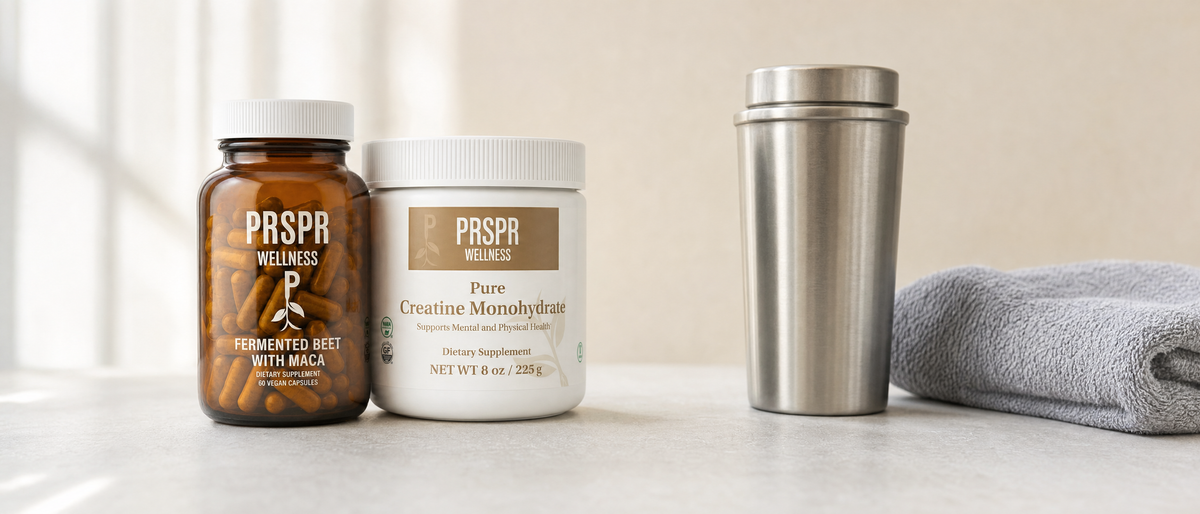
Best beet root supplement. Best creatine. Two separate searches, climbing side by side, and if you line up the results they start to look like the same shopping trip. Beetroot on its own is holding a strong volume score this week, and the comparison query creatine vs creatine monohydrate sits right underneath it. People are not browsing a category. They are trying to assemble one.
That is the interesting part of this week's data. The performance aisle is usually sorted by promise, and the promises are loud. But the searches underneath are quieter and more practical: which root, which powder, what is the difference between the two words on the tub. Nature's BBL is a two-container set that answers a narrower question than any of those, and it starts with what is not in it. The live listing describes it as a performance bundle put together without artificial stimulants. That single line is the reason this article exists, so let us take it seriously and read the box.
Beet root is the swollen taproot of Beta vulgaris, the same plant that gives you table beets and, in a different cultivar, sugar beets. It has been a food crop far longer than it has been a supplement, which is why the search results for beetroot bounce between recipes and capsules without warning. When someone narrows that to best beet root supplement, they have already decided they want the concentrated form and are now sorting the shelf.
What the shelf actually varies on is format and preparation. The same root shows up as a loose powder you scoop, a capsule you count, a chewable, and a bottled shot. None of those words are interchangeable, and none of them is a quality ranking. Beet root supplement benefits and beet root benefits are both live searches this week, and both are questions about outcomes rather than about the root. We are not going to answer those here, because the honest answer belongs to a healthcare professional who knows your situation, not to a product page. What we can tell you is what the plant is and what form it arrives in, which is the part the label is actually responsible for.
Maca is the second root in this conversation. It is a Peruvian plant grown at high altitude, traditionally dried and ground, and it turns up next to beet root often enough that the pair has become a familiar combination on ingredient panels. We wrote about both roots and about what the word fermented is doing on a label in our earlier piece on beet root and maca, so this article will not re-run that ground.
One more thing the search data shows plainly: beetroot as a bare word is still the biggest term in this cluster, bigger than any of the supplement-qualified versions of it. That tells you most people arrive at this shelf from the food side, having eaten the vegetable, and only then start wondering what the concentrated version is. It is a useful reminder that the plate comes first and the capsule is a convenience, not a replacement for one.
It also explains the format question. A root that people know as a vegetable does not obviously belong in a capsule, so the first real decision on this shelf is powder or capsule, not brand A or brand B. A powder is measured by scoop and mixed into liquid. A capsule is counted, travels without a shaker, and tastes of nothing. Neither is better. They are answers to different logistics.
Creatine is a compound that occurs naturally in the body and in some foods, particularly meat and fish. Creatine monohydrate is a specific form of it: the compound bound with one molecule of water, which is what the word monohydrate literally states. That is the whole of the distinction that creatine vs creatine monohydrate is asking about. Creatine is the category. Creatine monohydrate is one named member of it, and it is the one that has been sold and studied the longest.
So when best creatine trends, a good chunk of that traffic is really people checking whether the cheaper tub and the more expensive tub contain the same molecule. The label answers that. If it says creatine monohydrate, that is the form. If it just says creatine, the label is telling you less, and less is not a feature.
The other thing worth knowing is that creatine is sold by weight, not by servings, so two tubs with the same word on the front can hold very different amounts. The creatine container in this set is a net weight of 8 oz, which is 225 g. That is a printed number on the front of the tub, and it is the number that actually lets you compare one product with another. We went further into pack-size arithmetic in an earlier creatine article, which is a different question from this one.
Here is the bridge, and it is the reason these two searches keep landing in the same cart. The performance shelf is largely organised around energy, and energy on that shelf usually means a stimulant. Pre-workout tubs, energy powders, and a good share of the endurance category are built around one. So when a listing says a set was put together without artificial stimulants, it is not making a claim about what the set does. It is telling you what the ingredient panel does not contain, which is a different kind of statement entirely, and a much easier one to verify.
That matters for anyone who already has a coffee habit, trains late in the day, or has simply been told by their doctor to watch their stimulant intake. Those people are not shopping for a better promise. They are shopping for an ingredient panel with fewer surprises on it, and the fastest way to find one is to read the exclusion rather than the headline.
It also explains why beet root and creatine keep getting boxed together. Neither one is a stimulant. They are two of the most searched non-stimulant names in the performance aisle, which makes them the obvious pair when a set is being assembled around that constraint. The pairing is a shelf logic, not a formula secret.
We think the exclusion line is underrated. Most of the performance category sells you on what a product adds, and the label real estate goes to the promise. But a lot of people have already worked out that what they need is not another thing that keys them up, and there is no good way to search for that. There is no tidy query for I want the useful part without the jitters, so people end up typing best beet root supplement and best creatine separately and assembling it themselves.
So read the panel first and the front of the box second. Look for the form word, look for the net weight, look for what is listed and what is not. A set that tells you plainly what it left out has given you something you can check. A set that only tells you how you will feel has not.
Nature's BBL puts two containers together: our Fermented Beet with Maca, a 60 vegan capsule bottle, and our Pure Creatine Monohydrate, an 8 oz / 225 g tub. Both are manufactured in a GMP-certified facility and third-party batch tested, so what is printed on the label is what is in the container. Clear amounts, no guesswork.
If you want to read the panels for yourself, the Nature's BBL page lists both containers, and you can see how it sits next to our other sets on the bundles page. Not sure whether a set or a single container fits what you are already taking, take the quiz and start from where you actually are.
Answer all five questions to unlock a clear wellness plan made around your goal, schedule, preferred supplement format, and biggest roadblock.
Get clarity on what matters most right now.
See the product and routine connected to your goal.
Simple next steps you can use right away.
Pick the one you would fix first if you could.
This helps us make the guide easier to follow.
Consistency beats the “perfect” routine you never follow.
Be honest. We’re building something you’ll actually use.
Your guide will include one simple way around it.
Answer two more questions to unlock your product starting point, five-step plan, two-week routine, and one practical tip for your biggest roadblock.
Enter your details to open your five-step plan.
Verified PRSPR customer reviews
Expires when you close this page
*Your personal credit for completing the quiz. It's applied automatically at checkout on one-time purchases and expires when the timer runs out.
View full product detailsEverything in your plan, together — one add to cart.
Expires when you close this page
*Your personal credit for completing the quiz. It's applied automatically at checkout on one-time purchases and expires when the timer runs out.
View full product details Electrolytes
Salt is having a comparison week. Searches for celtic sea salt vs himalayan pink salt are up about 70 percent, pink himalayan salt vs table salt is...
 Kids
KidsPick up a box of children's snacks and somewhere on the front there is a number with the letter g after it, next to the word fiber. It looks like o...
 Label Reading
It is printed on the front of a lot of mineral bottles and it is one of the least understood words in the supplement business. Chelated. Search int...