
◎
Get clear
Get clarity on what matters most right now.

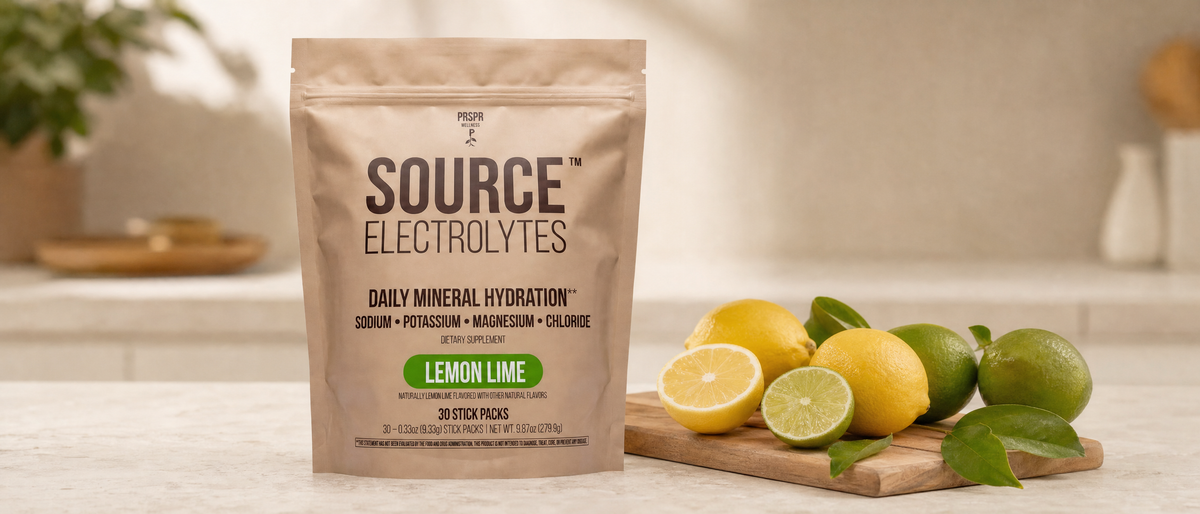
Lemon vs lime looks like a color question: one is yellow, one is green. The botany is less tidy. Both fruits belong to the genus Citrus, both descend in part from the same ancestor, and the green lime in a grocery bin is, by one extension service's description, simply picked before it would turn yellow on the tree. Below is what each fruit is, where it came from, how the key lime differs from the common grocery lime, and what people mean by a "lemon lime tree."
It is a busy week for the pairing. According to Google Trends, for US searches over the past seven days related to the seed term "lemon lime," the top related queries included "lemon and lime" at 100, "lemon or lime" at 51, "lemon vs lime" at 20, "lemon tree" at 12, "lemon lime tree" at 12, "lime tree" at 12, "lemon lime plant" at 11, "lime fruit" at 8 and "key lime" at 8.
Those numbers are relative, not counts. Within each seed term, 100 marks the most searched query in the set and everything else is scaled against it. A score of 8 means a query was searched far less than the top one, not that eight people searched it.
This piece is botany and kitchen vocabulary only. The main sources are three University of Florida IFAS Extension (EDIS) fact sheets by Jonathan H. Crane on lemon, Key lime and 'Tahiti' lime, a 2016 genetics study in Annals of Botany by Franck Curk and colleagues, and a University of Arizona Cooperative Extension guide to budding citrus trees by Glenn C. Wright.
Lemons and limes are not two branches of one neat family tree. They are a group of hybrids. Curk and colleagues, in "Phylogenetic origin of limes and lemons revealed by cytoplasmic and nuclear markers" (Annals of Botany, 2016), studied 133 Citrus accessions and describe the lime and lemon group as "highly polymorphic," arising from many independent hybridization events.
Their central finding is that one species turns up everywhere. In the study's words, "Citrus medica contributed to all limes and lemons." Citrus medica is the citron. According to the same paper, citron was the direct male (pollen) parent of the main sub-groups, paired with a different mother each time:
Yellow lemons (Citrus limon): the maternal side is Citrus aurantium, the sour orange. The UF/IFAS lemon fact sheet agrees, stating that molecular research indicates lemon "originated from a cross of citron (C. medica) and sour orange (C. aurantium)."
Mexican limes (Citrus aurantifolia): the maternal side is Citrus micrantha "or close papeda species," per Curk and colleagues.
'Tahiti' and 'Persian' limes (Citrus latifolia): a second-generation mix. The study says these triploid limes "result from the fertilization of a haploid ovule of C. limon by a diploid gamete of C. aurantifolia." Put plainly, the common grocery lime has a lemon for a mother and a Mexican lime for a father.
The older UF/IFAS lime fact sheets describe both limes as probable three-way crosses of citron, pummelo and Citrus micrantha, citing a 2001 source. The 2016 study is the more detailed of the two accounts, and both agree on citron and on micrantha's role in the key lime.
Here is the part that surprises people. Color on a lemon or a lime is largely a matter of when the fruit comes off the tree.
The UF/IFAS 'Tahiti' lime fact sheet says the fruit is "medium to dark green at maturity, becoming yellow before dropping from the tree," and advises harvesting at about 1¾ inches (45 mm) across while it is dark to medium-dark green. So the green lime fruit you know is a lime picked before its peel goes yellow.
Lemons run the other way, and not by as much as you might think. The UF/IFAS lemon fact sheet describes the peel as "light-yellow to yellow," yet advises harvesting mature fruit with "a light green peel color" and letting them cure at room temperature, during which the fruit slowly becomes yellow.
Size, per the same fact sheets:
| Fruit | Botanical name (as used by UF/IFAS) | Size | Peel color at harvest |
|---|---|---|---|
| Lemon | Citrus limon | 2.0 to 4.8 inches (5 to 12 cm) long | Light green, cured to yellow |
| 'Tahiti' / Persian lime | Citrus latifolia | 2¼ to 2¾ inches (5.5 to 7 cm) long | Dark to medium-dark green |
| Key lime | Citrus aurantifolia | 1½ to 2 inches (38 to 51 mm) across | Yellow (harvest mature fruit) |
Seeds differ too. UF/IFAS says 'Tahiti' limes grown in solid plantings are seedless, though they may set a few seeds when planted with other citrus, while Key limes carry 10 to 15 seeds per fruit. Lemons sit in between: the lemon fact sheet says some are seedless and most have a few seeds.
A key lime is a different fruit, not a small version of the common lime. The UF/IFAS fact sheet "Key Lime Growing in the Florida Home Landscape" lists its scientific name as Citrus aurantifolia and gives two other common names: Mexican lime and West Indian lime. It says Spanish and Portuguese explorers brought it to the Americas in the early 16th century.
The Persian lime has a shorter, more local story. The UF/IFAS 'Tahiti' lime fact sheet lists its scientific name as Citrus latifolia and its common names as 'Tahiti', 'Persian' and 'Bearss' lime. It says the lime was first recognized in the United States in 1875, when a tree producing seedless fruit was found in a home landscape in California, and that by 1883 it was growing in Florida under the name 'Persian' lime.
Three practical differences fall out of the fact sheets. Key limes are smaller. Key limes are picked yellow, while 'Tahiti' limes are picked green. And they differ in chromosome sets: the UF/IFAS 'Tahiti' lime sheet notes that "unlike Key lime, 'Tahiti' lime is a triploid," meaning it carries three sets.
Search "lemon lime tree" or "lemon lime plant" and you will find trees sold with both fruits on them. That is horticulture, not a new species. A lemon tree grows lemons and a lime tree grows limes. A tree carrying both has had one grafted onto the other.
The University of Arizona Cooperative Extension guide "Budding Citrus Trees" (AZ1146) explains the method. Budding means inserting a bud from one variety under the bark of another tree. The guide says "any citrus variety can be budded to any other citrus variety," and gives the example that a grapefruit bud can go on a lemon tree branch. The added variety is the scion, and the guide states: "A tree with two or more scion varieties is known as a cocktail tree."
The same guide adds a caution. Pair varieties with similar growth habits, because a vigorous variety can outgrow a weaker one; its example is a lemon that "would outgrow the mandarin and eventually dominate the tree."
Most single-variety citrus trees are grafted as well. The Arizona guide says "Most citrus trees grown today consist of a scion variety budded to a rootstock," and the UF/IFAS lemon fact sheet says lemons "are typically propagated by grafting or budding onto rootstocks." So a lemon tree from a nursery is usually two plants joined at the trunk, and a lemon lime tree is three or more.
No. A grafted branch keeps producing the fruit of the variety it came from. The Arizona guide says "a budded tree or branch will be genetically identical to its parent," which is why a lemon branch on a lime tree keeps bearing lemons.
We like this question because the obvious answer is half right. Lemons and limes are close relatives with citron in common, the grocery lime has a lemon in its parentage, and the green-versus-yellow split is mostly a picking decision. The key lime is its own fruit with its own names. And a lemon lime tree is grafting, not a hybrid.
If the naming caught your interest, our piece on how one genus name covers many plants works through the same genus and species logic. For a fruit word that became a drink word, read the history and stories behind pink lemonade. And for the label side of flavor words, see what "natural flavors" means on a label, per the FDA.
This piece connects to our Source Electrolytes, Daily Mineral Hydration through a name. It is an electrolyte and trace mineral drink mix sold as stick packs, and it comes in two flavors named Lemon Lime and Pink Lemonade. This article is about the fruit words in the first of those names, not the flavor.
Like everything we carry, it is made in a GMP-certified facility and third-party batch tested, so what's on the label is what's in the bottle. It sits in our Performance Boosters collection, listed at $45.00.
To read the full label, see Source Electrolytes, Daily Mineral Hydration at PRSPR.
Both are Citrus hybrids with citron as a parent. Curk and colleagues (Annals of Botany, 2016) report yellow lemons come from citron with sour orange, and Mexican limes from citron with Citrus micrantha or a close papeda.
No, they are different fruits. But UF/IFAS says 'Tahiti' limes turn yellow before dropping from the tree, so the green grocery lime is picked before it colors.
UF/IFAS lists the Key lime as Citrus aurantifolia, also called Mexican or West Indian lime. Its fruit is 1½ to 2 inches across and is harvested once the peel is yellow.
It is usually grafted. The University of Arizona Cooperative Extension guide AZ1146 calls a tree with two or more scion varieties a "cocktail tree," made by budding a second citrus variety onto an established tree.
Answer all five questions to unlock a clear wellness plan made around your goal, schedule, preferred supplement format, and biggest roadblock.
Get clarity on what matters most right now.
See the product and routine connected to your goal.
Simple next steps you can use right away.
Pick the one you would fix first if you could.
This helps us make the guide easier to follow.
Consistency beats the “perfect” routine you never follow.
Be honest. We’re building something you’ll actually use.
Your guide will include one simple way around it.
Answer two more questions to unlock your product starting point, five-step plan, two-week routine, and one practical tip for your biggest roadblock.
Enter your details to open your five-step plan.
Verified PRSPR customer reviews
Expires when you close this page
*Your personal credit for completing the quiz. It's applied automatically at checkout on one-time purchases and expires when the timer runs out.
View full product detailsEverything in your plan, together — one add to cart.
Expires when you close this page
*Your personal credit for completing the quiz. It's applied automatically at checkout on one-time purchases and expires when the timer runs out.
View full product details Botany
You pick up a fallen leaf on a walk, or you read a product label that says a botanical comes from a leaf, and you realize you do not have the words...
 Food Science
You are fine, you just ate, and then one specific food lands in your head and will not leave. Not food in general. That food. Researchers have a na...
 Fitness Terms
You have heard it from a coach, a gym sign-up form, a friend who just bought a set of dumbbells. Strength training. Resistance training. Hypertroph...