

◎
Get clear
Get clarity on what matters most right now.
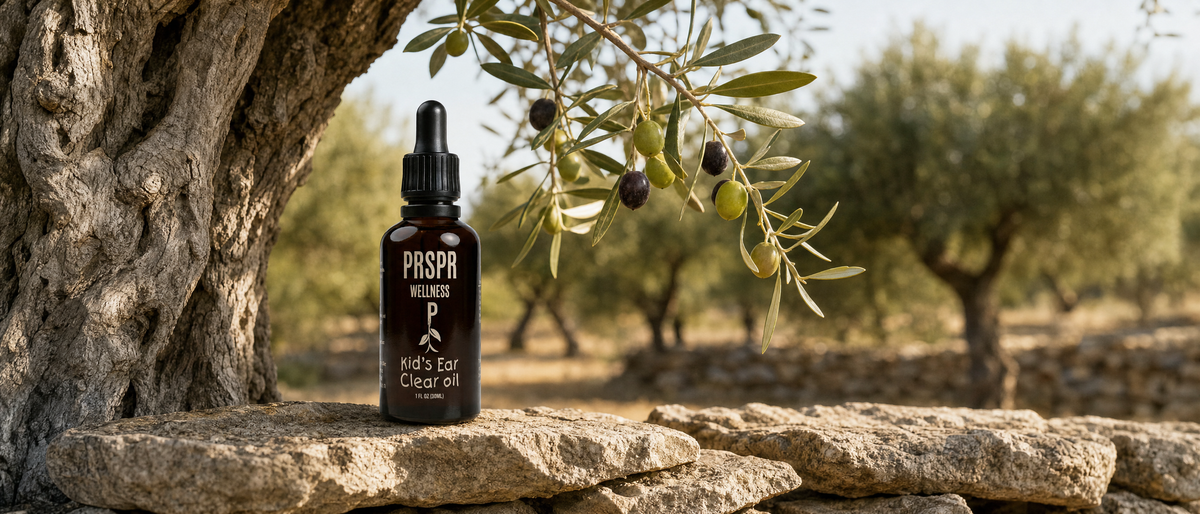
You see it in a Mediterranean travel photo: a squat, twisted trunk, silvery leaves, and a branch heavy with small green fruit. Or you see it at the garden center, in a pot by the door, next to a tag with a Latin name. Or you drive through Florida and notice a big shade tree with a very similar name. They are all called olive, but they are not the same thing. So what is the olive tree, really? Botanists have a precise answer, and once you know it, the names sort themselves out.
Plenty of people are asking. In Google Trends data for the US over the past 7 days, top related searches for the seed term "olive tree" included "the olive tree" with a score of 100, "olive trees" (38), "olive plant" (31), "olive tree plant" (30), and "black olive tree" (20). Rising searches included "olea europaea" at +60%, plus "leccino olive tree" and "manzanillo olive tree" at +50% each. Top scores are relative interest, scaled so the top related search for a seed equals 100; they are not search counts. A rising percentage shows growth in search interest compared with the prior period. People want the botany first, then the named varieties, then an answer about that Florida look-alike.
The scientific name is Olea europaea. The North Carolina State Extension Gardener Plant Toolbox lists it in the family Oleaceae and describes it as a broadleaf evergreen tree or shrub. The Food and Agriculture Organization of the United Nations, in its EcoCrop database, describes the olive as a small evergreen tree that can reach 12 meters or more, though regular pruning keeps it to about 6 meters.
The gray-green color has a practical reason. The University of California Marin Master Gardeners, part of UC Agriculture and Natural Resources, describe narrow, gray-green leaves that are hairy on the undersides, which reduces water loss in dry climates. That is a tree built for hot, dry summers. The NC State Plant Toolbox agrees, saying olive performs best in hot, dry summers and mild, wet winters, and that it is drought tolerant once established.
The NC State Plant Toolbox gives a mature size of about 20 to 30 feet tall and 15 to 25 feet wide. The UC Marin Master Gardeners add that the tree is wind pollinated, with some help from bees, and that some varieties are self-fruitful. They also say trees usually bear fruit by year four or five and fruit in alternate years. The crop ripens in late fall, and the fruit turns from green to black as it ripens. The same page says a single tree can yield up to 40 pounds.
There is a chilling requirement too. The NC State Plant Toolbox says the tree needs about two months of temperatures between 40 and 50 degrees Fahrenheit to flower. It also advises planting two different varieties so they can cross-pollinate. That detail matters later, because it explains why growers care so much about cultivar names.
When people type "olive plant" or "olive tree plant" into a search box, they usually mean this single species. The word "tree" is a loose label, much like the question we tackle in our explainer on whether palm trees are trees. The NC State Plant Toolbox calls Olea europaea a tree or shrub. Botany cares about the species, not the shape.
Olive trees have a reputation for great age. The FAO EcoCrop database calls olives long-lived, with a life expectancy of 500 years. The most famous claims run far higher, so researchers have tested them. A University of Arizona team, from its Tree Ring Laboratory and School of Natural Resources and Environment, radiocarbon dated the "Noah" olive tree in Bshaaleh, northern Lebanon, and reported an age of 1161 plus or minus 131 years. The authors conclude that most monumental olive trees are centennial rather than millennial, and that very old trees are probably restricted to harsh sites where growth is slow. So the thousands-of-years stories are best read as claims, not measurements.
The species has deep roots in the Mediterranean. The FAO EcoCrop database gives the origin as the Mediterranean region, tropical and central Asia, and parts of Africa, and says the olive may have been cultivated independently in Crete and Syria. It adds that the tree was grown historically across the Mediterranean, including Greece, Rome, and Crete, and is also grown commercially in California, Australia, and South Africa.
In the US, climate sets the limits. The NC State Plant Toolbox lists the tree as hardy outdoors in USDA zones 8 to 10, with colder areas bringing it indoors or into a greenhouse.
A cultivar is a named, propagated selection of a species. Two names show up in search trends right now, so here is what a reliable agricultural source says about each.
The University of California Marin Master Gardeners publish a list that sorts varieties by use. Here is how the two compare.
| Cultivar | Use as listed | Other notes from the source |
|---|---|---|
| Manzanillo | Table variety and oil producer | Medium oil content; needs 'Arbequina' as a pollinator |
| Leccino | Oil producer only | Bears early; needs 'Maurino' as a pollinator |
The Manzanillo olive tree is on the list twice. The UC Marin Master Gardeners place Manzanillo among the table varieties, which are olives meant to be eaten as fruit, alongside Mission. They also list it among the oil producers, noting medium oil content.
A Leccino olive tree is listed only among the oil producers, in the company of Arbequina, Manzanillo, and Mission. The same source says Leccino bears fruit early. Its pollinator note is another good example of why cultivars matter: it needs 'Maurino' nearby, so a grower cannot simply plant Leccino alone and expect a crop.
That is all the oil we need to cover here. For the oil itself, see our guide to what extra virgin olive oil is; this piece stays with the tree.
Now to the Florida look-alike. The black olive tree is a completely different species, and it is not an olive tree at all. The University of Florida IFAS Assessment of non-native plants lists the scientific name as Terminalia buceras, with the synonym Bucida buceras, and places it in the family Combretaceae. The same assessment lists its common names as black olive, Gregorywood, and oxhorn bucida, and gives its origin as Central America, Mexico, and South America.
Compare that with the true olive. Olea europaea belongs to Oleaceae, as the NC State Plant Toolbox states. Combretaceae and Oleaceae are separate plant families, so the two trees share a name and little else. The UF/IFAS Extension in Charlotte County says the black olive's name comes from its black seed capsule, that it should not be confused with the familiar edible olive, and that nothing from this tree is edible.
Virginia Tech's Dendrology guide fills in the picture. It describes the black olive (Bucida buceras) as a medium-sized tree reaching about 50 feet, with leathery, evergreen leaves that are tufted at the branch tips and urn-shaped fruit one-quarter to one-half inch long.
We like names that do real work. "Olea europaea" does. It tells you the species, the family, and the plant you are looking at, no matter what language the label is in. Common names are friendlier, but they are looser.
We think two quick questions that sort almost any olive you meet. Is it Olea europaea? Then it is the true olive, and the cultivar name tells you which one. Is it a big shade tree with tufted leaves and urn-shaped fruit? Then it is probably the black olive of Florida landscapes, a different family altogether.
We also think cultivar names are worth learning. Manzanillo and Leccino sound like small details, but they carry real information about use, timing, and pollination. Read them as labels from the people who grow the trees.
We wrote this botany guide as part of our Learn library, and it sits alongside our Kids Ear Clear Oil, which is made with extra virgin olive oil. This article is about the olive tree, its cultivars, and its look-alike, nothing more. Here is what the listing states about the product:
It is made in a GMP-certified facility and third-party batch tested. You can see it with the rest of our line in the Women & Children's Health collection.
See Kids Ear Clear Oil at PRSPR
It is Olea europaea. The NC State Extension Gardener Plant Toolbox lists it in the family Oleaceae and describes it as a broadleaf evergreen tree or shrub.
The FAO EcoCrop database calls olives long-lived, with a life expectancy of 500 years. A University of Arizona radiocarbon study of the "Noah" olive tree in Lebanon found an age of 1161 plus or minus 131 years and concluded that most monumental olive trees are centennial rather than millennial. Claims of several thousand years exist, but they are not what the measured dates show.
The UC Marin Master Gardeners list Manzanillo as both a table variety and an oil producer, with medium oil content. They list Leccino as an oil producer only, one that bears early.
No. The University of Florida IFAS Assessment places the black olive, Terminalia buceras (synonym Bucida buceras), in the family Combretaceae, while Olea europaea is in Oleaceae.
The FAO EcoCrop database says olives were grown historically across the Mediterranean, including Greece, Rome, and Crete, and are also grown commercially in California, Australia, and South Africa. The NC State Plant Toolbox lists the tree as hardy outdoors in USDA zones 8 to 10.
Answer all five questions to unlock a clear wellness plan made around your goal, schedule, preferred supplement format, and biggest roadblock.
Get clarity on what matters most right now.
See the product and routine connected to your goal.
Simple next steps you can use right away.
Pick the one you would fix first if you could.
This helps us make the guide easier to follow.
Consistency beats the “perfect” routine you never follow.
Be honest. We’re building something you’ll actually use.
Your guide will include one simple way around it.
Answer two more questions to unlock your product starting point, five-step plan, two-week routine, and one practical tip for your biggest roadblock.
Enter your details to open your five-step plan.
Verified PRSPR customer reviews
Expires when you close this page
*Your personal credit for completing the quiz. It's applied automatically at checkout on one-time purchases and expires when the timer runs out.
View full product detailsEverything in your plan, together — one add to cart.
Expires when you close this page
*Your personal credit for completing the quiz. It's applied automatically at checkout on one-time purchases and expires when the timer runs out.
View full product details Anatomy
You see an anatomy chart on a classroom wall, a model in a doctor's office, or a diagram in a textbook: a long coiled tube packed into the middle o...
 Chemistry
You are reading a label, and the word "betaine" shows up. Maybe it is on the back of a shampoo bottle as part of a long ingredient list. Maybe it i...
 Botany
You are standing in a nursery aisle, looking at a plant with a woody stem, a rounded crown, and a tag that says "large shrub." Next to it sits a pl...