
◎
Get clear
Get clarity on what matters most right now.

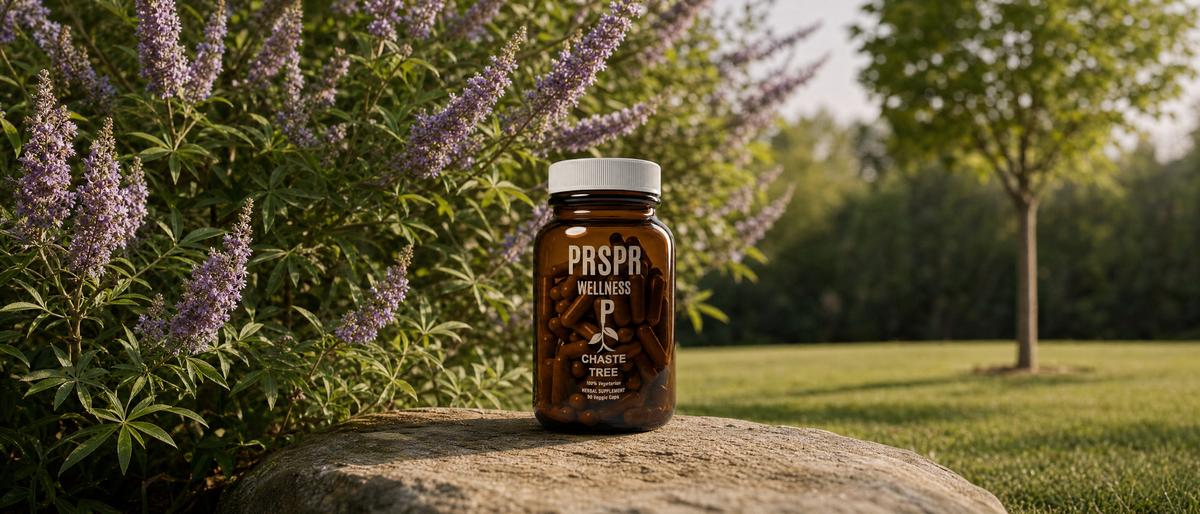
You are standing in a nursery aisle, looking at a plant with a woody stem, a rounded crown, and a tag that says "large shrub." Next to it sits a plant of nearly the same size labeled "small tree." Two plants, two words. So which is it? Once you know what botanists and gardeners actually check, the labels make sense.
Plenty of people are asking. In Google Trends data for the US over the past 7 days, top related searches for the seed term "shrubs" included "trees and shrubs" with a score of 100, "shrubs plants" (96), "what is shrubs" (85), "what are shrubs" (64), "tree shrubs" (60), "shrub" (58), "bushes" (54), "flowering shrubs" (49), and "shrubs and bushes" (25). Top scores are relative interest, scaled so the top related search for a seed equals 100; they are not search counts. These were top related searches, not rising ones, so there is no growth percentage to report.
The honest starting point is that there is no single official line. Both trees and shrubs are woody plants. The difference is in how the stems are arranged and, by convention, how tall they get.
The Royal Horticultural Society (RHS), in its plant-type pages, describes trees as having a permanent woody structure, usually a single trunk and a network of branches. On its shrubs page, the RHS says shrubs tend to produce multiple woody stems that sprout from low down. It also admits that it can sometimes be hard to distinguish between a large shrub and a small tree.
Structure is the first test. A tree, in the usual sense, sends up one main stem and holds its leafy branches high above the ground. A shrub sends up several stems from near the soil line, so the plant looks like a clump rather than a column.
The wording varies slightly from source to source, but the idea is the same. The St. John's Abbey Arboretum says shrubs have several main stems sprouting at ground level instead of one trunk, and that they are usually, though not always, shorter than trees. A 2016 paper in Frontiers in Plant Science by Frank Götmark and colleagues defines a tree as a tall perennial plant with a single free-standing woody stem, and a shrub as a short perennial plant with multiple free-standing woody stems branching at or near the ground. So even the plain version comes with "usually" attached.
Popular Science, in its article on the difference between a tree, a shrub, and a bush, quotes the ornithologist David Allen Sibley with a rule of thumb: if you can walk under it, it is a tree; if you have to walk around it, it is a shrub. The same article quotes him concluding that developing a precise definition of a tree is difficult and unrewarding.
Height is where the numbers show up, and where the sources disagree. Here are three conventions, each from a named source.
| Source | Tree | Shrub |
|---|---|---|
| Cornell University, as quoted by University of Florida IFAS Extension (Nassau County) | One central stem, generally more than 12 feet tall, normally with a distinct head | A number of stems from near the soil line, generally less than 12 feet, with some exceptions reaching 20 feet or more |
| National Park Service, as reported by Popular Science | Over 20 feet tall, trunk more than 2 inches across at 4.5 feet above the ground | Smaller than trees, often with many small, woody, bark-covered stems rising from the base |
| Götmark, Götmark and Jensen (2016), Frontiers in Plant Science | A tall perennial plant with a single free-standing woody stem (no number given) | A short perennial plant with multiple free-standing woody stems branching at or near the ground |
Notice the gap. A plant 15 feet tall would be a tree by the Cornell convention and a shrub by the National Park Service one. Neither is wrong; they draw the line in different places.
The University of Florida IFAS Extension post explains why a fixed cutoff is shaky: sunlight, water, soil conditions, soil pH, nutrient availability, and genetics all affect mature height. The post calls the Cornell definition "not a perfect definition, but it is a starting point." We agree with that framing.
"Bush" is the everyday word, and it is looser than "shrub." Popular Science quotes Deanna Curtis, a curator at the New York Botanical Garden, who looks at visible structure: if a plant is so dense that you cannot even tell whether there is a trunk, odds are it is a bush. In casual speech, "shrubs and bushes" are used almost interchangeably, and that is fine.
"Flowering shrubs" is a different kind of phrase. It adds a trait, flowering, that has nothing to do with form. A flowering plant can be a tree, a shrub, or neither. So when you search for flowering shrubs, the word "shrub" is doing the structural work, and "flowering" is only telling you what the plant does in season.
The phrase "tree shrubs" points straight at the overlap this article is about. For another place where the word "tree" gets stretched, see our guide to whether palm trees are trees.
Several things blur the boundary between trees and shrubs. A few are worth naming.
The words are tools for communication, not rulings from nature.
A good example of the fuzzy line is Vitex agnus-castus, the plant behind the common name chaste tree. The name says "tree," yet horticultural guides tend to say more than that. The North Carolina State Extension Plant Toolbox describes it as a deciduous tree or shrub with an erect, open, rounded habit, and its plant type lists both Shrub and Tree.
The same page says the plant is usually grown as a shrub, about 10 to 15 feet tall. It adds that in warmer climates it can be trained to grow as a small, single-trunk tree or a large shrub, and that in tree form it can reach heights and widths of up to 20 feet. Its attribute listing gives a height range of 8 to 20 feet.
Read that against the conventions above. At 10 to 15 feet with several stems, it passes the multiple-stem test for a shrub and stays under the National Park Service 20-foot tree line. At 20 feet with a single trunk, it sits at the edge of the Cornell tree line. Same species, same name, and the label depends on the form and the source. If you want to read more about the name itself, see our post on what chaste tree berry is.
We think the most useful definition is the simple one. Look at the base of the plant. One trunk rising from the ground means tree. Many stems rising from near the ground means shrub. Height is a convention layered on top of that, and it changes depending on who wrote the guide.
We also think it is fine to let the labels flex. The plant does not change species when its form changes.
And "bush" deserves more respect than it gets. It is not a technical term, but it is an honest one. Use "shrub" when you want to be precise about stems.
We wrote this botany guide as part of our Learn library, and it sits alongside our Chaste Tree. This article is about how trees, shrubs, and bushes are told apart and where the line gets fuzzy, nothing more, and so it is not about the product. Here is what the listing states:
It is made in a GMP-certified facility and third-party batch tested. You can see it with the rest of our line in the Vitamins & Supplements collection.
The Royal Horticultural Society says shrubs tend to produce multiple woody stems that sprout from low down. Cornell University, as quoted by University of Florida IFAS Extension, describes shrubs as woody, perennial plants with a number of stems usually produced from near the soil line.
Trees usually have a single trunk and shrubs have several stems, according to the RHS. Height conventions differ: Cornell uses about 12 feet, and the National Park Service, as reported by Popular Science, uses 20 feet.
In everyday speech, mostly yes. Popular Science quotes Deanna Curtis of the New York Botanical Garden saying that if a plant is so dense you cannot tell whether there is a trunk, odds are it is a bush. "Shrub" is the more precise word.
Sometimes the label depends on form. The North Carolina State Extension Plant Toolbox lists Vitex agnus-castus as both Shrub and Tree, and says it can be trained as a small, single-trunk tree or a large shrub. The RHS notes it can be hard to distinguish between a large shrub and a small tree.
Cornell says shrubs are generally less than 12 feet, with some exceptions reaching 20 feet or more. Götmark and colleagues note that shrub heights range from about 0.2 meters to about 10 meters.
Answer all five questions to unlock a clear wellness plan made around your goal, schedule, preferred supplement format, and biggest roadblock.
Get clarity on what matters most right now.
See the product and routine connected to your goal.
Simple next steps you can use right away.
Pick the one you would fix first if you could.
This helps us make the guide easier to follow.
Consistency beats the “perfect” routine you never follow.
Be honest. We’re building something you’ll actually use.
Your guide will include one simple way around it.
Answer two more questions to unlock your product starting point, five-step plan, two-week routine, and one practical tip for your biggest roadblock.
Enter your details to open your five-step plan.
Verified PRSPR customer reviews
Expires when you close this page
*Your personal credit for completing the quiz. It's applied automatically at checkout on one-time purchases and expires when the timer runs out.
View full product detailsEverything in your plan, together — one add to cart.
Expires when you close this page
*Your personal credit for completing the quiz. It's applied automatically at checkout on one-time purchases and expires when the timer runs out.
View full product details Anatomy
You see an anatomy chart on a classroom wall, a model in a doctor's office, or a diagram in a textbook: a long coiled tube packed into the middle o...
 Chemistry
You are reading a label, and the word "betaine" shows up. Maybe it is on the back of a shampoo bottle as part of a long ingredient list. Maybe it i...
 Botany
You see it in a Mediterranean travel photo: a squat, twisted trunk, silvery leaves, and a branch heavy with small green fruit. Or you see it at the...