
◎
Get clear
Get clarity on what matters most right now.

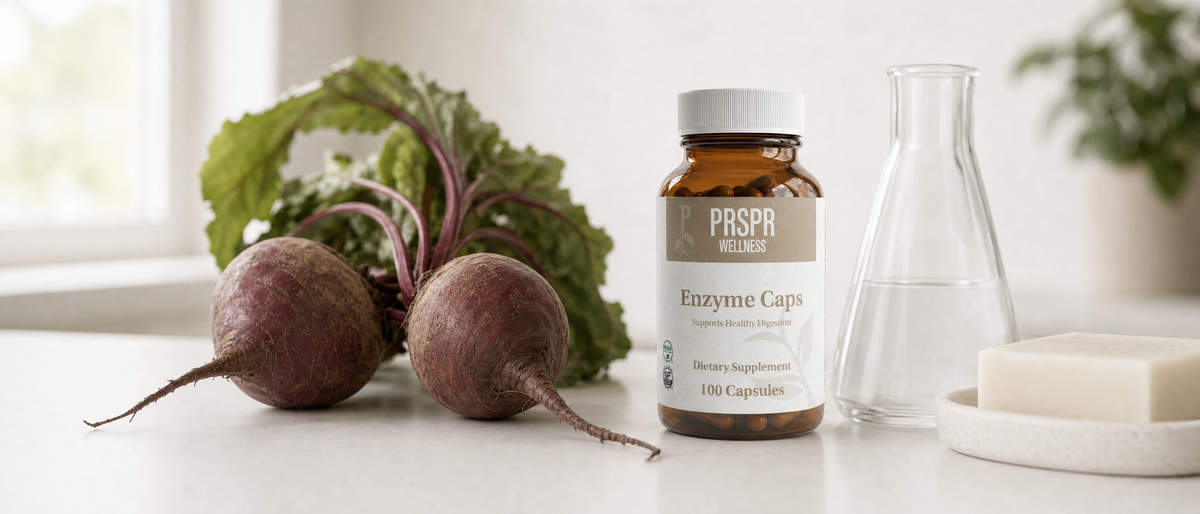
You are reading a label, and the word "betaine" shows up. Maybe it is on the back of a shampoo bottle as part of a long ingredient list. Maybe it is on a supplement as "betaine HCL." Maybe a chemistry page calls it "trimethylglycine." The spelling is the same, the compounds are not, and the internet rarely stops to say so. So what is betaine, really? The honest answer is that it is a name used for one specific molecule and also for a whole family of molecules, and the family is where the confusion starts.
Plenty of people are asking. In Google Trends data for the US over the past 7 days, top related searches for the seed term "betaine" included "cocamidopropyl betaine" with a score of 50, "what is betaine" (41), "betaine anhydrous" (32), "betaine tmg" (9), "coco betaine" (9), and "what is cocamidopropyl betaine" (7). Two rising searches also appeared: "betaine hydrochloride" showed growth of +120% and "what is betaine hydrochloride" showed growth of +110%. Top scores are relative interest, scaled so the top related search for a seed equals 100; they are not search counts. A rising percentage shows growth in search interest compared with the prior period. People want the definition first, then the specific names they keep running into.
Start with the original. PubChem, the chemical database run by the US National Library of Medicine, lists a compound simply titled "Betaine" with the molecular formula C5H11NO2 and a molecular weight of 117.15. Its systematic name is 2-(trimethylazaniumyl)acetate. In plain terms, it is a glycine molecule (the simplest amino acid) with three methyl groups attached to the nitrogen.
That is why this one molecule goes by so many names. PubChem's synonym list for it includes "glycine betaine," "trimethylglycine," "N,N,N-trimethylglycine," "betaine anhydrous," and an older name, "trimethylglycocoll." The shorthand "TMG" is short for trimethylglycine, so when someone searches "betaine tmg," they are asking about the same compound as "glycine betaine."
Then there is the family. ChEBI, the chemical ontology maintained by the European Bioinformatics Institute, defines glycine betaine as "the amino acid betaine derived from glycine" and files it under a class it calls "amino-acid betaine." A class name like that tells you other betaines exist. The American Heritage Dictionary, as shown on Wordnik, agrees by giving two senses of the word: a crystalline compound with the formula C5H11NO2 found in sugar beets and other plants, and any of several compounds with similar structures. Cosmetics Info, a site from the Personal Care Products Council, likewise places cocamidopropyl betaine in a group it calls amidopropyl betaines.
So "betaine" works like the word "alcohol" or "acid." Sometimes it points to a single named compound. Sometimes it points to a structural class. The rest of this guide sorts out which is which.
The word betaine is a botanical nickname frozen into chemistry. The American Heritage Dictionary places the compound in sugar beets, and the Princeton WordNet database describes it as occurring in sugar beets. The GNU Collaborative International Dictionary of English adds that it occurs naturally in beet-root molasses. The first syllable gives the game away: it matches Beta, the beet genus.
If you are curious about the plant behind the word, our guide to beet varieties and sugar beets explains how sugar beets differ from the red beets and chard that share the same species name. The short version: Beta vulgaris is the plant, and the chemistry word "betaine" points back to it.
This trips people up, so it is worth repeating. "Glycine betaine" and "trimethylglycine" are two names for one molecule, with formula C5H11NO2. PubChem lists both as synonyms of the same record, and ChEBI gives the same formula for glycine betaine. If you see all three names on different pages, you are looking at one compound.
"Anhydrous" means without water. In chemistry, an anhydrous form of a compound is the version that is not combined with water molecules. PubChem lists "betaine anhydrous" among the synonyms of the very same record, formula C5H11NO2, so the name refers to the plain, water-free form of the same molecule rather than a different compound. It is a labeling distinction, useful mainly for telling entries apart in a reference table or on a specification sheet.
Now the form that appears in the product name below. A hydrochloride is a salt made by pairing a molecule with hydrochloric acid, which is where the "HCl" comes from, and our explainer on what hydrochloric acid is covers the acid itself.
PubChem lists a record titled "Betaine chloride" with the molecular formula C5H12ClNO2, a molecular weight of 153.61, and the systematic name carboxymethyl(trimethyl)azanium chloride. Compare that to plain betaine at C5H11NO2 and 117.15: the hydrochloride form adds one hydrogen and one chlorine to the formula, and its weight rises accordingly.
That is the whole chemistry lesson on this form. When a label says "betaine HCl," read it as the hydrochloride version of the trimethylglycine molecule. When a page says "betaine anhydrous," it means the water-free form of trimethylglycine itself. Two different entries, one parent molecule.
Here is the biggest name collision of all. Cocamidopropyl betaine is the top-scoring related search in the data above, and it has almost nothing in common with the compound found in sugar beets beyond the family label.
Cosmetics Info describes cocamidopropyl betaine as one of a class of ingredients called amidopropyl betaines, made of various fatty acids bound to amidopropyl betaine. It says these are used mainly as surfactants in cosmetic and personal care products. Other functions it lists include antistatic agent, hair conditioning agent, skin conditioning agent, and cleansing surfactant. A surfactant, in the site's wording, helps water mix with oil and dirt so they can be rinsed away.
The same page lists where the ingredient turns up: bath products, skin cleansing products, and hair care products such as shampoos, conditioners, and sprays. It adds that the ingredient is also used in household cleaners such as laundry detergents, hand dishwashing liquids, and hard surface cleaners. In short, this one is a soap and shampoo ingredient.
Size alone shows how different it is. PubChem lists lauramidopropyl betaine, one of the amidopropyl betaines, with the formula C19H38N2O3 and a molecular weight of 342.5. Plain trimethylglycine is C5H11NO2 at 117.15. The larger molecule carries a long fatty chain that the beet compound does not have. It is a betaine in the class sense, with the same kind of charged head, and it is not a form of trimethylglycine.
As for "coco betaine," that is a shorter phrase people type into search boxes. We could not find a reference that treats it as a separate compound, so we mention it only as a search phrase and leave it there. If you see it on a label, the ingredient name printed on that label is the one to look up.
| Name | What it is | Formula | Source cited |
|---|---|---|---|
| Betaine, glycine betaine, trimethylglycine (TMG) | One small amino acid derivative; the original betaine | C5H11NO2 | PubChem; ChEBI |
| Betaine anhydrous | The water-free form of that same molecule | C5H11NO2 | PubChem |
| Betaine hydrochloride (betaine HCl, betaine chloride) | The hydrochloride form of that molecule | C5H12ClNO2 | PubChem |
| Cocamidopropyl betaine | An amidopropyl betaine used as a surfactant in soaps and shampoos; only shares the class name | C19H38N2O3 (lauramidopropyl betaine, a member of the group) | Cosmetics Info; PubChem |
We think the word "betaine" is a perfect example of why chemistry names deserve a second look. One word, at least four different things. Nobody is at fault; the word points back to a beet compound and, in dictionaries and chemistry databases alike, also names a structural family.
Our rule of thumb is simple. Look at what comes before and after the word. "Glycine," "trimethyl," or "TMG" points to the original molecule. "Anhydrous" points to its water-free form. "Hydrochloride" or "HCl" points to its salt. And "cocamidopropyl" or anything with a coconut-derived prefix points to the surfactant family, a different chemical story from the sugar beet compound.
We also think a formula is a better identity card than a name. C5H11NO2 is trimethylglycine. C5H12ClNO2 is its chloride salt. Anything in the high teens of carbon atoms is something else. When two compounds share a word but not a formula, they are different compounds.
We wrote this guide as part of our Learn library, and it sits alongside our Enzyme Caps, whose product name includes the word betaine. This article is about what the word betaine means in chemistry and where the names come from, and so it is not about what any compound does. Here is what the listing states about the product:
It is made in a GMP-certified facility and third-party batch tested. You can see it with the rest of our line in the Vitamins & Supplements collection.
PubChem lists betaine as a compound with the formula C5H11NO2, also known as glycine betaine and trimethylglycine. The American Heritage Dictionary describes it as a crystalline compound found in sugar beets and other plants, and also uses the word for several compounds with similar structures.
It is the hydrochloride form of trimethylglycine. PubChem lists it as "Betaine chloride" with the formula C5H12ClNO2 and a molecular weight of 153.61.
PubChem lists "betaine anhydrous" as a synonym for betaine itself, formula C5H11NO2. Anhydrous means the form without water.
Cosmetics Info describes it as an amidopropyl betaine used mainly as a surfactant in cosmetic and personal care products, including shampoos and bath products. It shares the class name with trimethylglycine but is a much larger molecule.
TMG is short for trimethylglycine. PubChem lists trimethylglycine as a synonym of glycine betaine, so the two names refer to the same molecule.
Answer all five questions to unlock a clear wellness plan made around your goal, schedule, preferred supplement format, and biggest roadblock.
Get clarity on what matters most right now.
See the product and routine connected to your goal.
Simple next steps you can use right away.
Pick the one you would fix first if you could.
This helps us make the guide easier to follow.
Consistency beats the “perfect” routine you never follow.
Be honest. We’re building something you’ll actually use.
Your guide will include one simple way around it.
Answer two more questions to unlock your product starting point, five-step plan, two-week routine, and one practical tip for your biggest roadblock.
Enter your details to open your five-step plan.
Verified PRSPR customer reviews
Expires when you close this page
*Your personal credit for completing the quiz. It's applied automatically at checkout on one-time purchases and expires when the timer runs out.
View full product detailsEverything in your plan, together — one add to cart.
Expires when you close this page
*Your personal credit for completing the quiz. It's applied automatically at checkout on one-time purchases and expires when the timer runs out.
View full product details Anatomy
You see an anatomy chart on a classroom wall, a model in a doctor's office, or a diagram in a textbook: a long coiled tube packed into the middle o...
 Botany
You see it in a Mediterranean travel photo: a squat, twisted trunk, silvery leaves, and a branch heavy with small green fruit. Or you see it at the...
 Botany
You are standing in a nursery aisle, looking at a plant with a woody stem, a rounded crown, and a tag that says "large shrub." Next to it sits a pl...