
◎
Get clear
Get clarity on what matters most right now.

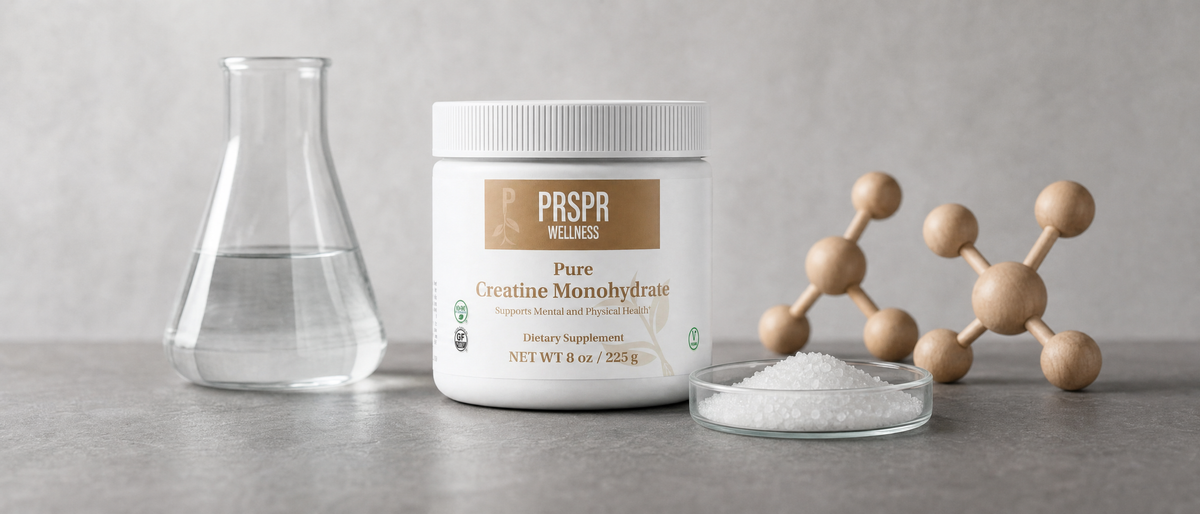
What is a chemical compound, exactly? It is one of those words that shows up in a science class, on a supplement label and in a news story all in the same week, and it is easy to nod along without a clear picture. The short answer: a compound is a pure substance made of two or more elements joined together in a fixed composition. Below is what that means, how a compound differs from a mixture and a molecule, why water counts, and how to read a chemical formula, with one real ingredient as the worked example.
According to Google Trends, for US searches over the past seven days related to the seed term "chemical compound," the top related queries included "a compound is" at 100, "what is a chemical compound" at 65, "what is a compound" at 65, "chemical formula" at 46, "is water a compound" at 26, "is water a chemical compound" at 26, "compounds" at 23, "chemical compounds" at 23, "molecule" at 23 and "mixture" at 22.
Those numbers are relative, not counts. A top score is scaled against the most searched query in the set, which is set at 100. A score of 22 means "mixture" was searched a little under a quarter as often as the top query, not that 22 people searched it. (Google also reports rising queries as a percentage of growth over the previous period; none made this list.)
This piece is chemistry vocabulary only. The main sources are OpenStax Chemistry 2e (sections 1.2, 2.4, 2.6 and 2.7, plus its chapter key terms) and the PubChem compound records for water, creatine and creatine monohydrate, maintained by the US National Library of Medicine.
OpenStax Chemistry 2e sorts all matter into two piles: pure substances and mixtures. It defines a pure substance as one that "has a constant composition." Pure substances then split again:
So if you are wondering what is a compound in one line: a compound is two or more elements chemically combined, always in the same proportions. OpenStax states that "each compound has a specific composition," and gives table sugar as an example: any sample of sucrose is 42.1% carbon, 6.5% hydrogen and 51.4% oxygen by mass.
The other key idea is that a compound is its own thing. OpenStax notes that "the properties of combined elements are different from those in the free, or uncombined, state." Hydrogen and oxygen are both gases at room temperature, yet the compound they form is water.
OpenStax describes two broad families of chemical compounds. Ionic compounds contain ions "held together by ionic bonds," like table salt. Molecular, or covalent, compounds "result when atoms share, rather than transfer (gain or lose), electrons." Water and creatine are both in the second family, which is why the word molecule keeps coming up.
These three words get swapped for each other all the time. They are not the same.
OpenStax defines a mixture as "composed of two or more types of matter that can be present in varying amounts." The chapter 1 key terms add that a mixture is matter that "can be separated into its components by physical means." That is the big difference from a compound: the parts of a mixture keep their own identities, and the recipe can change.
Mixtures come in two kinds. A heterogeneous mixture has "a composition that varies from point to point," and OpenStax uses Italian dressing as the example. A homogeneous mixture, also called a solution, "exhibits a uniform composition and appears visually the same throughout." The textbook lists air, maple syrup, gasoline and salt dissolved in water. Seawater is a good everyday case of a solution, and our piece on what salinity is in seawater looks at how much salt that mixture carries.
According to OpenStax section 1.2, "a molecule consists of two or more atoms joined by strong forces called chemical bonds." A molecule is a unit, not a category of matter. Some molecules are made of one element only; OpenStax notes that oxygen exists as pairs of oxygen atoms. Others, like water, contain more than one element, which makes them the smallest unit of a molecular compound.
| Term | What it is | Fixed recipe? | Example |
|---|---|---|---|
| Compound | Two or more elements chemically combined | Yes | Water, sucrose, creatine |
| Mixture | Two or more substances physically mixed | No, amounts can vary | Air, salt water, Italian dressing |
| Molecule | Two or more atoms joined by chemical bonds | Yes, for a given substance | One water molecule, one oxygen pair |
A quick way to keep them straight: every molecule of water is a compound unit, a glass of pure water is a compound, and a glass of salt water is a mixture.
Is water a chemical compound, or just a substance? It is a compound by every part of the definition. OpenStax says "water consists of the elements hydrogen and oxygen combined in a 2 to 1 ratio," and that "each water molecule is a unit that contains two hydrogen atoms and one oxygen atom." The ratio does not change from one glass to the next, which is the "fixed composition" test.
It also passes the decomposition test. OpenStax notes that "water can be broken down into hydrogen and oxygen gases by the addition of energy." A substance that can be chemically split into two or more elements is, by the textbook's own key-term definition, a compound.
So is water a compound? Yes. Salt water, by contrast, is a mixture that contains the compound water.
A chemical formula is shorthand for what is inside a compound. OpenStax section 2.4 says a molecular formula "uses chemical symbols to indicate the types of atoms followed by subscripts to show the number of atoms of each type in the molecule." It adds that a subscript "is used only when more than one atom of a given type is present."
Read water with that rule. PubChem lists the molecular formula of water as H2O: H for hydrogen with a subscript 2, then O for oxygen with no subscript, meaning one. Two hydrogens, one oxygen, the same 2 to 1 ratio OpenStax describes.
The Pure Creatine Monohydrate listing describes creatine as "a naturally occurring compound found in the body and in certain foods." That word, compound, is the one this whole article has been unpacking, so it makes a good worked example.
Creatine. PubChem (CID 586) lists the molecular formula of creatine as C4H9N3O2. Reading it left to right: 4 carbon atoms, 9 hydrogen, 3 nitrogen and 2 oxygen. Four different elements in a fixed ratio, so it is a compound, and a molecular one at that.
Creatine monohydrate. PubChem (CID 80116) lists creatine monohydrate with the formula C4H11N3O3 and records it as a hydrate of creatine and water in a 1:1 ratio. OpenStax defines a hydrate as a "compound containing one or more water molecules bound within its crystals," and explains that hydrate names use a Greek prefix for the number of water molecules, with "mono-" meaning one. OpenStax also shows how hydrate formulas are written, with a centered dot before the water, so creatine monohydrate can be written C4H9N3O2·H2O: one creatine unit plus one water molecule.
Check the math and the two formulas agree. Add the H2O to C4H9N3O2 and you get 4 carbon, 11 hydrogen, 3 nitrogen and 3 oxygen, which is C4H11N3O3. If you want to see how a single small change in a formula can name a different compound, our piece on creatine vs creatinine walks through that pair.
We like this question because the answer is simpler than the vocabulary makes it look. A compound is elements locked together in a fixed ratio. A mixture is things sharing space in any ratio. A molecule is the bonded unit you would find if you could zoom in far enough. Once those three words sit in the right boxes, a formula like H2O or C4H9N3O2 stops looking like code and starts reading like a parts list.
This article connects to our Pure Creatine Monohydrate through the word on its label. It is a single-ingredient dietary supplement made with creatine monohydrate, formulated for convenient daily use, and it comes in a white tub marked "Dietary Supplement" with a net weight of 8 oz (225 g). This piece is about what the word compound means, and the label is the place to read what is in the tub.
Like everything we carry, it is made in a GMP-certified facility and third-party batch tested, so what's on the label is what's in the bottle. It sits in our Vitamins & Supplements collection, listed at $30.99.
To read the full label, see Pure Creatine Monohydrate at PRSPR.
It is a pure substance made of two or more elements chemically combined in a fixed ratio. OpenStax Chemistry 2e defines it as a pure substance that can be decomposed into two or more elements.
Yes. OpenStax says water is hydrogen and oxygen combined in a 2 to 1 ratio, and that it can be broken down into hydrogen and oxygen gases by adding energy.
A mixture. OpenStax lists a solution of salt in water as a homogeneous mixture, because the amount of salt can vary and the parts can be separated by physical means.
It means one water molecule is bound in the compound's crystals. OpenStax uses the prefix "mono-" for one, and PubChem records creatine monohydrate as creatine and water in a 1:1 ratio.
Answer all five questions to unlock a clear wellness plan made around your goal, schedule, preferred supplement format, and biggest roadblock.
Get clarity on what matters most right now.
See the product and routine connected to your goal.
Simple next steps you can use right away.
Pick the one you would fix first if you could.
This helps us make the guide easier to follow.
Consistency beats the “perfect” routine you never follow.
Be honest. We’re building something you’ll actually use.
Your guide will include one simple way around it.
Answer two more questions to unlock your product starting point, five-step plan, two-week routine, and one practical tip for your biggest roadblock.
Enter your details to open your five-step plan.
Verified PRSPR customer reviews
Expires when you close this page
*Your personal credit for completing the quiz. It's applied automatically at checkout on one-time purchases and expires when the timer runs out.
View full product detailsEverything in your plan, together — one add to cart.
Expires when you close this page
*Your personal credit for completing the quiz. It's applied automatically at checkout on one-time purchases and expires when the timer runs out.
View full product details Botany
You pick up a fallen leaf on a walk, or you read a product label that says a botanical comes from a leaf, and you realize you do not have the words...
 Food Science
You are fine, you just ate, and then one specific food lands in your head and will not leave. Not food in general. That food. Researchers have a na...
 Fitness Terms
You have heard it from a coach, a gym sign-up form, a friend who just bought a set of dumbbells. Strength training. Resistance training. Hypertroph...